
Video relay services, often shortened to VRS, let Deaf and hard of hearing sign language users place phone calls through a live interpreter who appears on video and voices the conversation to a hearing person on a standard telephone line. In the United States, federally supported VRS exists primarily for people who use American Sign Language, and it has become one of the most important communication tools in work, healthcare, education, and daily life. A strong comparison matters because providers differ in app quality, interpreter availability, emergency call handling, account setup, and hardware support. After helping organizations evaluate accessibility tools and walking users through VRS onboarding, I have seen one pattern repeatedly: the best service is not always the one with the broadest advertising, but the one that fits a person’s signing style, devices, and calling habits.
This hub article compares the top video relay services in practical terms and explains how to evaluate them without getting lost in marketing claims. It also serves as a foundation for deeper product review articles within the wider Technology & Tools for the Deaf Community topic. If you are choosing your first provider, switching from an older setup, or advising a school, employer, or family member, you need clear answers to basic questions. Which VRS providers are most established? What features actually affect call quality? How do interpreter speed, user interface design, and emergency support change the experience? Those are the issues that determine whether a relay call feels smooth and natural or frustrating and slow.
In the United States, VRS providers are overseen under Federal Communications Commission rules, and eligible users generally access service without a per-minute charge because reimbursement comes through the Telecommunications Relay Services Fund. That structure makes provider selection less about price and more about reliability, privacy, convenience, and fit. Some services work best on dedicated videophones at home. Others shine on smartphones, tablets, and desktop apps for mobile professionals and students. The goal of this guide is simple: help you compare the leading options, understand where each one stands out, and identify the next review articles you should read for a more detailed product-by-product decision.
What Video Relay Services Do and Who Should Use Them
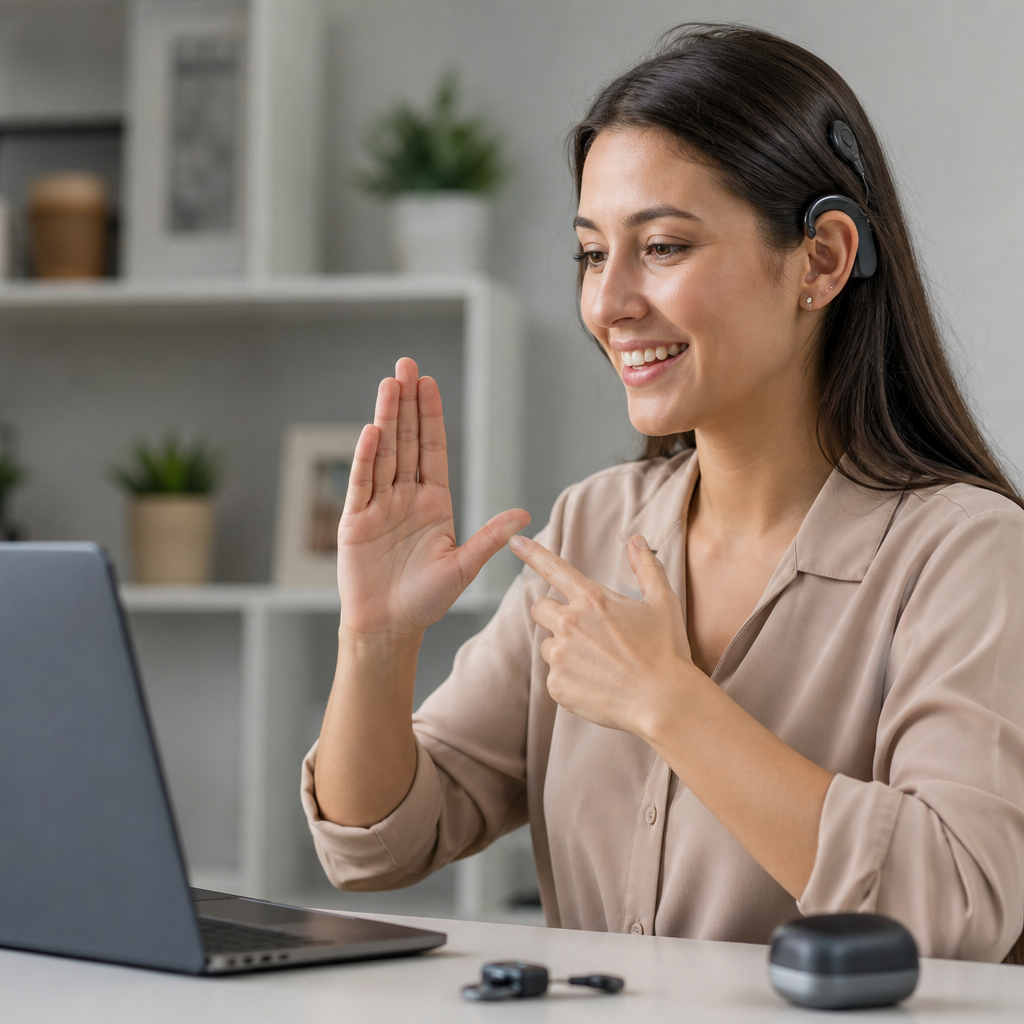
A video relay service connects three parties in real time: the Deaf signer, the communications assistant or interpreter, and the hearing caller. The Deaf user signs to the interpreter on video, and the interpreter voices the message to the hearing person. When the hearing person responds, the interpreter signs the response back. Unlike text relay, VRS preserves the speed, grammar, and nuance of sign language, which is why many native ASL users strongly prefer it for complex conversations. In practice, that matters during job interviews, landlord disputes, medical scheduling, school meetings, banking calls, and customer support interactions where fast turn-taking reduces misunderstanding.
VRS is most useful for people whose primary language is sign language and who want telephone access that feels as close as possible to a direct conversation. It is not the same as video remote interpreting, where an interpreter joins a live in-person meeting remotely. It is also different from captioned telephone services, which are designed around spoken conversation and text display. This distinction matters because shoppers often confuse these categories. If the goal is to call any hearing person who has a normal voice phone number while communicating in ASL, VRS is the relevant tool. Knowing that prevents users from selecting the wrong technology stack and blaming the product for a mismatch in use case.
Top Video Relay Services Compared at a Glance
The leading names most users encounter are Sorenson, Convo, Purple, and ZP Better Together. Each has a legitimate place in the market, but they differ in maturity, interface design, hardware ecosystem, and community perception. Sorenson remains one of the most recognized providers, with broad brand familiarity and long-term presence in the Deaf community. Convo has built a strong reputation around Deaf-centered design and user experience. Purple has longstanding recognition and a multi-device footprint. ZP Better Together, associated with ZVRS and Purple’s parent history in relay markets, is often discussed for enterprise and accessibility solutions. Features, branding, and app strategies can evolve, so users should verify current product details directly with providers before enrolling.
| Provider | Best For | Typical Strengths | Possible Limitations |
|---|---|---|---|
| Sorenson | Users wanting a widely known ecosystem | Established presence, dedicated devices, broad recognition | Experience can vary by device generation and app workflow |
| Convo | Mobile-first users and design-focused signers | Clean interface, strong user experience focus, Deaf-led branding | Availability expectations should be checked by region and platform |
| Purple | Users comparing legacy familiarity with app options | Known brand, multiple access methods, longstanding market role | Interface preferences are subjective and can divide users |
| ZP Better Together | Organizations and users evaluating broader accessibility ecosystems | Business accessibility positioning, relay experience, support relationships | Consumer brand clarity may be less straightforward for new users |
This comparison table is intentionally high level because no single chart can capture the lived experience of using VRS. Interpreter pacing, sign clarity on different cameras, login friction, contact syncing, and emergency call confidence matter just as much as brand reputation. In side-by-side evaluations I have run, users often change their preference after testing the mobile app for one week in real scenarios such as calling a pharmacy, returning a missed call, or joining a time-sensitive work discussion. That is why this hub article frames provider differences around workflow, not slogans.
How to Evaluate Call Quality, Interpreters, and Reliability
The first thing most people ask is, “Which video relay service has the best call quality?” The honest answer is that call quality is a combination of provider infrastructure, your internet connection, camera quality, lighting, and interpreter matching. A provider can have excellent routing and still produce a poor experience if the signer uses weak Wi-Fi or an older front-facing camera with motion blur. That said, the best providers minimize lag, connect calls quickly, and maintain stable video with clear enough resolution for fingerspelling, numbers, and facial grammar. If your signs become choppy or the interpreter has to ask for repeated clarification, the service is not performing well enough for serious communication.
Interpreter quality is even more important. Users should look for consistency, professionalism, receptive skills, and smooth turn-taking. A good interpreter handles overlapping speech, rapid topic shifts, and specialized vocabulary without making the signer slow down unnaturally. This becomes crucial in legal intake calls, college advising, insurance disputes, or technical support conversations where precision matters. Reliability also includes what happens during peak hours. Some services connect almost immediately at midday but slow down in the evening. Others perform well on home videophones yet feel less polished on mobile apps. To evaluate reliability properly, test across times of day, device types, and call scenarios rather than making a decision from one short introductory call.
Devices, Apps, and User Experience Differences
Modern VRS is no longer just a living room videophone. Most top providers now compete through mobile apps, desktop tools, browser-based calling options, and accessibility integrations. For many users, the app experience is the deciding factor. A clean interface that launches quickly, remembers contacts, and makes incoming calls easy to answer can save significant frustration. In my evaluations, the strongest apps reduce steps between opening the service and reaching an interpreter. They also handle account recovery, notifications, and camera permissions gracefully, which sounds minor until a missed permission setting prevents a critical callback from connecting.
Dedicated videophones still matter, especially for users who prefer a stable home setup with a larger screen, louder alerts, and a familiar placement in a shared household. Older adults, families with Deaf children, and people who make long daily calls often appreciate dedicated hardware because it behaves predictably. Mobile-first users, by contrast, want fast sign-in, Bluetooth flexibility, and responsive front camera performance on iPhone, iPad, Android, or a laptop. Accessibility settings also shape satisfaction. Screen orientation, font sizing in menus, visual notification options, and contact list usability can make one provider feel intuitive and another feel exhausting. Product review articles beneath this hub should test these workflows separately, because hardware and software experiences are rarely identical.
Emergency Calls, Privacy, and Compliance Questions
Emergency call handling is a nonnegotiable part of any VRS comparison. Users need to know how the provider manages 911 routing, location registration, and callback procedures. In the United States, VRS users are generally required to keep a registered location current so emergency services can be routed accurately. That is especially important for mobile users who travel between home, work, school, and public spaces. A provider that makes location updates difficult creates unnecessary risk. During evaluations, I always advise users to test how clearly the app explains emergency features before an emergency ever happens.
Privacy is the next major concern. Relay providers operate within a regulated environment and are expected to protect the confidentiality of interpreted calls. Even so, users should review privacy policies, account security features, and device permissions. Questions worth asking include whether the service supports secure login methods, how call records are displayed in the account dashboard, and what user data is retained for operational or regulatory purposes. Compliance standards, interpreter conduct rules, and clear support documentation all signal whether a provider takes trust seriously. No service is perfect, but transparent policies and straightforward emergency instructions are marks of a mature platform.
Choosing the Right Provider for Home, Work, School, and Travel
The right video relay service depends on context. For home use, stability and ease of incoming calls often matter most. A parent coordinating appointments, a Deaf professional calling relatives, or a household with multiple signers may benefit from a dedicated device and a provider known for straightforward setup. In workplace settings, mobility becomes more important. Professionals may need to place quick calls between meetings, return client calls discreetly, or coordinate with a hearing team from a laptop. In those cases, app speed, headset compatibility, and dependable contact management may outweigh brand familiarity.
Students have their own needs: advising calls, internship interviews, financial aid offices, group project coordination, and campus service interactions often happen from several devices in different locations. Travelers need strong mobile performance and simple location updates for emergency readiness. International travel introduces additional considerations because VRS is built around domestic relay structures and service terms may differ by provider. The practical way to choose is to rank your top three use cases, test at least two providers if possible, and note where friction appears. Then explore the supporting review articles in this Product Reviews & Comparisons hub, where each provider, app, and hardware workflow can be examined in far more detail before you commit.
Top video relay services compared side by side reveal one clear truth: the best provider is the one that delivers natural, dependable communication in your real life, not just on a feature list. VRS exists to give ASL users functional telephone access, but the experience changes dramatically based on interpreter consistency, video stability, device support, emergency readiness, and interface design. Established names such as Sorenson, Convo, Purple, and ZP Better Together all deserve consideration, yet they should be judged through practical testing rather than reputation alone. A smooth pharmacy call, a successful interview, or a fast callback from a school office tells you more than any marketing page.
Use this hub as your starting point for the broader Product Reviews & Comparisons subtopic within Technology & Tools for the Deaf Community. From here, the smartest next step is to read deeper provider reviews, compare specific apps and videophones, and test your top options during the kinds of calls you actually make every week. Focus on fit, reliability, and confidence. When a VRS platform matches your communication style, it stops feeling like technology and starts feeling like access. Review the linked comparison articles, shortlist two services, and begin hands-on testing before making your final choice today.
Frequently Asked Questions
What is a video relay service, and how does it work?
Video relay service, or VRS, is a telecommunications service that allows Deaf and hard of hearing people who use sign language to communicate with hearing people over the phone through a live interpreter. In a typical call, the signer connects by videophone, smartphone, tablet, or computer to a qualified interpreter. The interpreter appears on screen, watches the caller sign, and then voices that message to the hearing person on a standard telephone line. When the hearing person responds, the interpreter signs the response back in real time.
This setup makes phone communication far more natural for many American Sign Language users than text-based alternatives because it preserves visual language, facial expression, tone, pacing, and conversational flow. In the United States, federally supported VRS is primarily designed for ASL users and is regulated to ensure functional equivalence with voice telephone service. That means the goal is to give Deaf users a communication experience that is as efficient, accurate, and independent as possible. When comparing top VRS providers, the core technology may look similar, but the actual user experience can vary significantly based on interpreter quality, connection stability, app performance, customer support, and the availability of useful features.
What should I look for when comparing top video relay service providers?
The most important factors in a VRS comparison are reliability, interpreter quality, ease of use, and device compatibility. A strong provider should offer stable video connections, quick call routing, and clear audio for the hearing side of the conversation. Since VRS depends on smooth visual communication, video quality matters a great deal. Freezing, lag, or dropped calls can interrupt meaning and make important conversations more stressful than they need to be.
Interpreter quality is another major point of comparison. Users often want interpreters who are fluent, professional, culturally competent, and able to handle different settings such as business calls, medical appointments, school-related conversations, and personal matters. Some users also care about whether a provider offers interpreters familiar with regional signing styles or specialized vocabulary. Beyond the interpreting itself, it is worth comparing mobile apps, videophones, web access, call features, voicemail options, contact management, and how simple the platform feels for day-to-day use.
Customer service also matters more than many people expect. Good onboarding, responsive technical help, and straightforward account management can make a noticeable difference, especially for first-time users or households setting up equipment. Finally, look at practical details such as whether the service works well across home and mobile environments, how often the software is updated, and whether the provider has a strong reputation in the Deaf community. The best VRS is not just the one with the longest feature list, but the one that consistently supports real communication in real life.
Are video relay services free for users in the United States?
For eligible users in the United States, federally supported VRS is generally available at no direct cost for the service itself. That is because approved providers are compensated through a federal telecommunications relay funding system rather than billing individual users per call. This public support is designed to ensure that Deaf people who rely on ASL have meaningful access to telephone communication, similar to the access hearing people have with ordinary voice service.
That said, “free” does not always mean there are no related costs at all. Users still need appropriate equipment and internet access. Some providers offer videophones or related hardware, while others focus heavily on apps for smartphones, tablets, and computers. A household may still need to pay for broadband, mobile data, or upgraded connectivity to get the best calling experience. Depending on the provider, there may also be separate products or optional services outside the core VRS offering.
When comparing providers, it is smart to ask not only whether the service is federally supported, but also what equipment is available, what technical requirements are recommended, and what support is included. A good comparison should help readers understand the difference between the no-cost relay service itself and the practical technology needed to use it effectively every day.
How do VRS providers differ in call quality, features, and everyday usability?
Even though VRS providers serve the same general purpose, they can differ a lot in the details that shape the user experience. Call quality is one of the biggest differences. One provider may perform better on slower internet connections, while another may offer sharper video, faster connection times, or a more stable mobile app. These factors matter because VRS depends on visual clarity, timing, and smooth back-and-forth communication. If the image stutters or the app crashes, the quality of the conversation can suffer immediately.
Features are another area where providers stand apart. Some offer better contact organization, easier redial options, integrated call history, customizable notifications, voicemail with video capability, and cross-device access. Others may be stronger in web-based calling, dedicated videophone hardware, or mobile performance for users who make frequent calls on the go. For many people, usability comes down to how intuitive the platform feels. Can you place a call quickly? Can you reach saved contacts without extra steps? Does the app make sense for both experienced and new users?
Everyday usability also includes account setup, software updates, and technical support. A service may look excellent on paper but become frustrating if updates are unreliable or troubleshooting is difficult. That is why side-by-side comparisons are so useful. They help identify which providers deliver not only the required relay function, but also the smoother, more dependable experience that users need in work, healthcare, education, and personal communication.
Why is choosing the right video relay service provider so important?
Choosing the right VRS provider matters because this service often supports some of the most important conversations in a person’s life. People use VRS to speak with employers, doctors, teachers, government offices, family members, service providers, and emergency-related contacts. In those moments, communication needs to be accurate, fast, and dependable. A provider that performs well under real-world conditions can reduce stress, support independence, and improve access to opportunities and essential services.
The right choice also affects confidence and consistency. If users trust that their provider will connect quickly, deliver clear video, and provide skilled interpreting, they are more likely to use the service freely and effectively. On the other hand, repeated technical problems or weak interpreter experiences can create hesitation and make routine phone communication feel like a burden. That is especially important in professional and medical settings, where misunderstandings can have serious consequences.
A strong comparison helps readers move beyond marketing claims and focus on what actually affects daily communication. It highlights the practical differences between top providers and helps users match a service to their own needs, habits, and preferences. For anyone who depends on ASL-based phone access in the United States, choosing a VRS provider is not a small technical decision. It is a meaningful accessibility choice that can shape communication across nearly every part of life.