Artificial intelligence is reshaping accessibility, and few areas show both the promise and the complexity as clearly as deaf inclusion. In practical terms, deaf inclusion means designing products, services, workplaces, schools, healthcare systems, and public spaces so Deaf people and hard of hearing people can participate fully without relying on workarounds. AI, in this context, includes speech recognition, computer vision, natural language processing, machine translation, voice synthesis, predictive analytics, and multimodal systems that combine text, audio, and video. When these technologies are built carefully, they can reduce communication barriers at scale. When they are built poorly, they can automate exclusion just as quickly.
I have worked on accessibility reviews for communication tools, and the lesson is consistent: convenience for hearing users does not equal access for Deaf users. A meeting assistant that generates transcript summaries may sound inclusive, but if live captions lag, speaker identification fails, and industry terms are mistranscribed, Deaf participants still miss the discussion. By contrast, a well-tuned system with low-latency captions, strong acoustic modeling, domain vocabulary injection, visual alerts, and exportable transcripts can change educational outcomes, hiring access, and customer service experiences. The future of AI and deaf inclusion matters because communication is infrastructure. It affects employment, telehealth, emergency response, entertainment, civic participation, and day-to-day independence.
This article serves as a hub for AI and the future of accessibility across the Deaf community. It explains where AI already works, where it still falls short, and which standards, tools, and design practices will determine whether progress is meaningful. It also connects the major themes that sit underneath this topic: automatic captions, sign language technology, hearing devices, inclusive product design, policy, privacy, and the role of Deaf leadership in innovation. The central point is straightforward. AI will improve deaf inclusion only when it augments human communication, respects Deaf culture and language, and is measured against real-world outcomes instead of marketing claims.
Where AI Already Improves Deaf Accessibility
The most visible advance is automatic speech recognition. Live captions in platforms such as Zoom, Microsoft Teams, Google Meet, and smartphone operating systems have moved from novelty to baseline expectation. Modern systems use end-to-end neural models trained on large speech datasets, then adapted for noise handling, punctuation, and speaker diarization. For Deaf users, the important metrics are not abstract benchmark scores but word error rate in realistic conditions, latency, formatting clarity, and reliability when multiple people interrupt one another. In classrooms and workplaces, even imperfect captions can widen access if they are fast, readable, and paired with post-meeting transcripts.
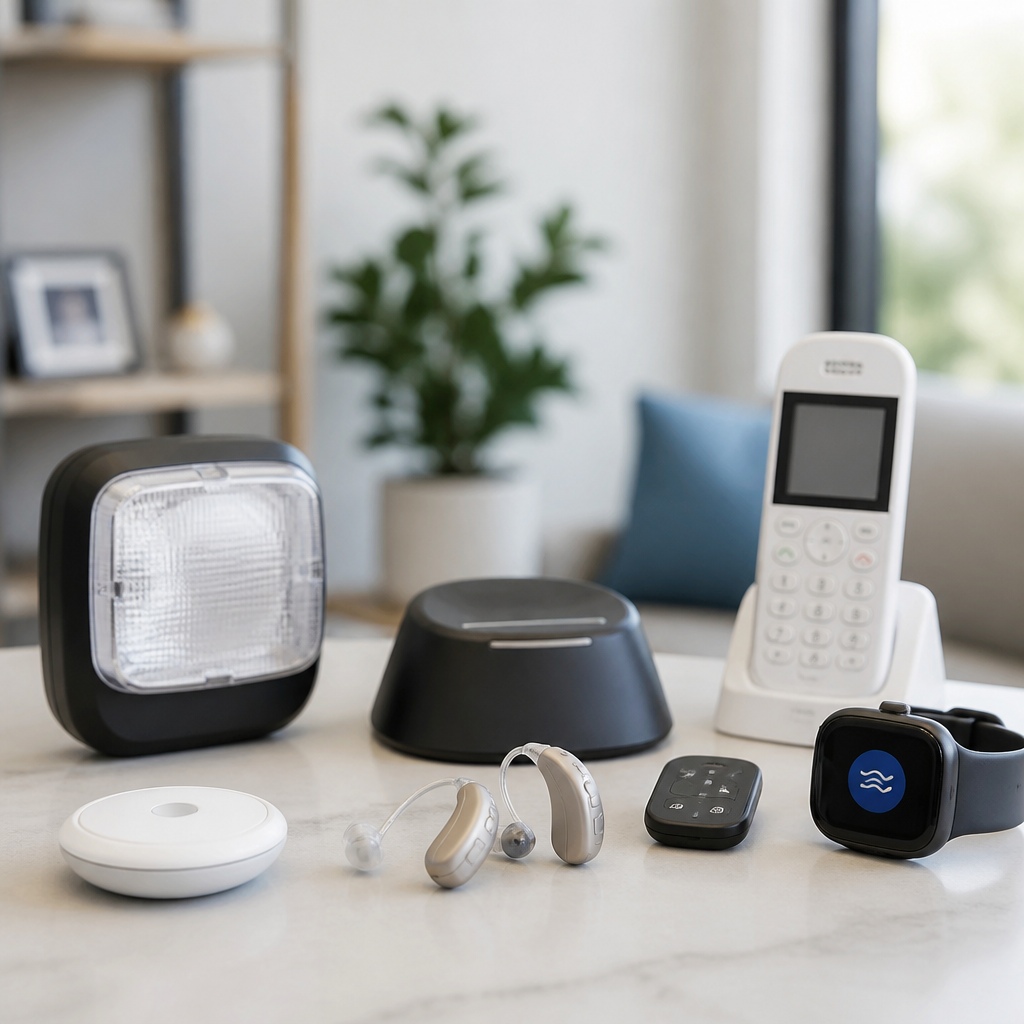
AI is also expanding visual and environmental awareness. Camera-based systems can detect when someone is speaking nearby, identify a doorbell or fire alarm, and send vibration or screen alerts through wearables, phones, or home hubs. Products such as smart displays, accessibility apps, and integrated operating system alerts increasingly convert sound events into visual notifications. In customer support, AI chatbots can offer text-first service that avoids inaccessible phone trees. In media, caption generation tools accelerate turnaround for newsrooms, educators, and creators, making it more feasible to caption large content libraries. These improvements are meaningful because they address persistent barriers in ordinary settings rather than special, isolated programs.
The Next Wave: Multimodal Communication Tools
The future will be defined less by single features and more by multimodal systems that let users move fluidly between text, sign, speech, and visual context. A strong example is the emerging meeting stack: live captions on screen, transcript search after the meeting, AI summaries, task extraction, translation, and visual speaker tracking. For Deaf professionals, that combination can improve participation before, during, and after discussion. In education, an AI tutor that explains a lesson in simplified text, highlights key terms, links to visual examples, and preserves a searchable transcript can support comprehension more effectively than captions alone.
Another promising direction is context-aware communication. A healthcare app might combine medical speech recognition, plain-language text rewriting, image support, and secure messaging so a Deaf patient can review instructions accurately. A public transit tool could pair platform announcements with instant text alerts and visual route changes. Retail kiosks may evolve into systems that detect communication preference, switch to text chat, and print or send the conversation to a phone. These are not speculative fantasies. The underlying components already exist; the challenge is integration, accuracy, and inclusive deployment. The products that succeed will be the ones that reduce cognitive load rather than adding one more layer of troubleshooting.
Sign Language Recognition and Translation: Promise With Limits
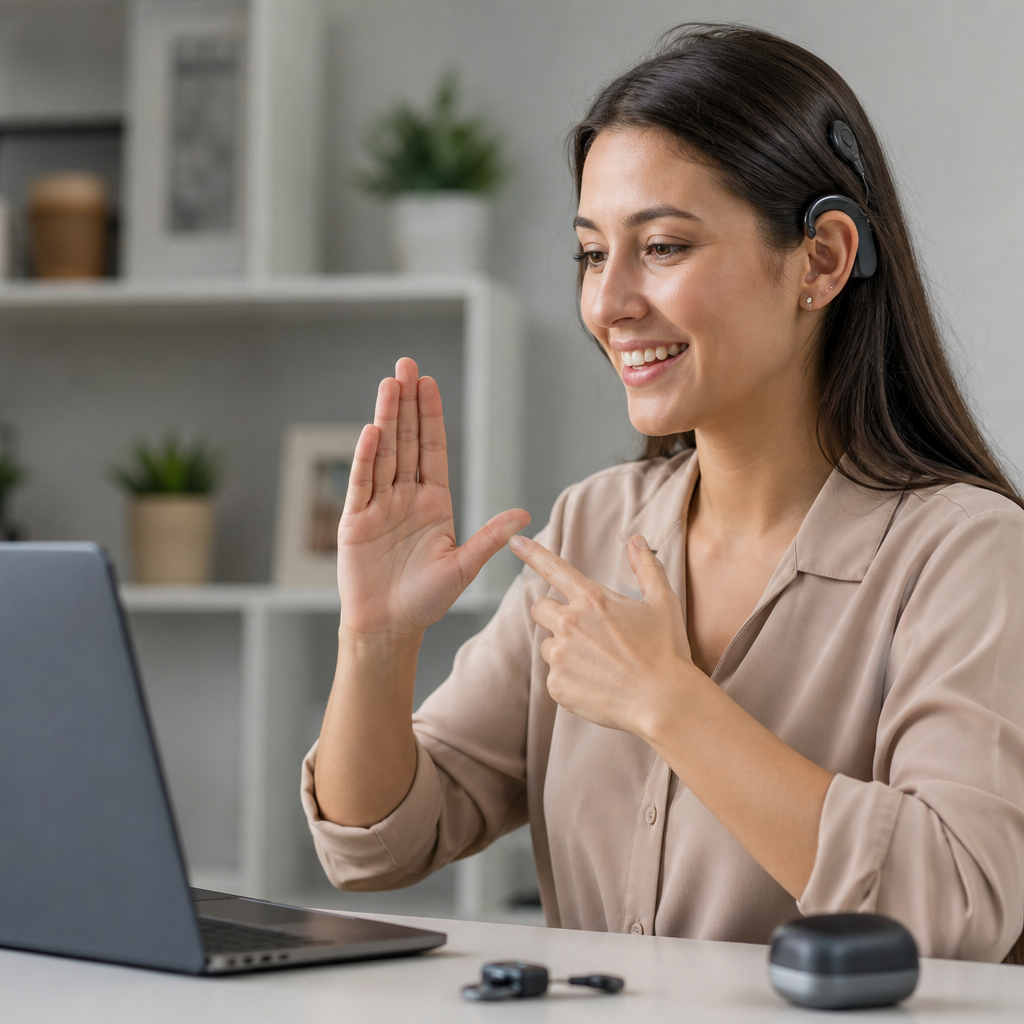
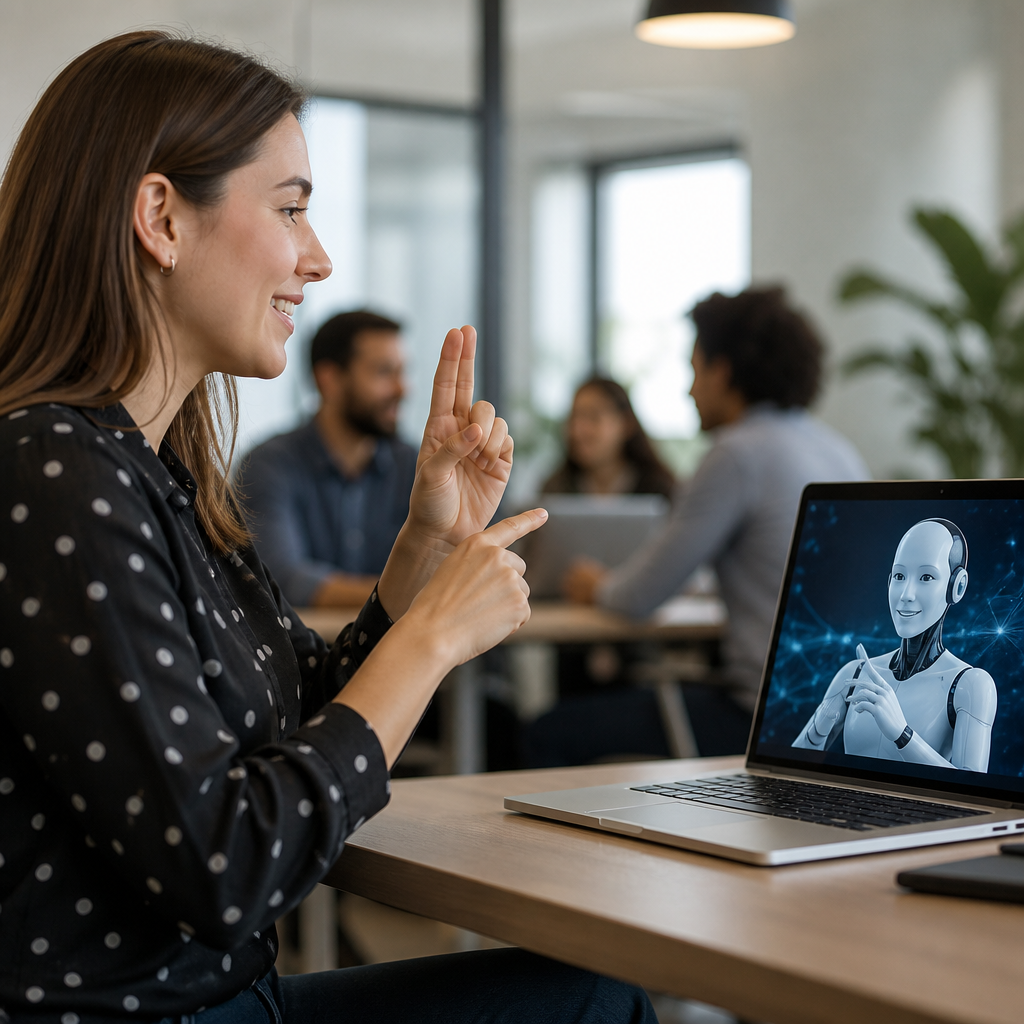
No topic attracts more attention than AI sign language recognition and translation, yet it is also where hype most often outruns reality. Sign languages are full natural languages with their own grammar, discourse structure, regional variation, and cultural context. They are not simply manual versions of spoken language. Accurate recognition requires more than tracking hand shapes. Systems must interpret movement, orientation, facial expression, mouthing, body shift, timing, and three-dimensional signing space. Translation then adds another layer of difficulty because the output must preserve meaning across languages with different structures. That is why many demos perform well in constrained environments but fail in everyday conversation.
Computer vision has improved rapidly through transformer architectures, pose estimation, and higher-quality video datasets, and researchers continue to make progress on fingerspelling recognition, isolated sign detection, and domain-specific corpora. Yet production-grade sign translation remains limited, especially for open-ended dialogue. The most responsible use today is targeted support in narrow tasks: educational vocabulary tools, sign search dictionaries, caption alignment for signed video, or interfaces that help hearing users learn basic communication. The future likely includes better avatar signing, improved dataset governance, and stronger signer-in-the-loop validation. But any serious roadmap must state clearly that human interpreters remain essential in legal, medical, educational, and nuanced interpersonal contexts.
Captioning, Transcription, and Summaries: What Good Looks Like
Many organizations assume captions are accessible if the feature exists. In practice, quality depends on operational details. Good live captioning needs low latency, high contrast, accurate punctuation, speaker labels, support for specialized vocabulary, and easy resizing across devices. Good transcripts need timestamps, editability, export formats, searchable text, and retention policies that respect privacy. Good summaries must reflect what was actually said rather than flattening nuance or omitting Deaf participants because the system failed to attribute their contributions. I have seen teams trust autogenerated notes that quietly dropped side discussions and misidentified action items, creating exclusion after the meeting ended.
The table below shows where common AI accessibility tools help most and where teams still need human oversight.
| AI tool | Best use case | Main benefit for Deaf users | Primary limitation |
|---|---|---|---|
| Live automatic captions | Meetings, classes, webinars | Real-time access to spoken content | Accuracy drops with noise, overlap, accents |
| Post-event transcription | Training, compliance, study review | Searchable record and replay support | Requires editing for technical terms and names |
| AI meeting summaries | Project follow-up | Faster review of decisions and tasks | Can omit nuance or misattribute speakers |
| Sound event alerts | Home, office, public settings | Awareness of alarms, knocks, announcements | False positives and device integration gaps |
| Sign language avatars | Fixed informational content | Potential signed access at scale | Naturalness and linguistic accuracy vary widely |
For organizations, the lesson is simple: do not buy a tool based on a demo clip. Test it in your environment. Measure word error rate for your vocabulary, review latency under poor audio conditions, and ask Deaf employees or customers whether the output is actually usable. Standards such as WCAG help frame digital accessibility, but communication access also depends on service design, procurement requirements, and support workflows. If a platform offers captions but does not let users pin them, save them, correct them, or use them on mobile, the access story is incomplete.
AI, Hearing Technology, and Personalized Access
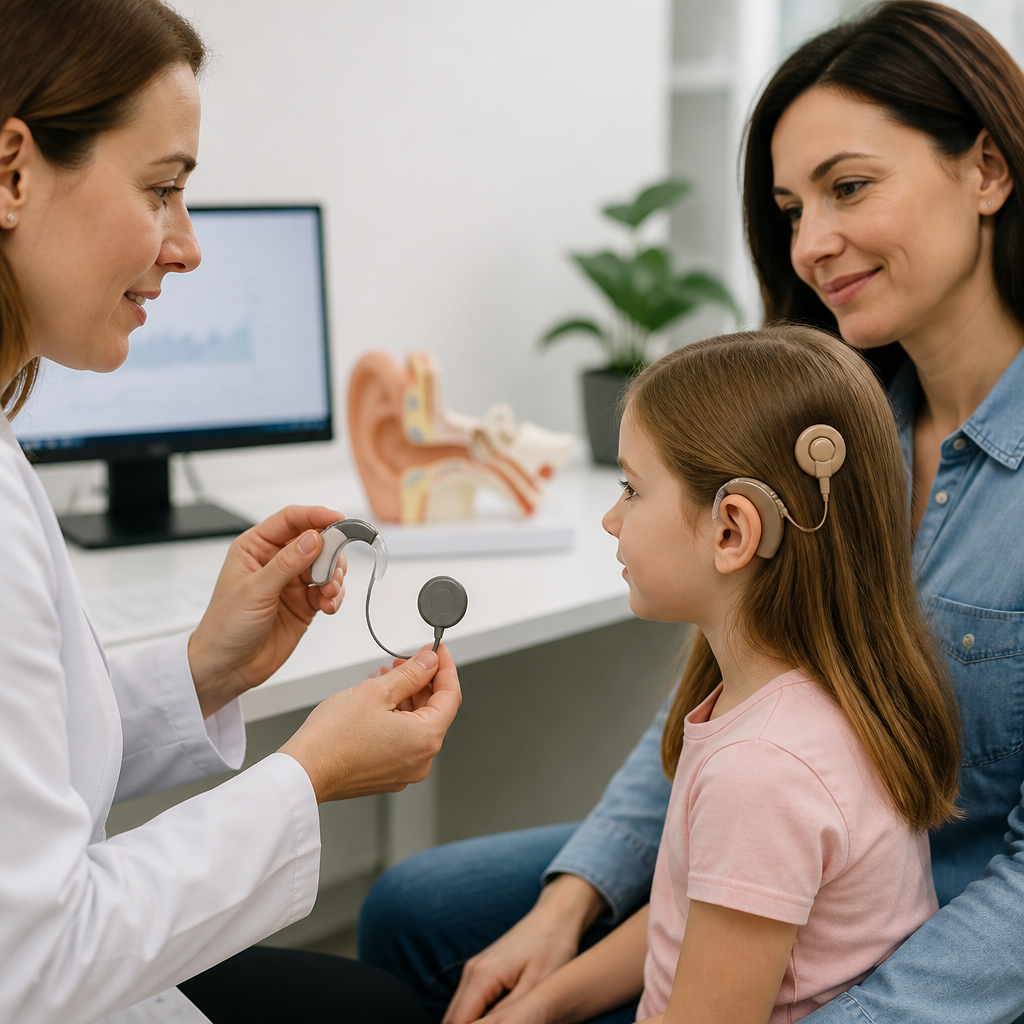
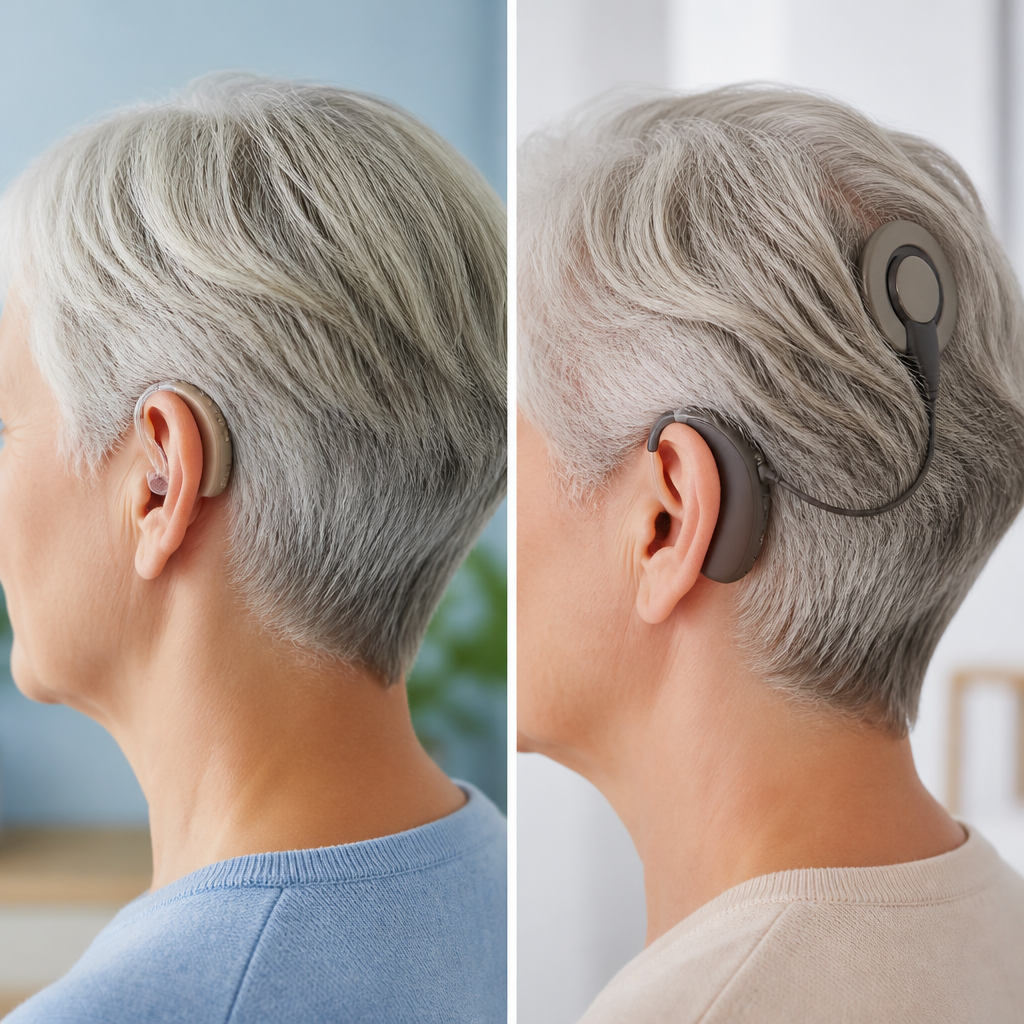
AI is also changing hearing technology, including hearing aids, cochlear implant ecosystems, and assistive listening systems. Modern devices increasingly use machine learning for scene classification, noise suppression, beamforming, and speech enhancement. For some hard of hearing users, that means better performance in restaurants, cars, classrooms, and outdoor settings that were previously exhausting. Smartphone-based remote microphones, Bluetooth LE Audio, and Auracast broadcasting can further improve access by sending cleaner audio directly to compatible devices. The future here is personalization: systems that learn listening preferences across environments instead of applying one generic noise-reduction profile.
Still, deaf inclusion cannot be reduced to better hearing. Many Deaf people do not use hearing devices, and many who do still depend on text, sign, visual cues, or interpreters depending on context. Product teams often make the mistake of treating AI audio enhancement as a complete accessibility solution. It is not. The strongest approach combines channels. For example, a lecture hall may support Auracast audio, CART captioning, visual slides, and transcript access afterward. In telehealth, improved speech processing should be paired with secure live captions and text chat. Personalized access works because it gives users control over modality, not because it assumes one technology can solve every communication need.
Inclusion Risks: Bias, Privacy, and False Confidence
AI can widen access, but it can also create new exclusions that are harder to detect because they look automated and official. Bias appears when speech models perform worse on accented speakers, children, older adults, or field-specific language. Vision models may underperform with varied signing styles, skin tones, camera angles, or low-light conditions. Summarization systems can erase context by compressing discussion into generic bullet points. These are not edge cases. In disability access, the edge case is often the real use case. A noisy clinic, a masked speaker, a courtroom, or a multilingual family interaction is exactly where communication support matters most.
Privacy is the second major risk. Accessibility tools often process highly sensitive data: medical conversations, education records, workplace meetings, and private household activity. Teams should ask where audio and video are stored, whether data is used for model training, how long transcripts are retained, who can edit records, and whether users can opt out. False confidence is the third risk. A company may assume AI captions eliminate the need for interpreters, or a school may think automated notes are enough for equal access. In my experience, the most expensive accessibility failures happen when organizations mistake partial assistance for compliance or inclusion.
What Organizations Should Build Next
The best future for AI and deaf inclusion will come from product strategy, not isolated features. Organizations should start by mapping high-impact communication moments: onboarding, classrooms, support calls, emergency alerts, clinical visits, video content, public announcements, and team meetings. Then they should define access pathways for each one, including captions, sign language support, transcripts, visual notifications, text alternatives, and human backup. Procurement should require measurable performance, not vague accessibility statements. User research must include Deaf participants from the beginning, with paid testing, not after launch as a damage-control step.
Several practical priorities stand out. First, improve interoperability so captions, transcripts, and alerts work across devices and platforms. Second, build customization for font size, placement, vocabulary, notification intensity, and language preference. Third, support human override: easy escalation to an interpreter, live captioner, or text chat agent when automation fails. Fourth, document limitations plainly in product interfaces. Fifth, include Deaf professionals in governance, dataset review, and policy decisions. The companies that lead this area will not be the ones with the flashiest demo. They will be the ones that treat accessibility as a core quality metric and measure success by whether Deaf users can complete important tasks independently and accurately.
What the Future Holds for AI and Deaf Inclusion
The future of AI and deaf inclusion is neither fully solved nor purely experimental. It is a fast-moving practical frontier. Expect major gains in live caption quality, multilingual text support, environmental sound awareness, personalized hearing assistance, and multimodal interfaces that combine video, text, and context. Expect slower progress in open-domain sign language translation, where linguistic complexity and dataset quality still limit reliability. Expect regulators, schools, employers, hospitals, and media companies to face stronger pressure to verify accessibility outcomes rather than accept feature checklists. Most of all, expect Deaf users to keep shaping the market by demanding tools that work in real conditions, not controlled demos.
The central takeaway is clear. AI can expand deaf accessibility when it offers choice, accuracy, and accountability across the full communication journey. It should help people understand, respond, review, and participate, not merely generate automated text. If you are building, buying, or evaluating accessibility technology, start with the highest-stakes moments, test with Deaf users, and insist on measurable performance. That is how better tools become genuine inclusion.
Frequently Asked Questions
1. How can AI improve deaf inclusion in everyday life?
AI can improve deaf inclusion by reducing the everyday barriers that often make communication, access, and participation harder than they should be. In practical settings, that includes real-time captioning for meetings, classes, videos, and public events; speech-to-text tools for one-on-one conversations; sign language recognition research; visual alert systems for alarms and announcements; and smarter translation tools that help convert spoken or written language into more accessible formats. When these systems are designed well, they allow Deaf and hard of hearing people to participate more independently in workplaces, schools, healthcare appointments, transportation systems, customer service interactions, and digital platforms.
One of the most immediate benefits is speed and convenience. Instead of waiting for transcripts, requesting repeated clarification, or relying on ad hoc accommodations, users can access information as it happens. AI-powered captioning, for example, can make virtual meetings more inclusive, while mobile apps can support spontaneous conversations in stores, offices, and public spaces. In education, AI tools can help students follow lectures, group discussions, and multimedia content more consistently. In healthcare, they can support better communication between patients and providers, especially when fast understanding matters.
That said, the real value of AI is not simply automation. It is the ability to build accessibility into the default experience rather than treating it as an afterthought. Deaf inclusion improves most when AI is paired with intentional design, strong usability standards, and direct input from Deaf communities. In other words, the future is not just about more tools. It is about better systems that recognize access as essential from the beginning.
2. Will AI replace human interpreters, captioners, or other accessibility professionals?
In most cases, no. AI is far more likely to support accessibility professionals than to fully replace them. Human interpreters, CART captioners, accessibility coordinators, and Deaf communication specialists provide judgment, cultural understanding, nuance, and accountability that current AI systems do not reliably match. A sign language interpreter is not just converting words. They are interpreting meaning, tone, pace, intent, and context in real time. The same is true for professional captioners, who can handle overlapping speakers, technical vocabulary, dialects, and high-stakes situations with a level of accuracy and adaptability that automated systems still struggle to reach consistently.
AI does have an important role to play. It can expand access where human support is not immediately available, reduce costs for lower-risk settings, speed up transcript creation, and make routine communication more accessible on demand. For example, auto-captioning may be perfectly useful for internal check-ins, casual video content, or preliminary note-taking. It can also help professionals work more efficiently by automating repetitive tasks and improving preparation workflows.
However, high-stakes environments such as legal proceedings, medical consultations, formal education, emergency communication, and public policy settings still require a human level of reliability and ethical responsibility. Errors in those settings are not minor inconveniences; they can affect safety, rights, outcomes, and trust. The most realistic future is a hybrid one, where AI handles speed and scale while human experts provide quality control, cultural competence, and communication accuracy. That approach tends to deliver both broader access and better protection for users.
3. What are the biggest risks of using AI for deaf inclusion?
The biggest risks are inaccuracy, bias, overconfidence, privacy concerns, and poor implementation. AI systems often appear polished and helpful even when they are making important mistakes. In deaf inclusion, that can be especially harmful because users may be asked to rely on captions, transcripts, alerts, or translations in moments that matter. If a speech recognition system mishears names, medical information, instructions, or emergency announcements, the consequences can be serious. If a platform assumes that one accessibility feature works for everyone, it can exclude the very people it claims to support.
Bias is another major concern. Many AI systems are trained on incomplete or unrepresentative data, which can lead to weaker performance for people with different accents, speaking styles, regional language use, or communication patterns. The challenge becomes even greater with sign languages, which are not universal and have their own grammar, syntax, cultural context, and regional variation. Treating sign language as a simple gesture set instead of a full language can produce technology that looks impressive in demos but fails in real-world use.
Privacy also matters. Accessibility tools may process sensitive audio, video, or personal conversations in workplaces, classrooms, hospitals, and homes. If companies collect that data without clear consent, transparency, and protection, users may face significant risks. There is also the policy risk of organizations adopting AI as a cost-cutting substitute for proper accommodations. When businesses use automated tools to check a compliance box rather than to genuinely improve access, Deaf users may end up with less support, not more. The safest path forward is rigorous testing, human oversight, transparent standards, and meaningful involvement from Deaf users at every stage of design and deployment.
4. How can companies, schools, and public institutions use AI more responsibly for Deaf and hard of hearing communities?
Responsible use starts with a simple principle: AI should strengthen accessibility, not redefine it downward. Organizations should avoid assuming that an automated tool is “good enough” just because it is fast or inexpensive. Instead, they should evaluate whether it actually improves communication for the people it is meant to serve. That means testing tools in real conditions, measuring accuracy, identifying failure points, and comparing automated outputs against the needs of Deaf and hard of hearing users in different settings.
The most effective organizations involve Deaf stakeholders from the beginning. That includes Deaf employees, students, customers, patients, advocates, and accessibility experts. Their feedback helps identify gaps that technical teams may miss, such as caption lag, poor speaker labeling, unreadable formatting, inaccessible interfaces, or features that ignore sign language users entirely. Responsible organizations also offer choices rather than one-size-fits-all solutions. Some users may prefer captions, others may need interpreters, transcripts, visual notifications, assistive listening support, or multiple options used together.
Clear policies are equally important. Institutions should define when AI tools are appropriate, when human support is required, how errors will be handled, and what privacy protections are in place. Staff should be trained not only on how to use the technology, but also on its limitations. In schools and healthcare systems especially, there should be a clear escalation path when automated access fails. Responsible implementation is not about deploying the newest tool. It is about building trust, maintaining accountability, and making sure accessibility remains a human-centered commitment rather than a purely technical feature.
5. What does the future of AI and deaf inclusion most likely look like?
The future will likely be more integrated, more personalized, and more multimodal. Rather than relying on a single accessibility tool, people will increasingly use systems that combine live captioning, speaker identification, contextual translation, visual alerts, wearable notifications, and better interface design across devices and environments. AI may help meetings automatically generate accurate captions and summaries, public spaces provide clearer visual communication, classrooms adapt content for different communication needs, and healthcare settings offer smoother accessible interactions from check-in through follow-up care.
At the same time, the future is unlikely to be defined by technology alone. The most meaningful progress will come from combining AI innovation with inclusive policy, workplace standards, education reform, accessible procurement practices, and direct leadership from Deaf communities. Advances in sign language technology may continue, but success will depend on whether those systems respect linguistic complexity and real-world diversity. Better AI could make access more immediate and more widespread, but only if developers and institutions avoid the mistake of treating convenience as the same thing as inclusion.
In practical terms, the future holds both promise and responsibility. AI can make deaf inclusion more proactive instead of reactive, embedding accessibility into how services are delivered from the start. But the best outcomes will come from a balanced model: powerful tools, strong safeguards, human expertise, and a clear understanding that Deaf and hard of hearing people are not edge cases to be accommodated later. They are part of the public from the beginning, and the future of AI will be strongest when it reflects that reality in every product, policy, and experience.