
Artificial intelligence is reshaping accessibility for deaf and hard of hearing users in practical, measurable ways. In this context, AI tools are software or devices that use machine learning, speech recognition, natural language processing, computer vision, or predictive models to reduce communication barriers. The category includes live captioning apps, automated transcription platforms, sign language recognition systems, hearing support devices, translation tools, and meeting assistants. For users who navigate classrooms, workplaces, healthcare visits, customer service calls, and public spaces where spoken information still dominates, these tools can turn inaccessible moments into usable ones.
As someone who has evaluated accessibility software across meetings, video workflows, education platforms, and mobile apps, I have seen one pattern clearly: the best AI tools for deaf and hard of hearing users do not replace human accommodation, but they dramatically improve speed, reach, and independence. A strong live captioning app can make an impromptu conversation understandable. An accurate transcription service can convert a dense lecture into searchable text. A meeting assistant can preserve decisions, speaker labels, and action items without requiring a user to split attention between lip reading and note taking. Those gains matter because accessibility is often lost in ordinary moments, not only in formal settings.
This hub covers AI and the future of accessibility comprehensively by focusing on the tools that are already useful, the categories that are advancing quickly, and the limits users should understand before relying on them. Not every product performs equally. Accuracy depends on microphone quality, background noise, accents, vocabulary, speaker overlap, and whether the model has been trained for the situation. Privacy also matters, especially in medical, legal, workplace, and school settings where speech data may be stored or processed in the cloud. Understanding which tools solve which problems is the difference between buying software and building access.
For searchers asking the most basic question first, here is the direct answer: the top AI tools for deaf and hard of hearing users today are live captioning platforms such as Google Live Transcribe and Ava, transcription services such as Otter and Trint, meeting tools such as Microsoft Teams and Zoom with AI captions, media captioning systems such as YouTube automatic captions and Descript, hearing support products that use AI sound processing, and emerging sign language technologies that use computer vision. Each serves a different use case, and the best choice depends on whether the priority is conversation access, class notes, video content, workplace collaboration, or environmental awareness.
What AI accessibility tools actually do for deaf and hard of hearing users
AI accessibility tools help convert sound into text, organize spoken content, identify speakers, summarize conversations, enhance sound, and in some cases interpret gestures or visual context. The most established function is automatic speech recognition, often called ASR. ASR powers real-time captions in phones, video calls, lecture halls, and smart glasses. Modern ASR models are far better than earlier dictation engines because they process context, punctuation, domain terms, and speaker turns more effectively. In practice, that means a user can follow a team meeting, a lecture, or a family conversation with fewer missed phrases.
Another major function is post-event transcription. Unlike live captions, transcription platforms focus on creating a reviewable record. They usually offer timestamps, speaker identification, search, export, keyword extraction, and summaries. For deaf students and professionals, this matters because access is not only about understanding the moment. It is also about reviewing details later without depending on incomplete notes. In my testing, searchable transcripts consistently outperform manual note taking when conversations move quickly or involve technical vocabulary.
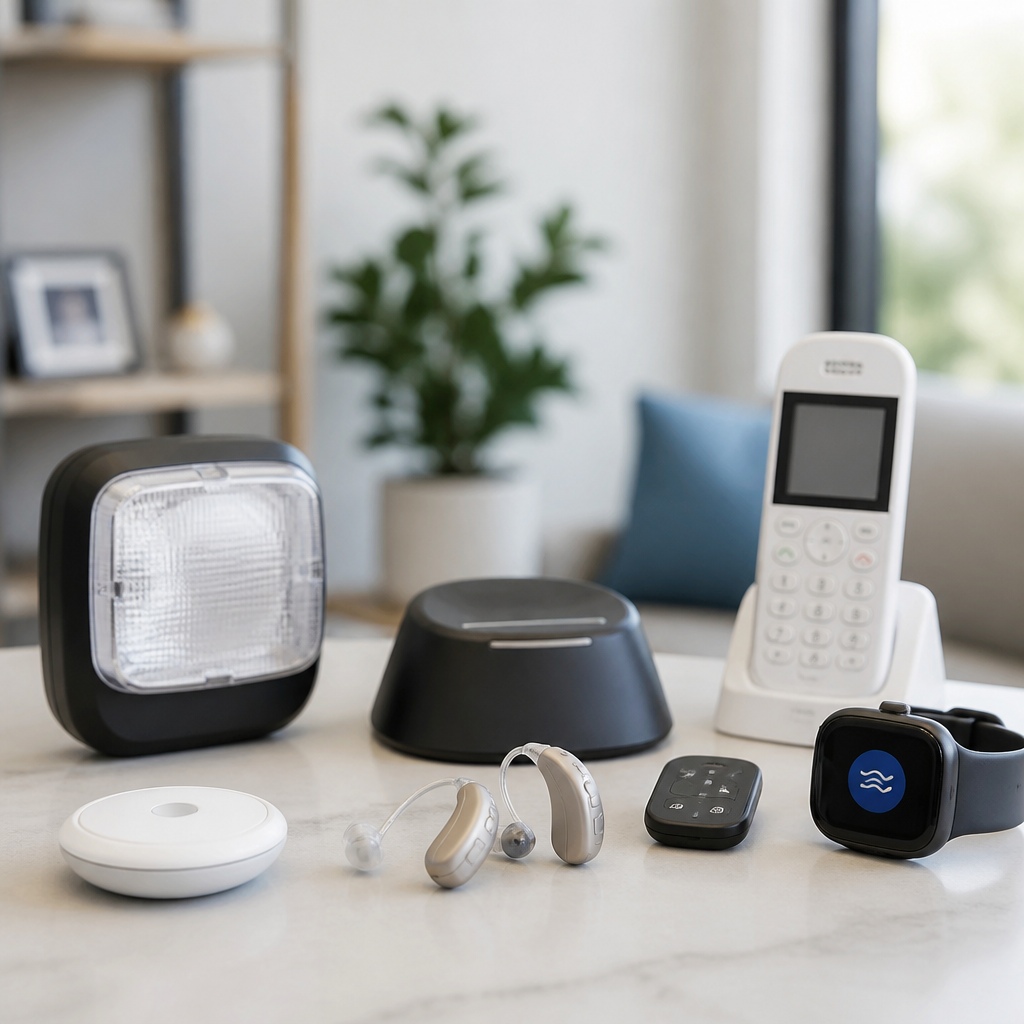
AI also supports hearing technology. Some modern hearing aids and assistive listening systems use machine learning to classify sound environments, reduce background noise, and emphasize speech. This does not make hearing aids universal solutions, because hearing loss types vary widely, but it can improve clarity in restaurants, traffic, or group settings. Environmental sound recognition is another useful branch. Certain apps can identify alarms, knocks, sirens, or crying babies and push visual or vibration alerts. These are especially valuable in homes, hotels, and workplaces where missing a critical sound creates a safety issue.
Best live captioning and conversation apps
For everyday communication, live captioning apps are usually the first recommendation because they solve the most immediate problem: understanding spoken language as it happens. Google Live Transcribe remains one of the strongest free options on Android. It supports many languages, displays large rolling captions, and works well in one-on-one conversations when the phone microphone is positioned correctly. Google also offers Sound Notifications, which can alert users to specific sounds such as doorbells, appliances, or alarms. On Pixel devices, Recorder adds highly usable on-device transcription and search, which is valuable for privacy and speed.
Ava is built more directly around deaf and hard of hearing communication needs. It provides live captions for in-person conversations and meetings, supports multiple participants, and can integrate with workplace workflows. In professional settings, Ava’s strength is not just caption generation but shared conversational access. Several people can join, and the app attempts to organize speech in a way that is easier to follow than a single unstructured text stream. Accuracy improves with external microphones, which is a practical point many reviews miss. No captioning app performs at its best when a phone is far from the speaker in a noisy room.
Built-in ecosystem tools also matter. Apple Live Captions, available on supported devices, can caption calls, media, and conversations. Microsoft offers live captions in Windows and AI features in Teams. Zoom and Google Meet continue improving automatic captions, translated captions, and meeting summaries. These are not niche accessibility add-ons anymore; they are becoming part of mainstream communication infrastructure. That shift matters because when captioning is embedded into the platform everyone uses, access becomes easier to request and less dependent on separate setup.
Top transcription, meeting, and study tools
Transcription and meeting tools are essential when the goal is retention, review, and documentation rather than only live access. Otter is widely used for lectures, interviews, and meetings because it combines transcription with speaker labels, highlights, summaries, and collaborative notes. For students, that means a class discussion can be revisited by keyword. For teams, it means decisions and action items are easier to verify. Trint is stronger for editorial workflows because it offers robust transcript editing, search, and publishing support. Descript is especially useful for creators because it blends transcription with audio and video editing in one interface.
Professional users should also consider the native AI features inside meeting platforms. Microsoft Teams can generate live captions, transcripts, and recaps, while Zoom provides captions, transcripts, smart summaries, and searchable recordings depending on the plan. Google Meet offers automatic captions and translated captions in supported configurations. In real organizations, integrated tools often win over standalone tools because they reduce friction. If a company already runs on Teams, using built-in transcripts is easier than introducing another system that requires separate training, billing, and permissions.
| Tool | Best use case | Key strengths | Main limitation |
|---|---|---|---|
| Google Live Transcribe | In-person conversations | Free, fast, simple interface | Less effective in noisy group settings |
| Ava | Group communication and work | Multi-speaker captions, accessibility focus | Best performance may require paid features |
| Otter | Lectures and meetings | Searchable transcripts, summaries, notes | Accuracy varies with overlapping speech |
| Descript | Media creation | Edit audio and video through transcript | Less ideal for simple live conversation access |
| Zoom or Teams captions | Remote collaboration | Built into common workplace platforms | Feature depth depends on account level |
Video, media, and content accessibility tools
AI tools are also changing access to recorded media. YouTube automatic captions are imperfect, but they have significantly improved and often provide a usable first layer of access when no human-made captions exist. For creators and educators, that is not a reason to stop there. Auto captions should be reviewed for names, technical terms, punctuation, and speaker changes. Tools like Descript, Kapwing, Rev’s automated workflows, and Adobe Premiere Pro speech-to-text make this editing process faster, which helps more organizations publish accessible media consistently.
For deaf and hard of hearing users, better media tools mean more than entertainment access. They affect training videos, onboarding modules, public information, telehealth tutorials, university lectures, and social content where key context is often spoken rather than shown onscreen. I have repeatedly seen the same accessibility failure in organizations: they caption the main webinar but ignore the short internal videos that contain process instructions or policy changes. AI captioning closes that gap because it reduces the labor needed to create first-pass captions at scale.
Translation adds another layer. Some platforms now offer translated captions or subtitle generation across languages, which can help users who communicate in a signed language, written English as a second language, or multilingual households and workplaces. Translation quality is still uneven, especially with idioms and specialized vocabulary, but it is improving rapidly. When reviewed by a human, AI translation can expand access much faster than manual workflows alone.
Emerging AI for sign language, wearables, and assistive listening
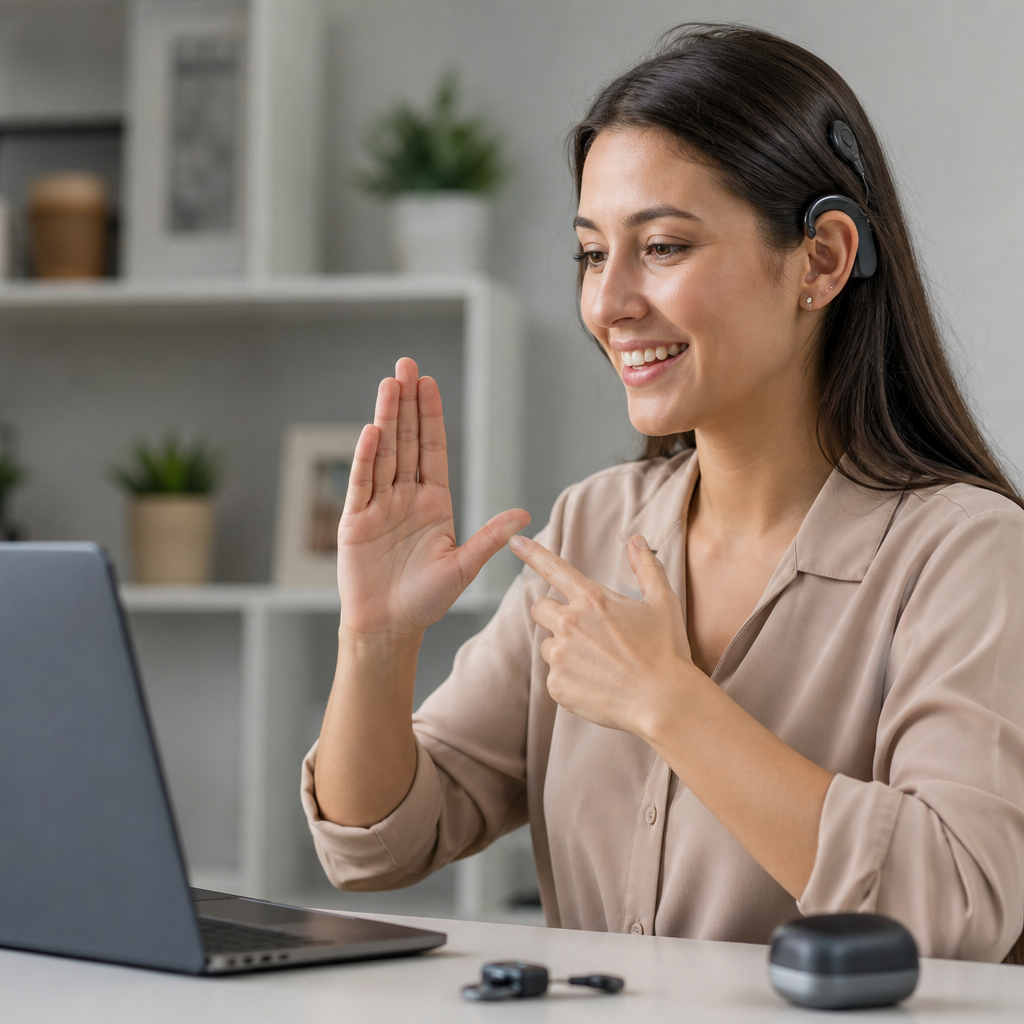
One of the most discussed frontier areas is sign language technology. Researchers and startups are developing computer vision systems that recognize signs through cameras and convert them into text or speech, as well as avatars that render signed output. This field is promising but not mature enough to be treated as a universal replacement for interpreters or direct communication. Sign languages have regional variation, grammar distinct from spoken languages, and heavy dependence on facial expression, space, and context. A demo may work with a limited vocabulary set yet fail in natural conversation. Users should evaluate claims carefully and look for evidence from real deaf signers, not only technical demos.
Wearables are another growing category. Smart glasses that display captions in the user’s line of sight can reduce the need to look down at a phone during conversation. Devices from companies working on augmented reality captions have shown real potential in classrooms, conferences, and guided tours. The practical question is comfort and reliability. A wearable is only useful if text appears with low latency, remains readable in different lighting, and lasts through a full event without creating social friction.
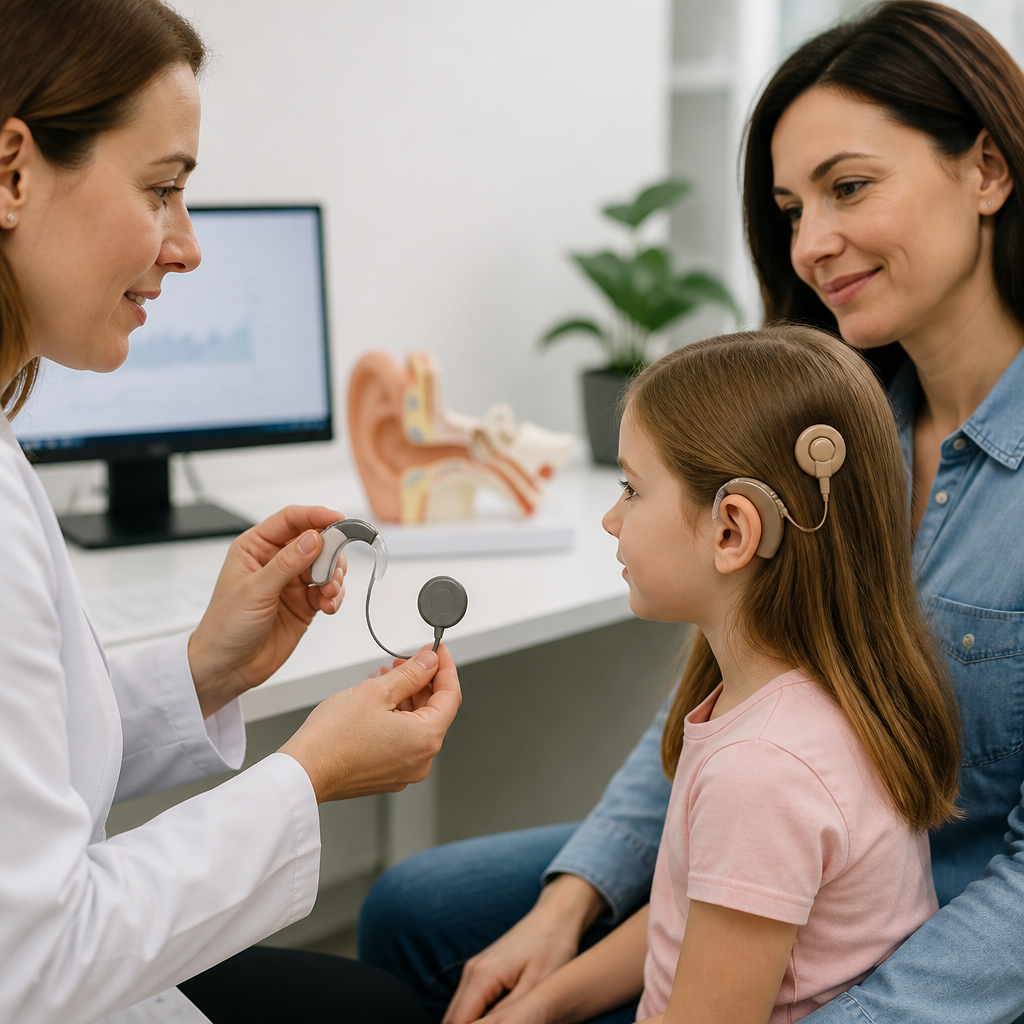
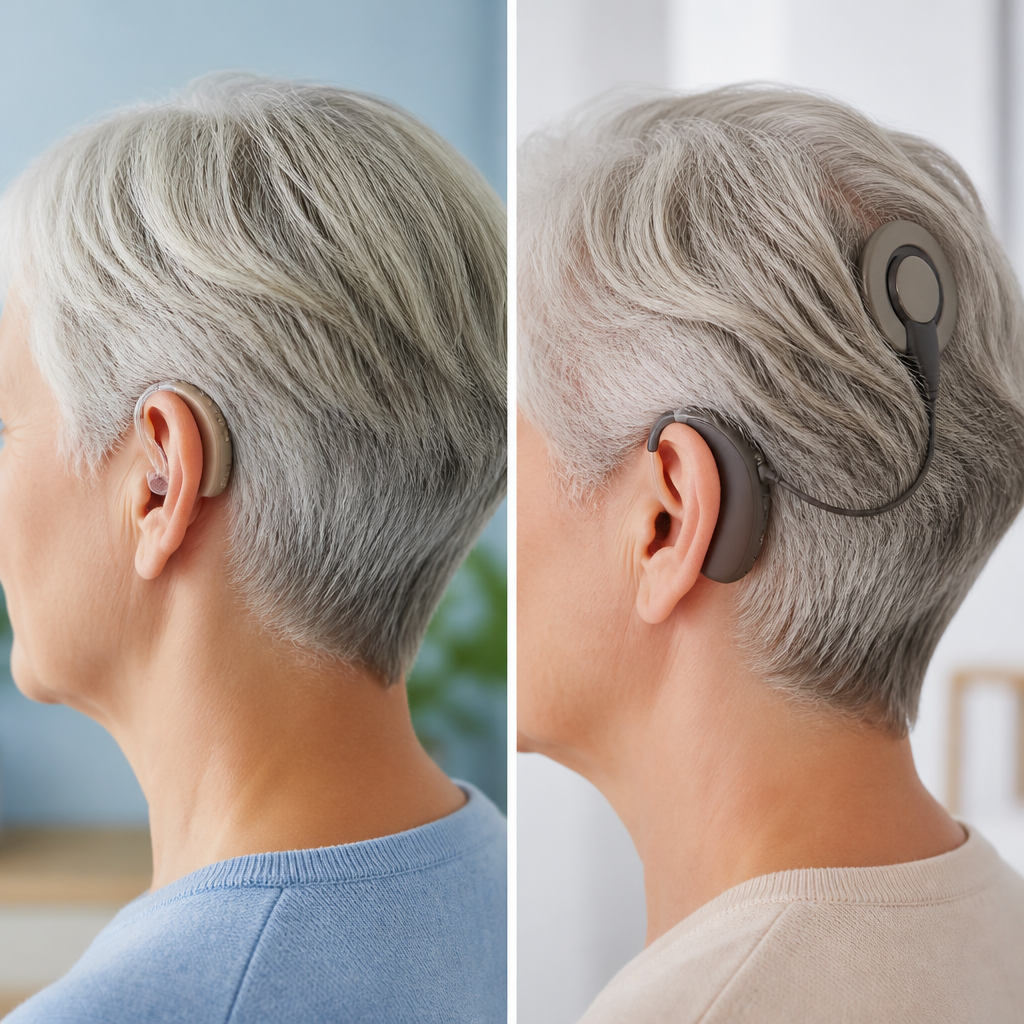
Assistive listening is advancing through AI-enhanced processing as well. Hearing aids from major manufacturers such as Phonak, Oticon, ReSound, and Starkey increasingly use machine learning to classify sound scenes and prioritize speech. Cochlear implant ecosystems are also integrating smarter streaming and personalization features. These tools are not interchangeable with captioning software, but together they create a layered accessibility strategy. Many users need both optimized audio and dependable text access, especially in places with reverberation, masks, distance, or multiple simultaneous speakers.
How to choose the right AI tool and what the future looks like
The best AI tool depends on environment, communication style, and risk level. Start with the question, what problem needs solving? For in-person speech access, use live captions. For lectures and documentation, use transcription. For remote work, prioritize built-in meeting captions and transcripts. For media, choose tools that support caption editing. For safety, add environmental sound alerts. Then test in the real setting, not a quiet demo. A tool that looks excellent in a product video may break down in a cafeteria, clinic, factory floor, or hybrid meeting room.
Accuracy should be checked against five variables: microphone placement, background noise, speaker overlap, accent diversity, and specialized vocabulary. Privacy should be checked against data storage, retention controls, consent policies, and whether processing occurs on device or in the cloud. Accessibility should also be measured beyond captions alone. Does the interface support large text? Can transcripts be exported? Are speaker labels clear? Is there vibration support? Can the tool integrate with interpreters, note takers, or existing accommodations? The strongest products fit into daily routines instead of asking users to redesign them.
The future of accessibility will be multimodal. That means text, audio, video, gesture, translation, and context awareness working together instead of as separate features. We are moving toward systems that caption conversations, summarize them, translate them, identify speakers, detect important sounds, and display information across phones, laptops, hearing devices, and glasses. That future is not fully here yet, but it is close enough that users, schools, employers, and developers should act now. Evaluate the top AI tools for deaf and hard of hearing users, build a toolkit around real needs, and make accessibility part of every communication workflow.
Frequently Asked Questions
1. What are the most useful types of AI tools for deaf and hard of hearing users?
The most useful AI tools for deaf and hard of hearing users are the ones that solve everyday communication challenges quickly, accurately, and with as little friction as possible. In practice, that usually includes live captioning apps, automated transcription platforms, AI meeting assistants, sign language recognition tools, hearing support devices, and speech-to-text translation systems. Live captioning tools are especially valuable for in-person conversations, phone calls, video meetings, classroom lectures, and public events because they convert spoken language into readable text in real time. Automated transcription platforms are helpful when users need a full written record of interviews, medical appointments, presentations, webinars, or workplace discussions.
AI meeting assistants have also become increasingly important because they do more than just caption a conversation. Many can identify speakers, summarize key points, highlight action items, and create searchable notes, which improves access before, during, and after a meeting. Sign language recognition systems are another growing category, although their usefulness depends heavily on language support, training quality, and regional sign differences. Some tools attempt to translate signs into text or speech, while others focus on educational or assistive use cases. For users with residual hearing, AI-powered hearing support devices can reduce background noise, enhance speech clarity, and adapt sound settings automatically based on the environment.
The best tool ultimately depends on the user’s communication preferences, hearing profile, environment, and goals. Someone in a corporate setting may prioritize meeting captions and transcripts, while a student may need lecture captioning and note generation. A traveler might benefit most from instant translation and visual alerts, while a person who communicates primarily through sign language may look for tools that integrate visual communication more effectively. The strongest AI accessibility solutions are not one-size-fits-all; they are flexible, reliable, and designed around real-world communication needs.
2. How accurate are AI captions and transcriptions for deaf and hard of hearing users?
AI captions and transcriptions can be highly useful, but their accuracy varies based on several real-world factors. Modern speech recognition systems have improved significantly, especially in quiet environments with clear audio and standard speech patterns. In strong conditions, many tools can produce captions that are fast and readable enough to support conversations, meetings, classes, and media consumption. However, even the best systems can struggle with overlapping speakers, heavy accents, rapid speech, background noise, technical jargon, poor microphones, or unstable internet connections. That means users should think of AI captioning as powerful assistive technology, but not always flawless word-for-word interpretation.
For deaf and hard of hearing users, accuracy matters beyond convenience because a single missed word can change the meaning of a sentence, especially in legal, medical, educational, or workplace settings. This is why many users look for platforms that offer customization features such as personal vocabulary, industry-specific terms, speaker labeling, punctuation control, and saved corrections. Some AI tools learn from repeated usage and improve performance over time, especially when they are exposed to the same names, phrases, and communication patterns. Others combine automated speech recognition with human review for situations where a higher level of precision is required.
It is also important to distinguish between live captions and post-event transcription. Live captions prioritize speed, so they may contain more errors or simplified phrasing. Post-event transcripts can often be refined for higher accuracy because the system has more processing time and, in some cases, editing tools. For best results, users should choose tools with strong language support, use quality microphones whenever possible, reduce background noise, and test platforms in the specific settings where they will be used. In short, AI transcription is often good enough to dramatically improve access, but users should still evaluate whether a given tool meets the accuracy level needed for the situation.
3. Can AI tools replace human interpreters or professional captioners?
In most cases, AI tools should be viewed as a complement to human interpreters and professional captioners rather than a complete replacement. AI offers major benefits in speed, affordability, convenience, and availability. It can provide instant captions on a smartphone, generate transcripts on demand, support spontaneous conversations, and improve access in situations where professional services are not immediately available. That makes AI incredibly valuable for day-to-day communication, quick interactions, remote collaboration, and personal productivity. For many users, this kind of immediate access is a meaningful improvement over having no support at all.
That said, human interpreters and professional captioners still play a critical role in situations that require nuance, cultural understanding, specialized vocabulary, legal reliability, or very high accuracy. Sign language interpretation is not simply word-for-word conversion. It involves context, tone, facial expression, regional language variation, and the ability to adapt communication in real time. Likewise, professional captioners can often handle complex discussions, multiple speakers, technical language, and fast-paced environments with greater consistency than automated systems. In medical, legal, academic, and high-stakes workplace settings, that difference can be essential.
The most realistic and effective approach is often a hybrid one. AI can expand baseline access, reduce cost barriers, and support users in informal or lower-risk settings, while human professionals remain the gold standard for critical communication. As AI continues to improve, it will likely take on a bigger support role, but trust, precision, and human judgment still matter. Users, organizations, and service providers should focus on matching the tool to the context instead of assuming one solution fits every communication need.
4. What features should users look for when choosing an AI accessibility tool?
When choosing an AI accessibility tool, users should start with the features that directly affect usability in everyday life: accuracy, speed, readability, language support, and compatibility across devices. A captioning or transcription tool should display text quickly enough to keep up with natural conversation and clearly format that text so it is easy to follow. Good punctuation, line breaks, speaker identification, and customizable text size can make a major difference in comprehension. If a user participates in multilingual environments, translation support may also be essential, especially if the tool can switch between languages in real time.
Beyond core performance, users should evaluate practical accessibility and personalization features. These may include offline mode, background noise reduction, saved transcripts, searchable conversation history, meeting summaries, keyword highlighting, custom vocabulary, and integration with video conferencing platforms, phones, hearing devices, or note-taking apps. Visual alerts, vibration notifications, and compatibility with assistive hardware can also improve accessibility in public spaces, workplaces, and home settings. For some users, privacy and data security are just as important as functionality, especially if the tool will be used during healthcare visits, business meetings, classroom discussions, or personal conversations.
Ease of use is another critical factor that is often underestimated. A powerful AI system is far less helpful if it takes too long to set up or requires constant correction. The best tools feel intuitive and dependable under normal conditions. Before committing to a platform, users should test it in the exact scenarios that matter most, such as one-on-one conversations, lectures, group meetings, phone calls, or noisy environments. Reading reviews from deaf and hard of hearing users can also provide valuable insight into how well a tool performs beyond marketing claims. A strong accessibility tool should not just look innovative; it should deliver consistent, real-world communication support.
5. Are AI tools improving accessibility enough to make a real difference in work, education, and daily life?
Yes, AI tools are making a real and measurable difference in work, education, and daily life for many deaf and hard of hearing users. Their biggest strength is that they increase access at the exact moment communication happens. Real-time captions can make meetings more understandable, transcripts can make lectures reviewable, and AI summaries can help users revisit key details without depending entirely on memory or handwritten notes. In workplaces, these tools can support participation in team discussions, onboarding sessions, presentations, and client calls. In education, they can improve access to classroom instruction, recorded lessons, group projects, and study materials. In personal life, they can help with appointments, social conversations, media consumption, travel, and everyday errands.
The impact is especially important because accessibility gaps often come from inconsistency rather than complete absence of support. A person may have accommodations in one environment but not in another, or may need access during spontaneous conversations that formal systems do not cover. AI helps fill many of those gaps by making communication support more portable and immediate. Instead of waiting for scheduled services, users can often access captions, transcripts, or speech support on a phone, tablet, laptop, or wearable device. This can increase independence, reduce communication fatigue, and improve confidence across a wide range of settings.
At the same time, AI is not a complete solution to accessibility on its own. Its effectiveness depends on affordability, training, digital literacy, internet access, language coverage, and the quality of the specific tool. Some systems still perform unevenly across accents, dialects, and specialized terminology, and not all platforms are designed with deaf and hard of hearing users at the center. Even so, the broader trend is clear: AI is becoming a practical accessibility layer that can improve communication outcomes in meaningful ways. When used thoughtfully and paired with inclusive policies and human support where needed, these tools can significantly expand participation, understanding, and autonomy.