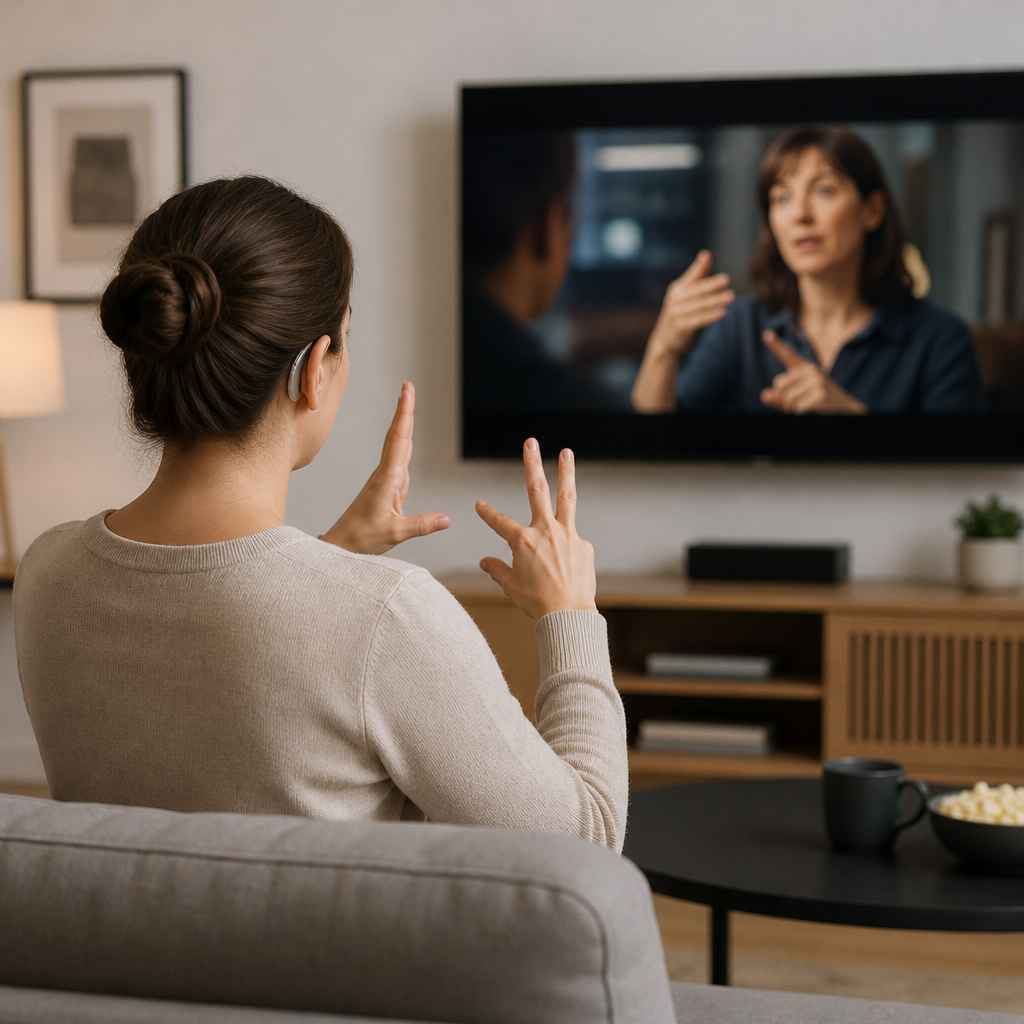

Stereotypes about Deaf people persist because they are continually reinforced by media shortcuts, educational gaps, inaccessible public systems, and long-standing misunderstandings about language, culture, and ability. In this context, Deaf usually refers to people who are culturally connected to Deaf communities and signed languages, while deaf can also describe the audiological condition of hearing loss. Stereotypes are oversimplified beliefs assigned to a group, and misrepresentation happens when those beliefs replace the full reality of lived experience. I have worked on accessibility and content review projects where the same myths surfaced again and again: that Deaf people all lip-read, that signed languages are universal, that deafness is mainly a medical tragedy, or that technology has “solved” communication barriers. These assumptions matter because they shape policy, schooling, hiring, healthcare, journalism, and everyday interactions. They also influence how Deaf children see themselves and how hearing people decide what inclusion should look like. A hub article on misrepresentation and stereotypes must therefore do two jobs at once: explain the roots of harmful ideas and map the practical consequences across public life.
The persistence of these stereotypes is not accidental. Many hearing people have limited sustained contact with Deaf adults, so their views are formed through films, charity campaigns, special education narratives, and occasional viral stories. Those sources often reward emotional simplicity over accuracy. The result is a narrow public script: Deaf people are framed as inspirational, deficient, isolated, or miraculously “fixed,” rather than as ordinary people with varied identities, professions, politics, and communication preferences. Understanding why these patterns endure is essential for anyone working in media, education, human resources, public service, healthcare, or advocacy. It is also essential for families raising Deaf children, because early assumptions can affect language access and developmental outcomes. Research on language deprivation, bilingual education, and disability representation shows that representation is never cosmetic. It influences opportunity. To challenge stereotypes effectively, we need to look beyond individual prejudice and examine the institutions and storytelling habits that keep old myths circulating.
How history shaped modern stereotypes
Many current stereotypes about Deaf people can be traced to older conflicts over language, education, and control. In the nineteenth and twentieth centuries, oralism dominated many schools, especially after the 1880 Milan Conference, where educators endorsed speech-focused methods and marginalized sign language in formal instruction. That decision had long effects. It legitimized the idea that spoken language was superior and that Deaf success depended on becoming as hearing-like as possible. Even today, public discussions still echo that hierarchy when sign language is treated as a backup rather than a complete natural language. In practice, signed languages such as American Sign Language and British Sign Language have their own grammar, syntax, and cultural history. Yet many people still assume they are simplified versions of spoken language or pantomime.
Historical charity narratives also shaped perception. Deaf people were often presented as objects of pity needing rescue, not as a linguistic minority with civil rights claims. That framing survives in fundraising appeals, sentimental news packages, and some medical marketing. It encourages hearing audiences to focus on cure, dependence, or inspiration rather than access, autonomy, and structural barriers. Once a group is repeatedly shown through a single emotional lens, stereotypes become socially convenient. They offer a fast story people feel they already understand. That convenience is exactly why they persist.
Common stereotypes and why they are wrong
Several stereotypes appear so often that they function like default scripts. One is that all Deaf people can lip-read. In reality, lip-reading, or speechreading, is difficult and incomplete; many sounds look identical on the lips, and environmental conditions make comprehension even harder. Another myth is that all Deaf people use the same sign language. Signed languages are not universal. ASL differs from BSL, Auslan, Langue des Signes Française, and many other national or regional signed languages. A third stereotype is that Deaf people are intellectually limited because they may use a signed language or communicate differently in written speech. This confuses language difference with intelligence and ignores barriers in access to early language, schooling, and interpretation.
Another persistent myth is that hearing aids or cochlear implants erase deafness. These technologies can be valuable tools, but outcomes vary by person, age of implantation, auditory environment, support services, and personal preference. They do not eliminate the need for accessible communication, and they do not make signed language unnecessary. I have seen organizations assume assistive technology solved inclusion, then fail to provide interpreters, captions, or visual alerts. The misunderstanding is costly because it shifts responsibility from institutions onto individuals. A related stereotype frames Deaf people as socially withdrawn or rude when they miss auditory cues. In reality, many apparent “miscommunications” are access failures, not character flaws.
Why media representation keeps old myths alive
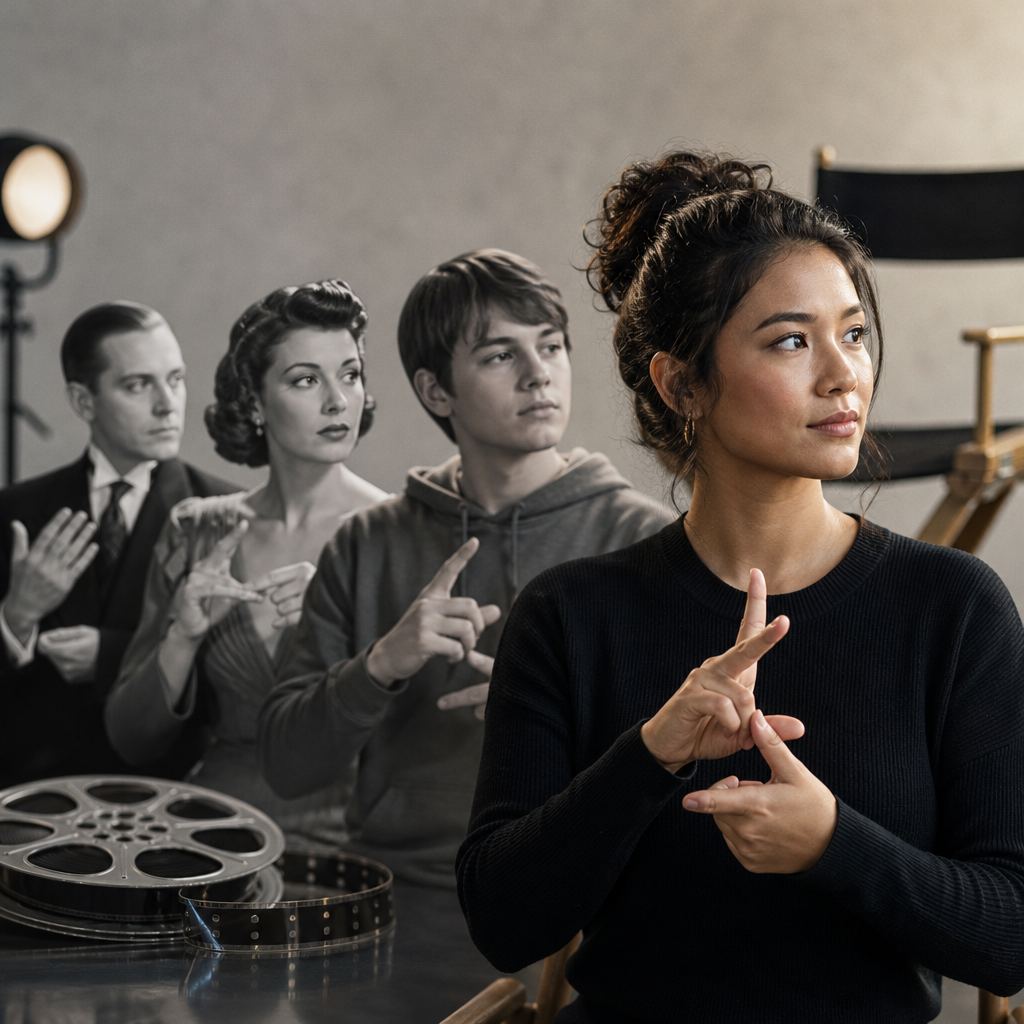
Media representation is one of the strongest engines of stereotype persistence because it reaches people before they have any direct relationship with Deaf communities. Film and television have historically cast hearing actors in Deaf roles, centered plots on suffering or cure, and used deafness as a metaphor for isolation, brokenness, or miscommunication. News stories often focus on exceptional moments, such as a Deaf person hearing a sound for the first time, because these clips travel well emotionally. The problem is not that these moments can never be meaningful. The problem is that they crowd out routine, accurate depictions of Deaf life: work, friendship, parenting, humor, disagreement, politics, and culture.
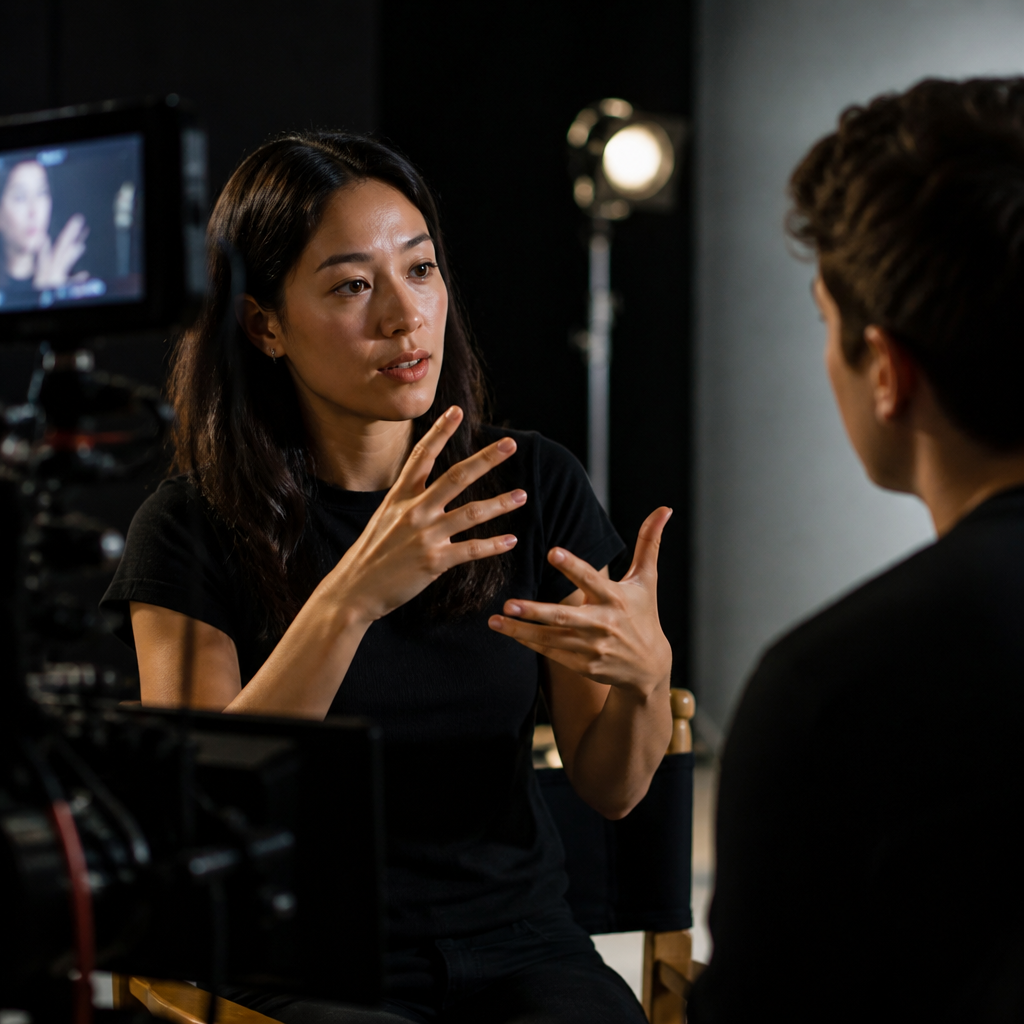
When representation improves, stereotypes weaken. Productions that cast Deaf actors, use Deaf consultants, and treat signed language as normal tend to create more credible public understanding. Viewers learn that Deaf people are not all the same, that communication is negotiated, and that identity is more complex than diagnosis. Journalistic style also matters. Person-on-the-street interviews without interpreters, podcasts without transcripts, or documentaries that subtitle signing poorly all signal that Deaf perspectives are secondary. Repetition teaches audiences what to expect. If media repeatedly excludes nuance, audiences repeatedly absorb simplifications.
| Stereotype | What fuels it | What the evidence shows |
|---|---|---|
| All Deaf people lip-read | TV scenes and classroom myths | Speechreading is partial, tiring, and highly context dependent |
| Sign language is universal | Lack of language education | Signed languages differ by country and community, with distinct grammar |
| Technology fixes deafness | Medical marketing and feel-good news | Devices help some users, but access still requires captions, interpreters, and visual design |
| Deaf people are isolated | Stories centered on deficit | Many Deaf people have strong community networks and rich cultural life |
| Deafness equals low ability | Bias in schooling and hiring | Outcomes are shaped by access, language exposure, and discrimination, not lack of intelligence |
Education, language access, and the formation of bias
Stereotypes often take root in school because that is where hearing children first learn what difference means. If disability and Deaf culture are absent from curriculum, students fill the gap with assumptions. If Deaf students are present but unsupported, peers may mistake institutional neglect for personal limitation. Early language access is especially important. Strong evidence from developmental linguistics and deaf education shows that children need full access to a natural language during critical early years. For many Deaf children, signed language provides that reliable access. When adults delay sign exposure because they hope speech alone will be enough, children can face language deprivation, which affects literacy, social development, and academic performance.
These outcomes are then misread as proof of Deaf incapacity rather than proof of poor systems. That is one reason stereotypes survive across generations. Schools also influence whether hearing students see sign language as legitimate. Where sign language is offered as a formal subject, students tend to understand Deaf peers more respectfully and communicate more confidently. Where it is treated as marginal, stereotypes flourish. Inclusive education is not just about physical placement in a mainstream classroom. It requires interpreters when appropriate, captioned media, teachers trained in Deaf awareness, visual teaching strategies, and recognition that Deaf children are not a single homogeneous group. Some use spoken language, some sign, many do both, and some move between communities depending on context.
How institutions turn assumptions into everyday barriers
Stereotypes last when institutions silently encode them into routine practice. In healthcare, providers may assume a family member can interpret, that a written note is always sufficient, or that a Deaf patient understands complex consent language without a qualified interpreter. In employment, managers may avoid hiring Deaf candidates because they overestimate accommodation costs, even though many adjustments are inexpensive: captions for meetings, messaging platforms, visual alarms, and scheduled interpreter support. In customer service, staff often address the hearing companion instead of the Deaf person, revealing an assumption about competence and agency.
These are not isolated social mistakes. They are patterns built from stereotype-based expectations. The Americans with Disabilities Act in the United States and similar laws elsewhere establish duties around effective communication and equal access, yet compliance remains uneven because many organizations think accessibility is occasional rather than operational. I have audited workflows where the barrier was not hostility but design negligence: video content without captions, emergency procedures based only on audio alarms, reception desks behind glass with no text option, and event planning that asked about dietary needs but not communication access. Stereotypes make these omissions seem normal by implying Deaf people are rare, hard to include, or best handled through improvised workarounds.
Intersectionality and the myth of a single Deaf experience
Another reason stereotypes persist is that the public often imagines one generic Deaf identity. In reality, Deaf experiences are shaped by race, class, gender, age, immigration status, geography, additional disabilities, and educational opportunity. A Black Deaf woman navigating healthcare may face different barriers from a white Deaf man in a corporate office. A Deaf immigrant may need access across multiple languages, not just one signed and one spoken language. A late-deafened adult may describe identity differently from someone raised in a Deaf family. Rural access challenges differ from urban ones because interpreters, specialist teachers, and community networks may be less available.
When representation ignores these differences, some people become invisible even within awareness efforts. That invisibility creates new stereotypes: who counts as “truly Deaf,” which communication methods are respected, whose accents or signing styles are judged, and whose needs are dismissed as too complicated. Accurate representation requires resisting the urge to flatten complexity for convenience. It also requires listening to Deaf people who disagree with one another. Disagreement is normal in any community. Presenting Deaf communities as monolithic is itself a form of misrepresentation.
What better representation and awareness look like
Better representation starts with a simple rule: Deaf people must be present in decisions about stories, services, and systems that affect them. In media, that means hiring Deaf writers, actors, consultants, interpreters, editors, and producers. In schools, it means teaching about Deaf history, signed languages, and disability rights as standard knowledge, not niche content. In workplaces, it means treating communication access as infrastructure. In healthcare, it means planning for qualified interpretation and accessible patient information before an urgent situation exposes the gap.
Language choices matter too. Terms should be accurate, audience-aware, and consistent with community preference in context. Not every Deaf person identifies the same way, so respectful practice includes asking rather than assuming. The most effective awareness efforts move beyond symbolic inclusion. They show Deaf people in ordinary and leadership roles, explain access features clearly, and correct myths directly. For this subtopic hub, the practical takeaway is that misrepresentation and stereotypes are connected to every downstream issue: media casting, school policy, employment bias, healthcare communication, family decision-making, and public attitudes. If you want to reduce harm, start by auditing the stories you repeat and the systems you maintain. Replace assumption with evidence, tokenism with participation, and pity with access. Then keep learning from Deaf voices across journalism, advocacy, research, and everyday life.
Stereotypes about Deaf people persist because they are historically rooted, emotionally convenient, and institutionally reinforced. They survive when sign language is misunderstood, when technology is framed as a total solution, when media favors pity or inspiration over accuracy, and when schools and workplaces treat communication access as optional. The good news is that these patterns can be changed. Accurate representation, early language access, legal compliance, inclusive design, and direct Deaf leadership all reduce misunderstanding and improve outcomes. This matters not only for Deaf people but for the quality of public life, because a society that communicates accessibly serves everyone better.
As the hub for misrepresentation and stereotypes within Media, Representation & Awareness, this article provides the foundation for deeper pages on specific myths, media tropes, language politics, employment bias, and inclusive communication practices. Use it as a starting point for reviewing your organization’s content, training, and policies. If you publish stories, teach students, manage staff, design services, or support a Deaf family member, examine where old assumptions still shape your decisions. Then act on what you find: add captions, book qualified interpreters, consult Deaf professionals, diversify your sources, and challenge inaccurate portrayals when they appear. Consistent, informed action is how stereotypes lose their power.
Frequently Asked Questions
Why do stereotypes about Deaf people continue even when there is more public awareness today?
Stereotypes about Deaf people persist because awareness is not the same thing as understanding. Many people have heard basic facts about deafness or have seen a Deaf character in a movie or television show, but those limited exposures often repeat the same narrow ideas. Media has historically portrayed Deaf people as either inspirational figures who “overcome” deafness, tragic individuals defined by loss, or one-dimensional side characters whose main purpose is to create emotional tension for hearing audiences. These simplified portrayals can feel familiar, so they keep circulating and shaping public assumptions.
Another major reason is that many hearing people have little direct, meaningful contact with Deaf communities. When people do not have real relationships with Deaf individuals, they tend to rely on secondhand ideas picked up from school, entertainment, news coverage, or outdated social attitudes. Educational systems also play a role. Many schools spend very little time teaching about Deaf history, signed languages, accessibility, or Deaf culture, which leaves room for misconceptions to fill the gap. On top of that, inaccessible public systems can make Deaf people seem “absent” from everyday life, when in reality they are being excluded. The result is a cycle: lack of access leads to less visibility, less visibility leads to more guessing, and guessing hardens into stereotypes.
What are some of the most common stereotypes about Deaf people, and why are they inaccurate?
Some of the most common stereotypes include the belief that all Deaf people can read lips, that all Deaf people want to be “fixed,” that signed languages are just simplified versions of spoken language, and that Deaf people are less capable intellectually or socially. These ideas are inaccurate because they treat a highly diverse population as though everyone has the same experience, preferences, communication style, and identity.
For example, lip-reading is extremely difficult and incomplete. Even skilled lip-readers can only catch part of what is being said because many sounds look identical on the lips or are not visible at all. Assuming that every Deaf person can read lips well places the burden on them instead of encouraging accessible communication. Another harmful stereotype is that deafness is always a personal tragedy. While some people experience hearing loss in medical terms, many culturally Deaf people do not view themselves as broken. They see themselves as part of a linguistic and cultural community with its own history, values, and signed languages.
The idea that signed languages are lesser or “not real languages” is also false. Signed languages such as American Sign Language have their own grammar, structure, and nuance. They are not pantomime, and they are not simply spoken English on the hands. Stereotypes become especially damaging when they shape expectations in classrooms, workplaces, healthcare settings, and public life. When people assume inability, they often create barriers that limit opportunity, then mistake those barriers for proof of the stereotype.
How do media and entertainment contribute to stereotypes about Deaf people?
Media and entertainment contribute to stereotypes by relying on shortcuts that are easy for audiences to recognize but often misleading. Deaf characters are frequently written by people with limited knowledge of Deaf life, and they are too often presented through a hearing-centered lens. This means the story may focus less on Deaf perspectives and more on how hearing people feel about deafness. As a result, characters may be shown as isolated, dependent, unusually helpless, or inspirational simply for existing.
These portrayals matter because repeated images shape expectations. If audiences mainly see Deaf people represented as struggling to fit into a hearing world, they may assume that this struggle defines all Deaf experience. If the only Deaf stories people encounter are about medical intervention, pity, or hardship, they may never learn about Deaf joy, humor, leadership, language, activism, family life, or cultural pride. Even well-meaning content can reinforce stereotypes when it erases complexity or treats Deaf people as symbols rather than as full human beings.
Authentic representation makes a difference. When Deaf actors, writers, consultants, and creators are involved, stories are more likely to reflect real experiences and challenge old assumptions. Better representation does not mean portraying Deaf people as perfect; it means portraying them as multidimensional. That includes showing diversity within Deaf communities, including different communication choices, racial and cultural backgrounds, identities, and relationships to both Deaf and hearing worlds.
What is the difference between Deaf culture and the medical idea of hearing loss, and why does that distinction matter?
This distinction matters because many stereotypes come from confusing cultural identity with medical diagnosis. The term deaf can refer to the audiological condition of hearing loss. The term Deaf, often capitalized, commonly refers to people who identify with Deaf communities, signed languages, and a shared cultural experience. Not every person with hearing loss identifies as Deaf in the cultural sense, and not every Deaf person has the same relationship to spoken language, technology, or hearing environments.
When people only understand deafness as a medical issue, they may assume that the main goal should always be correction, cure, or normalization. That framework can erase the reality that many Deaf people value signed language, community, and culture as central parts of their lives. It can also lead hearing people to misunderstand advocacy for accessibility. For example, requesting interpreters, captions, visual alerts, or direct communication is not evidence of inability. It is a demand for equal access.
Understanding this difference helps people move beyond stereotypes that frame Deaf people solely in terms of limitation. It encourages a more accurate view: Deaf lives are shaped not only by hearing status but also by language access, social attitudes, identity, and inclusion. Seeing Deaf people only through a medical lens often leads to pity or deficit-based thinking. Recognizing Deaf culture opens the door to respect, partnership, and a better understanding of how discrimination works in everyday systems.
How can individuals, schools, workplaces, and public institutions help reduce stereotypes about Deaf people?
Reducing stereotypes requires more than changing language; it requires changing habits, expectations, and systems. For individuals, one of the most important steps is to stop assuming that one Deaf person represents all Deaf experiences. Ask respectful questions when appropriate, follow the person’s preferred communication method, and avoid patronizing behavior such as speaking to interpreters instead of directly to the Deaf person. It is also helpful to learn basic facts about signed languages, Deaf culture, and accessibility so that first impressions are not based on myths.
Schools can make a major impact by including accurate information about Deaf history, language, and civil rights in the curriculum. Representation should not be limited to a brief disability unit. Students should have opportunities to understand Deaf people as members of a linguistic and cultural minority as well as individuals with varied experiences. Workplaces can reduce stereotypes by normalizing accommodations, providing captions and interpreting when needed, and training staff on accessible communication. When accessibility is built into everyday practice instead of treated as a special exception, negative assumptions begin to lose their power.
Public institutions, including healthcare systems, government offices, transportation networks, and media organizations, also have a responsibility. Inaccessibility often creates the false impression that Deaf people are difficult to serve or rarely present, when the real problem is that systems were not designed inclusively. Clear communication access, strong anti-discrimination practices, and consultation with Deaf people themselves are essential. The most effective way to challenge stereotypes is to replace assumptions with contact, accurate information, and structural inclusion. When Deaf people are fully visible, fully accessible, and fully heard on their own terms, stereotypes become much harder to sustain.