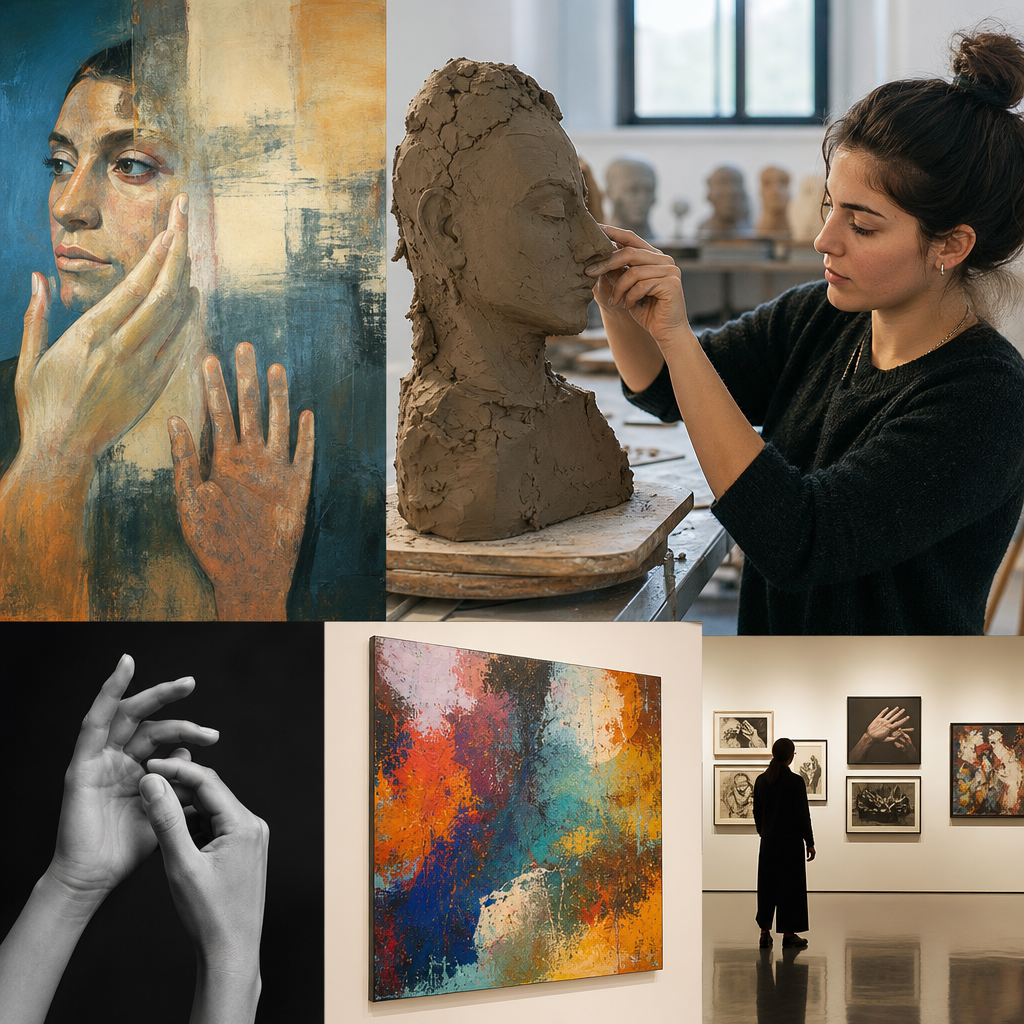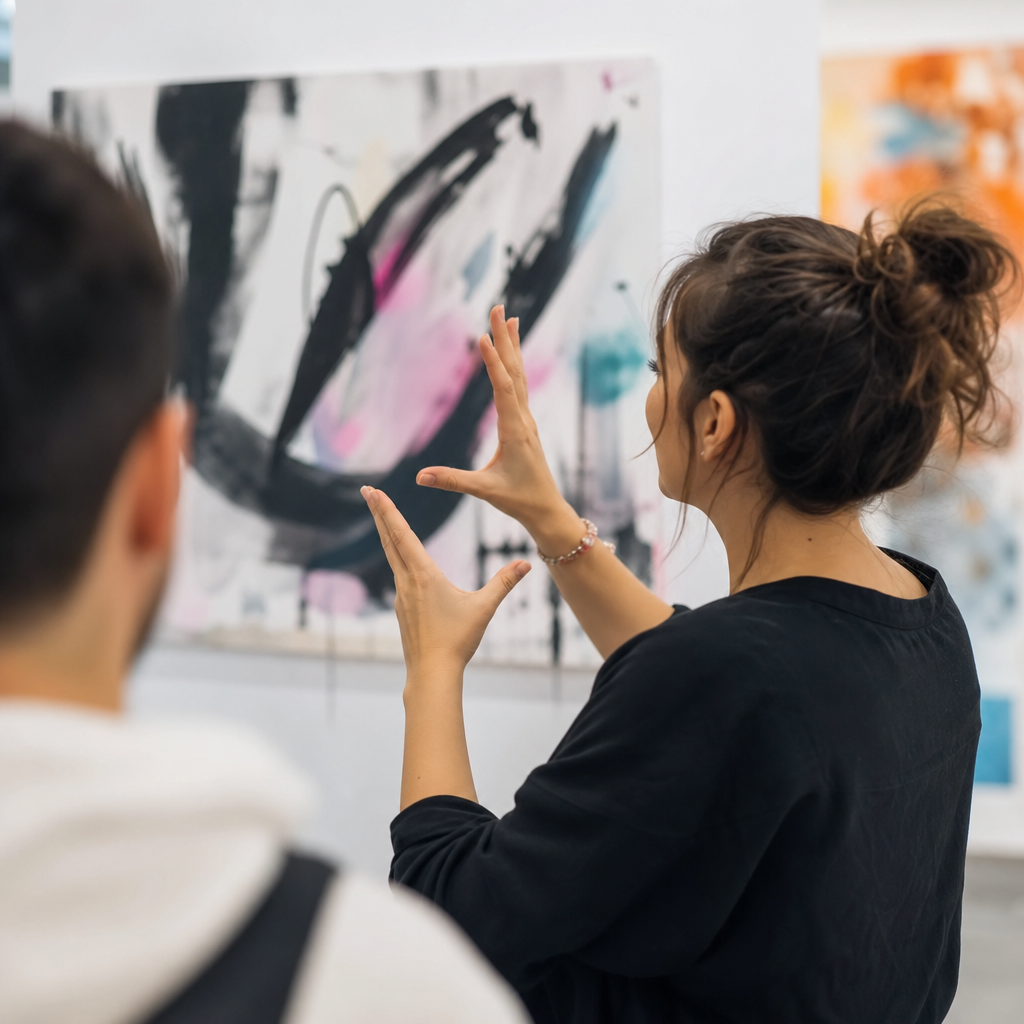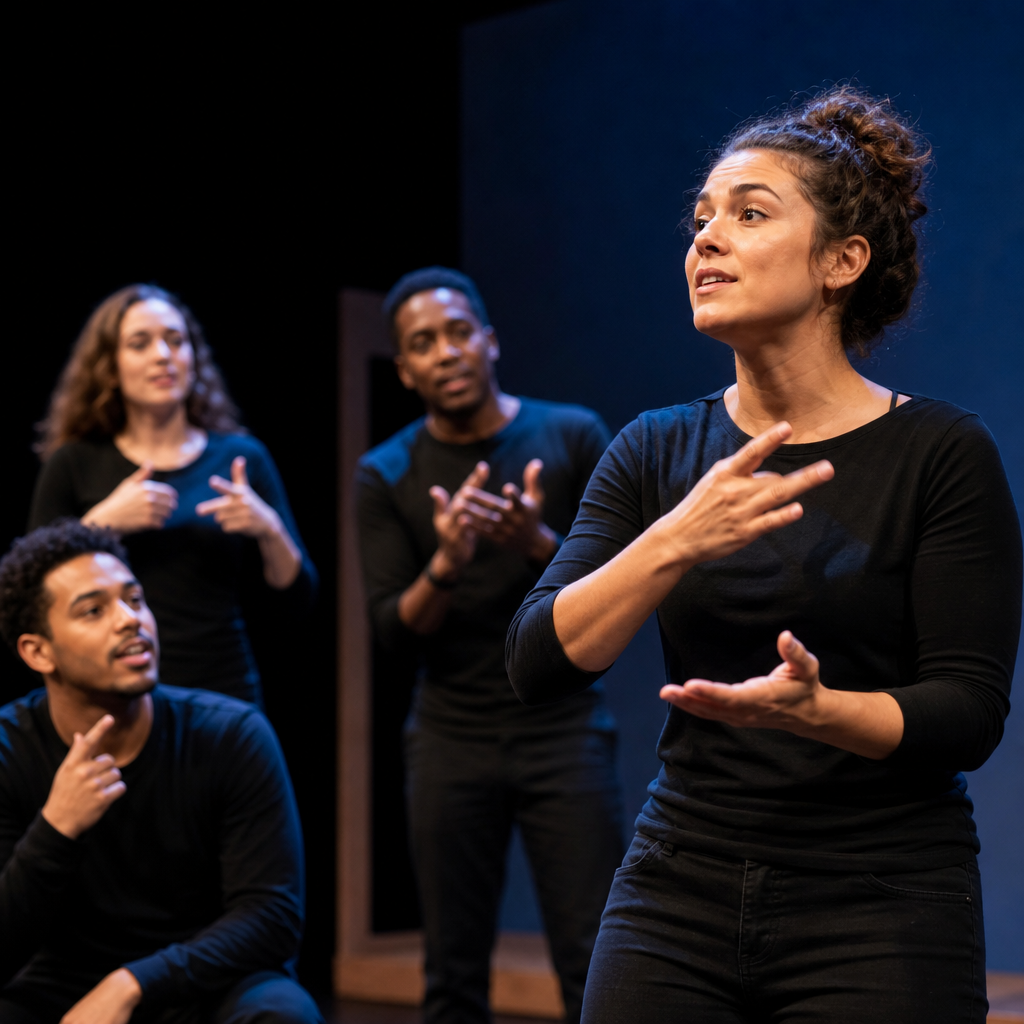
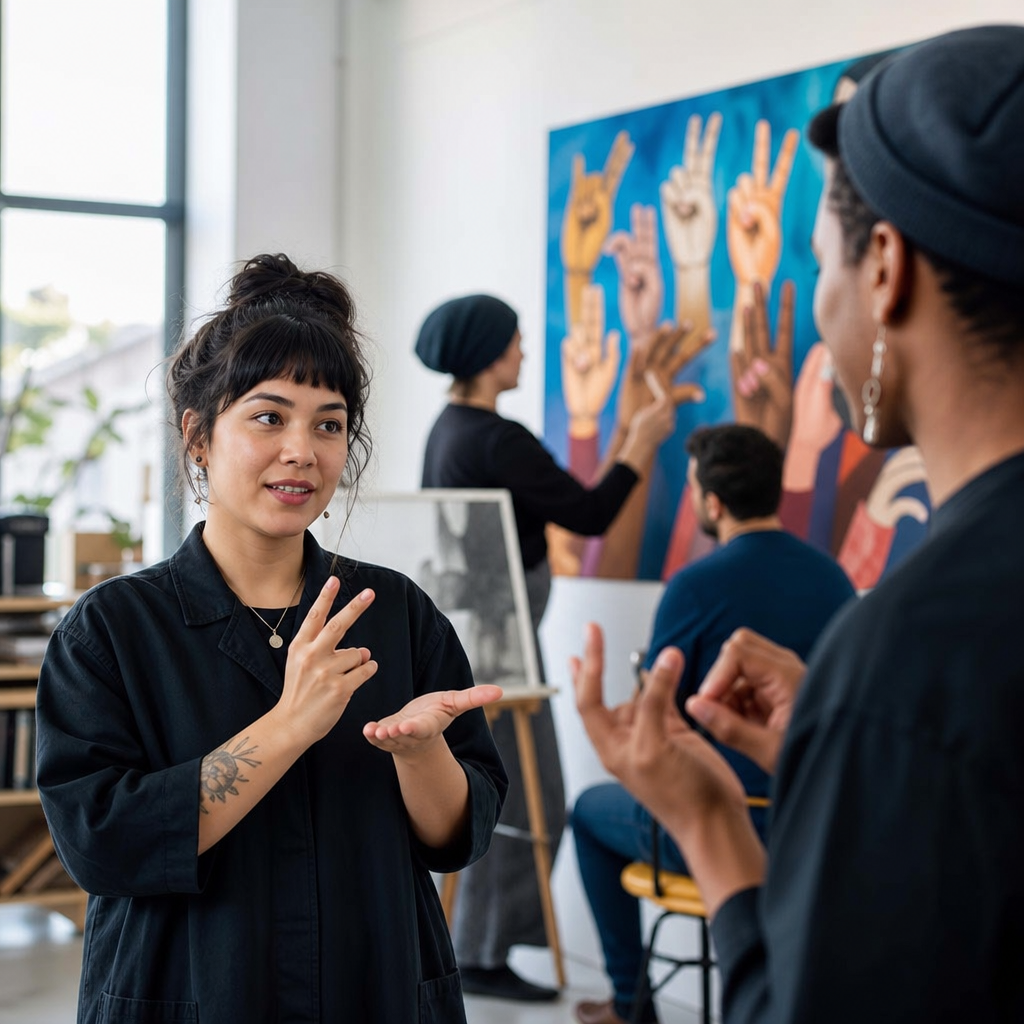
Art helps preserve Deaf culture by carrying language, memory, values, and community identity across generations in forms people can see, perform, share, and reinterpret. In Deaf communities, art is not an accessory to culture; it is one of the main ways culture survives. When I have worked on Deaf cultural content and reviewed exhibitions, performances, and community archives, the pattern is consistent: where art is active, cultural continuity is stronger. Stories remain visible, sign languages stay central, younger people find role models, and hearing audiences gain a clearer understanding of Deaf life beyond medical stereotypes.
To understand why this matters, it helps to define the terms. Deaf culture refers to the shared language, social norms, history, humor, values, and creative traditions of people who identify with the Deaf community, especially those connected through sign language. It is not simply the experience of hearing loss. It is a linguistic and cultural identity. Art, in this context, includes visual art, signed storytelling, theater, film, poetry, dance, photography, digital media, and community-based performance. Expression is especially important in Deaf culture because sign languages are visual, spatial, embodied languages. That means artistic creation often grows naturally from the same visual attention and movement that shape everyday communication.
Art also preserves what official records often miss. Many Deaf histories were underdocumented in mainstream institutions, and for long periods hearing educators, doctors, and policymakers controlled the written narrative about Deaf people. Cultural memory therefore survived through signed stories, club life, school traditions, performance, murals, family storytelling, and later through video. These forms do more than entertain. They record oppression such as oralist education, celebrate milestones such as the Deaf President Now movement at Gallaudet University in 1988, and transmit values such as visual attentiveness, collective resilience, and pride in sign language. As a hub for art, storytelling, and expression, this topic matters because it connects language preservation, identity formation, and public understanding in one place.
Why art is central to Deaf cultural preservation
Art preserves Deaf culture because it keeps sign language visible and socially meaningful. A culture lasts when its language is used in public, taught to younger generations, and attached to respected forms of expression. In Deaf communities, signed storytelling, theater, and poetry do exactly that. They show that sign language is capable of metaphor, irony, rhythm, layered narrative, and emotional depth. This matters historically because Deaf people have repeatedly had to defend the legitimacy of sign language against oralist approaches that privileged speech and lipreading. Artistic excellence becomes cultural evidence. It proves, in practice, that signed languages are complete languages with their own aesthetics.
Art also carries community memory more effectively than abstract explanation. A child may not remember a lecture on educational discrimination, but they will remember a performance showing a Deaf student punished for signing in class. A viewer may not know the term audism, yet a painting of isolated hands or a film about exclusion from family conversations can make the experience instantly understandable. The best Deaf art compresses lived experience into images and performances that are easy to remember and hard to dismiss. That is one reason it functions as preservation rather than mere commentary.
Another critical point is accessibility within the community itself. Because sign language is visual, many cultural works are most powerfully transmitted in visual formats rather than text alone. Video storytelling, performance archives, and signed poems preserve culture in the language mode most natural to many Deaf people. This does not reduce the value of written scholarship; it complements it. In practice, communities preserve more when archives include both written interpretation and signed originals.
Signed storytelling as a living archive
Signed storytelling is one of the oldest and strongest preservation tools in Deaf culture. Long before online video platforms, stories moved through homes, schools for the Deaf, clubs, and community gatherings. These stories included personal narratives, jokes, legends, historical recollections, and moral lessons. They taught social expectations such as maintaining eye contact, using light or touch to gain attention, and valuing direct communication. They also preserved shared reference points: strict teachers, dorm life, sports rivalries, intergenerational mentorship, and collective responses to discrimination.
What makes signed storytelling distinctive is that meaning is conveyed not only through vocabulary but through movement, space, timing, facial grammar, and role shift. A skilled storyteller can embody multiple characters, shift perspective instantly, and use the signing space to build a scene that the audience can almost see physically unfolding. That expressive capacity allows stories to preserve both facts and social feeling. In my experience reviewing performances and educational materials, younger viewers often connect more deeply to a historical signed narrative than to a written summary because they witness the attitude, humor, and emotional cadence carried by the performer.
Storytelling also adapts without losing continuity. A traditional anecdote about life at a Deaf club can be retold on social media, in classrooms, or in documentary film while retaining its cultural core. That flexibility is important because preservation is not freezing culture in place. It is maintaining recognizability while allowing new generations to reshape the form.
Visual art, symbols, and collective identity
Visual art preserves Deaf culture by turning shared experience into durable symbols. Paintings, murals, illustrations, and photography can represent signed hands, visual attention, silence imposed from outside, or the energy of community gathering. The work of artists such as Chuck Baird, a leading figure associated with the Deaf View/Image Art movement, showed how visual art could center Deaf experience rather than translate it for hearing expectations. Deaf View/Image Art emphasized that Deaf artists were not merely producing art while Deaf; they were creating from a specifically Deaf cultural perspective.
That distinction matters. When an artist depicts hands as expressive agents rather than clinical symbols, or shows a classroom where signing is freedom, the artwork records cultural values. It states what the community honors and what it resists. Murals in Deaf schools and community centers often serve this function publicly. They tell young people, before any formal lesson begins, that sign language belongs on walls, in institutions, and in history.
Photography is equally important. Photo documentation of Deaf clubs, theater productions, protests, sports teams, and graduation ceremonies preserves communal life that might otherwise disappear when organizations close or members age. Across many communities, Deaf clubs declined after legal changes, shifting leisure patterns, and digital communication transformed social life. Where photographs were kept, a major part of local cultural memory remained accessible. Where they were not, communities lost visual records of how people met, organized, and celebrated together.
Theater, film, and performance traditions
Deaf theater and film preserve culture by combining language, embodiment, and public narrative. Organizations such as the National Theatre of the Deaf demonstrated that signed performance could reach broad audiences while maintaining Deaf artistic integrity. Deaf theater often stages conflicts around communication access, family dynamics, schooling, and identity, but its deepest contribution is formal as well as thematic. It develops visual timing, ensemble movement, and bilingual or cross-cultural staging techniques that reflect Deaf ways of perceiving interaction.
Film extends that preservation power through repeatability and distribution. A live performance can transform a local audience; a filmed performance can teach people decades later. Today, documentaries, short films, and recorded stage works allow Deaf histories and artistic methods to circulate far beyond one event. This has been especially significant for preserving elders’ stories and for documenting sign language variation across regions. A film that captures an older signer’s narrative preserves lexical choices, rhythm, facial expression, and storytelling structure that a transcript alone cannot fully hold.
Performance also creates role models. When Deaf children see actors, directors, cinematographers, and playwrights who share their language, they receive a concrete message about possibility. Preservation is stronger when a culture can imagine its future, not only remember its past.
Poetry, translation, and language artistry
Signed poetry is one of the clearest demonstrations that art preserves Deaf culture at the level of language itself. In signed poems, handshape, symmetry, movement repetition, pacing, and facial expression function like poetic devices. Some works use visual vernacular, a performance approach that relies on cinematic shifts, iconic imagery, and embodied perspective. Others play with classifier constructions, rhythm, or handshape constraints. These are not decorative tricks. They are linguistic artistry that teaches audiences what the language can do.
Translation is part of preservation too, but it requires care. When signed poems are translated into written English, some meaning can be carried over, yet much of the visual structure changes. Responsible preservation therefore uses layered documentation: original video, gloss or transcription where useful, contextual notes, and interpretive translation. Museums, universities, and archives that skip the original signed form often preserve content while losing aesthetic method. The reverse is also true; video without context may survive technically but become less usable educationally. The best preservation systems combine both.
| Art form | What it preserves | Example of cultural value transmitted |
|---|---|---|
| Signed storytelling | History, humor, norms, intergenerational memory | Respect for sign language and community elders |
| Visual art | Symbols, identity, political experience | Pride in Deaf ways of seeing and communicating |
| Theater and film | Public narratives, performance techniques, role models | Collective resilience and demand for access |
| Poetry and visual vernacular | Linguistic creativity, aesthetic forms | Recognition of sign language as artistically rich |
Community institutions, archives, and digital platforms
Art preserves culture most effectively when institutions support it. Schools for the Deaf, Deaf clubs, festivals, museums, libraries, university programs, and arts organizations all help turn individual creativity into shared inheritance. Gallaudet University, the National Association of the Deaf, local historical societies, and specialized archives have all played roles in collecting records, hosting exhibitions, and legitimizing Deaf artistic production. Formal preservation matters because communities cannot rely only on memory. Works need cataloging, metadata, captions where appropriate, language identification, and durable storage formats.
Digital platforms have transformed this work. Video hosting, social media, and online archives allow signed performances to circulate globally, helping younger Deaf people encounter artists and storytellers they might never meet locally. This is a major advantage for people in areas with small Deaf populations. At the same time, digital preservation has risks. Files disappear, platforms change policies, metadata is inconsistent, and context can be stripped away when clips are reposted. I have seen excellent cultural material become difficult to trace within a few years because no institution preserved the original source, date, performer information, or language variant.
The solution is intentional archiving. Communities and organizations should record performances in high quality, collect permissions, document names and dates, identify the sign language used, and store copies in trusted repositories. Preservation succeeds when art is treated as historical evidence as well as creative work.
Challenges, representation, and the future of Deaf expression
Despite its strength, Deaf cultural preservation through art faces real challenges. One is underfunding. Deaf artists and organizations often work with fewer grants, smaller venues, and limited distribution networks. Another is misrepresentation. Hearing-led institutions sometimes present Deaf art as inspirational difference rather than as cultural production rooted in language and politics. That framing weakens preservation because it detaches the work from the community that gives it meaning.
Representation within the community also requires nuance. Deaf culture is not monolithic. It includes people of different races, national backgrounds, signing styles, educational histories, and relationships to speech, technology, and disability identity. Strong preservation must therefore include Black Deaf art, Indigenous Deaf expression, immigrant narratives, queer Deaf work, and the perspectives of DeafBlind and hard of hearing creators connected to the culture. A narrow archive preserves only part of the truth.
The future is promising when communities invest in transmission. That means commissioning Deaf artists, teaching Deaf art history, recording elders, supporting bilingual exhibitions, and making signed content discoverable. It also means treating art as infrastructure for cultural survival, not as a luxury. If you want to understand Deaf culture deeply, follow its artists, watch its storytellers, study its films, and support the institutions that preserve them. Art does not simply reflect Deaf culture. It keeps Deaf culture alive, visible, and speakable in the language of the eyes.
Frequently Asked Questions
Why is art so important to preserving Deaf culture?
Art is essential to preserving Deaf culture because it carries the community’s language, history, values, and shared identity in forms that are visual, performative, and collective. In Deaf communities, culture is not preserved only through written records or formal institutions. It is also sustained through signed storytelling, theater, poetry, film, painting, sculpture, photography, and digital media that reflect Deaf ways of seeing and communicating. These forms make cultural knowledge visible and memorable, allowing each generation to inherit more than information alone. They inherit perspective, humor, resilience, and ways of belonging.
Art also gives Deaf people control over representation. Instead of having their experiences interpreted by outsiders, Deaf artists can present their own realities, priorities, and aesthetics. That matters because cultural preservation depends on authenticity. When Deaf stories are told by Deaf creators, the result is not just documentation but continuation of culture itself. Artistic work becomes a living archive, one that can be performed, revisited, shared, taught, and reimagined without losing its cultural core.
How does art help preserve sign language across generations?
Art helps preserve sign language by keeping it active, visible, and valued in public and community life. Sign languages are not only systems of communication; they are cultural languages with their own rhythm, structure, symbolism, and expressive possibilities. Art forms such as Deaf poetry, sign language performance, theater, film, and storytelling highlight the beauty and complexity of these languages in ways everyday conversation alone may not. When younger Deaf people watch a performance in sign language, they are seeing vocabulary, facial expression, spatial grammar, timing, and cultural nuance all working together.
This is especially important because language preservation depends on use in meaningful settings. Artistic expression gives sign language a powerful role in ceremony, celebration, education, protest, and memory. It shows that sign language is not secondary to spoken or written language, but fully capable of carrying emotion, metaphor, identity, and artistic sophistication. As performances are recorded, taught, and shared through schools, festivals, archives, and social media, they become resources for future generations. In that sense, art does not just display sign language; it helps secure its continuity.
What kinds of Deaf art play the biggest role in cultural preservation?
Several forms of Deaf art play a major role in cultural preservation, and each contributes in a different way. Signed storytelling is one of the most important because it passes down community memory, values, humor, and lived experience in a direct and accessible form. Deaf theater preserves cultural themes through live performance, often drawing attention to communication barriers, identity, and Deaf social life. Sign language poetry captures the visual richness of language itself, turning movement, rhythm, and expression into cultural record and artistic innovation at the same time.
Visual arts such as painting, illustration, photography, and sculpture are also powerful because they document Deaf identity in images that can travel across places and generations. Film and video have become especially influential, since they can preserve sign-based performances with far greater accuracy than text alone. Community murals, digital exhibitions, and archival projects add another layer by connecting personal experience to collective history. Together, these art forms do more than represent Deaf culture. They store it, transmit it, and keep it adaptable in changing times.
Can art strengthen Deaf community identity as well as preserve history?
Yes, and in practice the two are deeply connected. Art preserves history by holding onto stories, symbols, struggles, and milestones, but it strengthens identity by making those things emotionally and socially present. When Deaf people see their language, experiences, and values reflected in art, they are reminded that they belong to a community with its own traditions and creative power. That recognition can be especially meaningful in environments where Deaf perspectives are marginalized or overlooked.
Art also creates shared spaces for community participation. Performances, festivals, exhibitions, workshops, and screenings bring people together around common references and cultural pride. In those settings, identity is not only remembered; it is practiced. Younger members learn from elders, new interpretations emerge, and community bonds grow stronger. This is why active artistic life often corresponds with stronger cultural continuity. Art gives Deaf culture a visible and repeatable way to gather around itself, reinforcing both memory and belonging at once.
How can people support Deaf art as a way to help preserve Deaf culture?
Supporting Deaf art begins with recognizing Deaf artists as cultural leaders, not just entertainers or advocates. People can attend Deaf theater productions, film festivals, sign language poetry events, exhibitions, and lectures. They can purchase work by Deaf artists, promote Deaf-led creative projects, and encourage schools, museums, and cultural institutions to include Deaf art in meaningful and accessible ways. Support also means making sure Deaf creators are credited, compensated fairly, and given space to shape how their work is presented.
Long-term preservation requires infrastructure as well as appreciation. That includes funding community archives, recording performances in sign language, preserving historical materials, and expanding access to platforms where Deaf artists can share work with wider audiences. Educators and organizations can help by integrating Deaf art into curricula and public programming, not as a side topic but as an essential part of cultural history. The most effective support is sustained, respectful, and Deaf-centered. When Deaf art is actively created, documented, and celebrated, Deaf culture has a much stronger chance of thriving across generations.