How Deaf creators are changing media is no longer a niche cultural story; it is a structural shift in who gets to shape film, television, publishing, journalism, theater, music, and digital platforms. In this context, Deaf refers broadly to people who are culturally Deaf, deaf, hard of hearing, late-deafened, or signing members of Deaf communities, though experiences differ by language, identity, education, and access. Creators include directors, actors, producers, writers, designers, journalists, performers, illustrators, game makers, influencers, and educators whose work reaches audiences through traditional and emerging channels. Media includes everything from feature films and broadcast news to TikTok series, podcasts with transcripts, signed poetry, live performance, and interactive storytelling. Together, these definitions matter because they expand the old idea that Deaf people are only subjects of representation. Deaf creators are increasingly authors of representation, owners of narrative choices, and decision-makers in production.
I have worked on accessibility reviews for digital content and watched the same pattern repeat: when Deaf professionals are involved early, the work gets better for everyone. Dialogue becomes more intentional. Visual pacing improves. Captioning stops feeling like an afterthought and starts functioning as part of storytelling. Audiences who never considered visual communication as an artistic strength begin to recognize how much meaning can be carried through movement, framing, rhythm, and silence. That change matters commercially as well as culturally. Inclusive media reaches larger audiences, lowers friction for multilingual viewers, and often performs better on mobile and social platforms where sound-off viewing is common.
This shift also matters because media still has a long history of misrepresenting Deaf lives. For decades, Deaf characters were frequently played by hearing actors, sign languages were flattened into generic gestures, and plots revolved around cure, pity, or inspiration. Deaf creators have challenged those habits by changing who writes the scripts, who consults on language, who controls editing decisions, and who approves final cuts. The result is more accurate storytelling and a broader understanding of identity. This hub page explores how Deaf creators are reshaping art, storytelling, and expression across media, what methods they use, where major progress is happening, and why their influence will continue to grow.
Why Deaf creators tell different stories
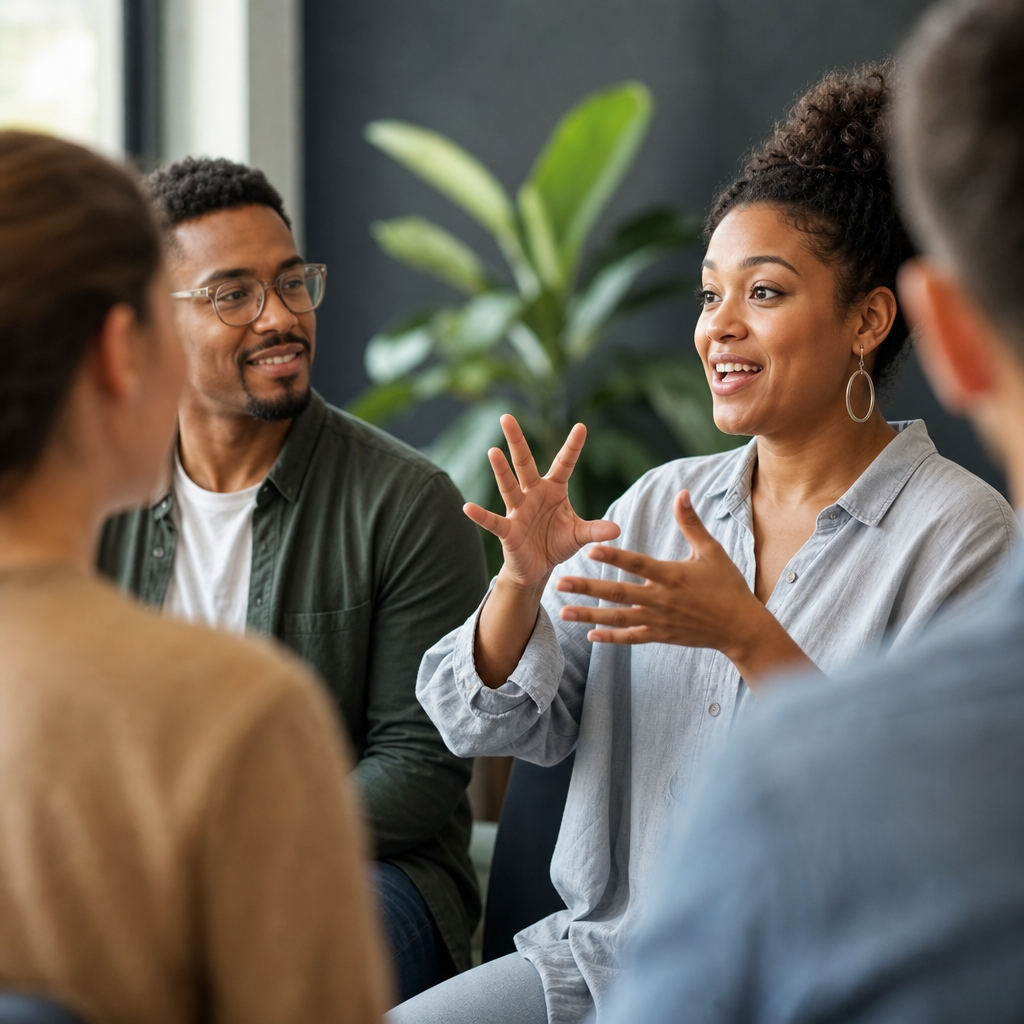
Deaf creators change media first by changing the point of view. A hearing-led production may include a Deaf character, but a Deaf-led production often changes the grammar of the entire piece. Scenes are blocked to preserve sightlines. Camera coverage respects signed conversation instead of cutting away at the wrong moment. Sound design is treated as one layer among many rather than the main carrier of emotion. Silence is not framed as emptiness. Visual cues, touch, facial expression, lighting, and spatial relationships do more narrative work.
That difference is easy to see in screen work that treats sign language as language, not ornament. American Sign Language, British Sign Language, Langue des Signes Française, and other signed languages have their own syntax, rhythm, and rhetorical devices. When a Deaf writer or director builds a scene around that reality, pacing changes. Tension can come from a blocked line of sight, a flickering light, a missed visual cue, or the politics of interpretation. Humor can come from bilingual misunderstandings, code-switching, or sharp visual wit. These are not minor details. They are story engines that hearing creators often miss.
Deaf creators also resist the narrow categories that historically boxed them in. Their work can be joyful, political, experimental, romantic, satirical, or mundane. Not every Deaf story is about oppression, and that is one of the most important changes in contemporary media. Normalization happens when Deaf characters and creators are allowed range. A thriller, cooking show, memoir, stand-up set, fashion campaign, documentary short, or fantasy comic can all center Deaf expression without justifying its existence.
Film and television are becoming more visually literate
Film and television have provided some of the clearest examples of this change. Productions shaped by Deaf actors, consultants, coaches, and filmmakers have proven that authenticity improves artistic quality. The film CODA brought mainstream attention to Deaf performance through Troy Kotsur and Marlee Matlin, but its deeper significance was industrial: it showed studios that sign-centered storytelling could win awards, attract broad audiences, and sustain emotional complexity without flattening Deaf experience. Kotsur’s Academy Award was historic, yet the more lasting impact is the expectation it created for future casting and creative leadership.
Television series have moved the conversation forward as well. Shows featuring Deaf characters and signing scenes now face greater scrutiny from audiences who expect accurate language use, thoughtful captioning, and meaningful inclusion behind the camera. In my experience reviewing episodes for accessibility gaps, the strongest productions are the ones that involve Deaf professionals from development onward, not just at the compliance stage. That early involvement affects script structure, shot selection, wardrobe contrast for signing visibility, and post-production timing.
Deaf directors and actors have also pushed editors to avoid common mistakes. Rapid cuts can destroy signed dialogue. Poor framing can crop out essential grammar carried by hands, face, and torso. Dark backgrounds and cluttered compositions reduce legibility. These are craft issues, not merely access issues. When they are solved well, all viewers benefit because scenes become cleaner, more intentional, and easier to follow. Media industries increasingly recognize that visual literacy is a competitive advantage, and Deaf creators are helping define what that literacy looks like.
Digital platforms have lowered gatekeeping
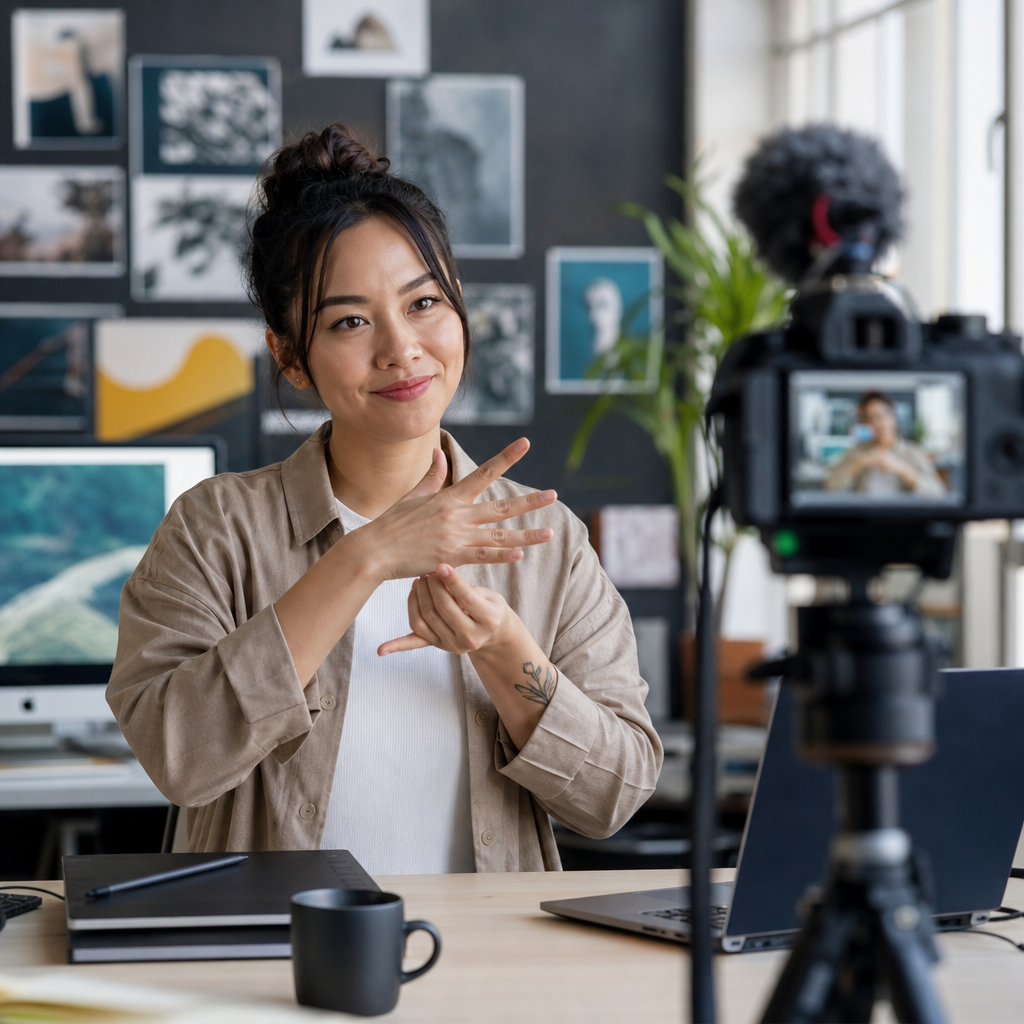
Social platforms have accelerated change faster than legacy media because they reward direct audience connection. Deaf creators on TikTok, YouTube, Instagram, and other platforms do not need permission from a network executive to publish signed comedy, educational explainers, beauty content, political commentary, or personal essays. They can test formats, build communities, and show audience demand in real time. Many have developed substantial followings by combining sign language, on-screen text, editing, and strong visual hooks in ways that fit platform behavior.
Sound-off design on mobile has helped this shift. A large share of social video is watched without audio, which means captions, visual pacing, and expressive performance are central to retention. Deaf creators were fluent in these strengths long before brands began talking about silent autoplay. Their work often feels native to the medium because it assumes viewers are scanning visually. Text overlays are concise, eyelines are deliberate, and edits support comprehension rather than spectacle.
Digital platforms have also made advocacy inseparable from creation. When a show mishandles signing, when captions are inaccurate, or when a campaign tokenizes a Deaf participant, creators can respond publicly with analysis that reaches thousands. That feedback loop has raised expectations across industries. It has also created new business paths: consulting, workshops, community partnerships, merchandise, subscription content, and cross-platform storytelling. The opportunity is real, though uneven. Algorithms still disadvantage some accessibility-first formats, and monetization remains volatile. Even so, digital media has been one of the most important routes for Deaf creative leadership.
Art, performance, and literature are expanding what expression looks like
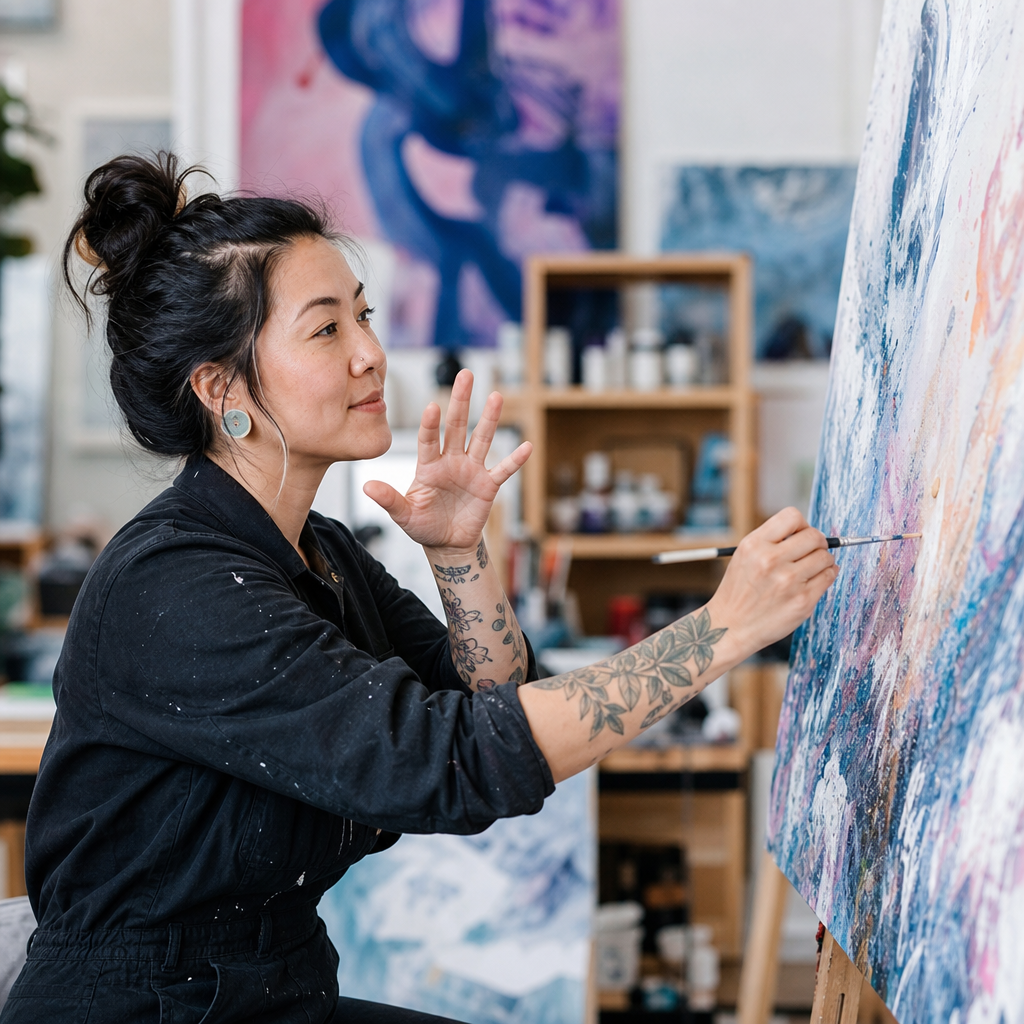
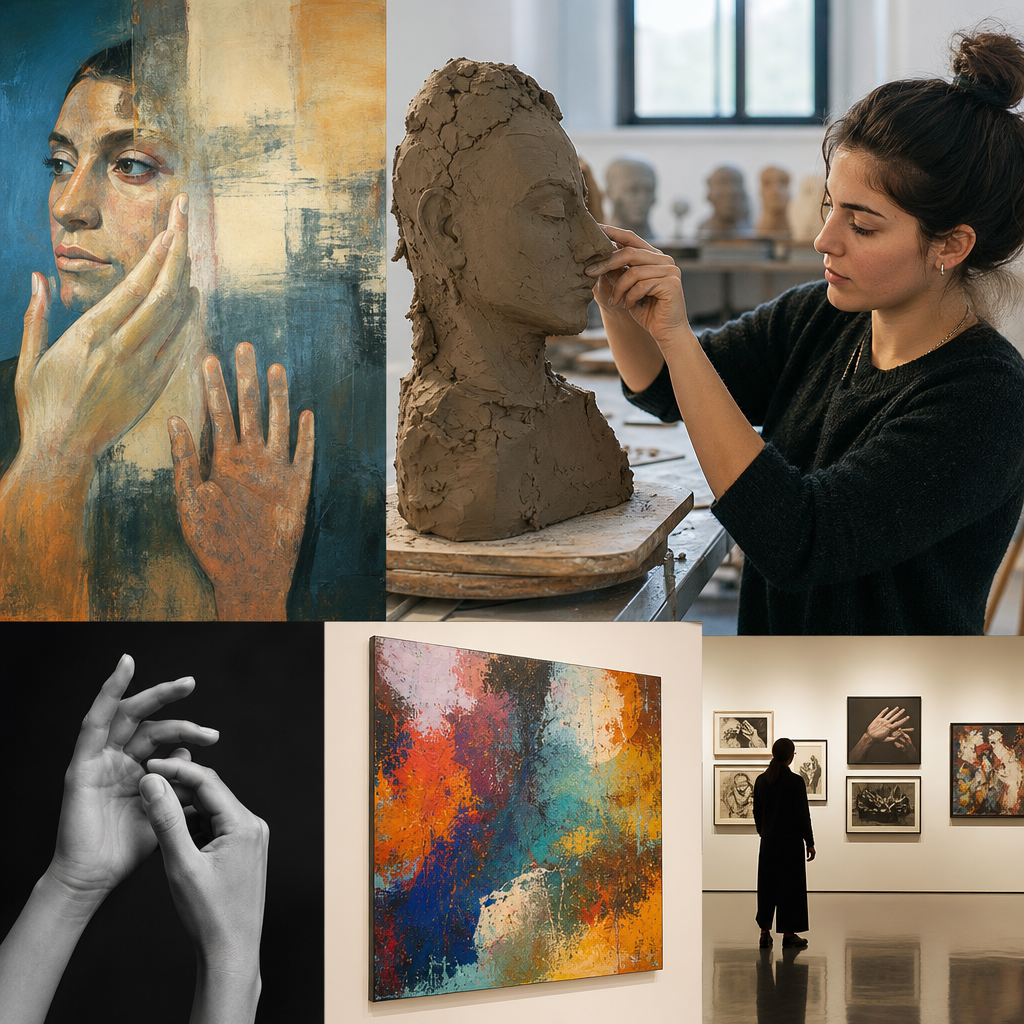
Deaf storytelling is not limited to screen media. Theater, poetry, visual art, memoir, comics, dance, and performance have long been central to Deaf culture and identity. What is changing now is visibility, distribution, and critical recognition. Signed poetry, for example, uses movement, timing, facial grammar, handshape, and space to create metaphor and rhythm. It cannot be fully translated into spoken or written language without loss, which makes it a powerful reminder that language and art are embodied. Festivals, universities, and museums increasingly program this work as art in its own right rather than as educational demonstration.
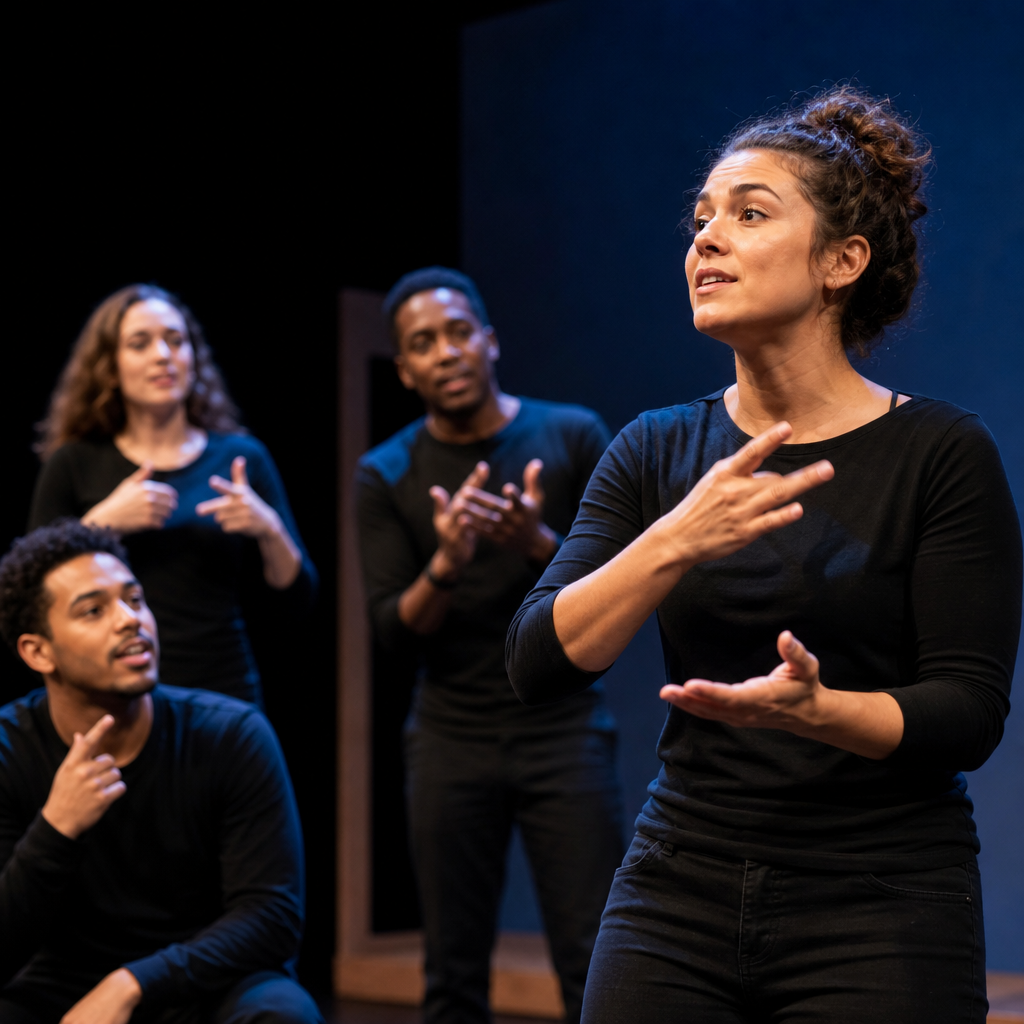
Deaf theater companies have influenced mainstream stagecraft by centering bilingual performance, creative caption integration, and choreography that respects visual attention. Productions associated with Deaf West Theatre helped popular audiences see that signed performance can deepen emotional and musical storytelling rather than compete with it. In literature, Deaf authors and illustrators have expanded memoir, young adult fiction, children’s books, and essays that address language deprivation, schooling, family dynamics, technology, and pride with far more nuance than outsider accounts usually provide.
Visual artists and photographers are contributing another important layer by documenting Deaf spaces, protest history, and everyday intimacy. Their work often interrogates gaze: who is looking, who is being seen, and who controls interpretation. This matters because Deaf people have historically been observed, categorized, and explained by hearing institutions. Art created from within the community reverses that dynamic. It turns observation into authorship and makes Deaf ways of seeing visible on their own terms.
What Deaf creators are changing inside the production process
The change is not only on screen. Deaf creators are reshaping the workflow of media production itself. The most effective teams plan access from the start, treating it as infrastructure rather than accommodation. That means budgeting for qualified interpreters, Deaf consultants, caption editors, and accessible call sheets. It means deciding whether captions are open or closed based on audience and artistic intent. It means building sets and shooting schedules that support communication across departments.
Several production areas improve immediately when Deaf leadership is present:
| Production area | Common old approach | Improved Deaf-led approach |
|---|---|---|
| Script development | Deafness added as a trait late in drafting | Story built around authentic language, culture, and stakes |
| Casting | Hearing actors considered interchangeable | Role-specific language ability and lived experience prioritized |
| Cinematography | Fast cuts and partial framing of signing | Wider compositions and timing that preserve signed meaning |
| Post-production | Captions created quickly for compliance | Captions edited for accuracy, tone, speaker identification, and timing |
| Marketing | Accessibility mentioned only in small print | Signed promos, accessible trailers, and community outreach included |
These decisions are practical, not symbolic. Accurate captions reduce drop-off. Better framing improves comprehension. Authentic casting builds credibility with audiences who can spot inaccuracy immediately. Named standards and tools matter here. Broadcasters and streamers increasingly work within accessibility guidelines such as WCAG for digital interfaces, FCC captioning rules in the United States, and professional interpretation protocols for live events. Those standards do not guarantee good art, but they establish a baseline. Deaf creators push beyond baseline toward quality.
Business impact, cultural impact, and the limits of progress
Deaf creators are changing media because their work creates both cultural value and business value. Accessible design expands audience reach beyond Deaf communities to multilingual viewers, commuters, students, and anyone watching in noisy or quiet environments. Brands and publishers have learned that captions improve engagement, that clear visual storytelling travels well internationally, and that authentic representation protects reputation. In practical terms, a production that gets Deaf representation wrong can face backlash, weak reviews, and lost trust. One that gets it right can build loyal audiences and long-term credibility.
Cultural impact is broader. Deaf-led media helps families understand signing, gives Deaf children mirrors instead of stereotypes, and archives community memory that institutions often ignored. It also complicates public understanding in useful ways. There is no single Deaf experience. Cochlear implants, hearing aids, oral education, bilingual education, interpreting access, race, disability, and class all shape life differently. Strong Deaf creators do not erase those tensions. They show them honestly.
Progress, however, is incomplete. Funding still lags. Many Deaf creators are invited to consult without being given authority. Festivals and studios may celebrate one breakthrough project while failing to build sustainable pipelines. Global access is unequal, especially outside major cities and wealthy markets. The next phase requires more than visibility. It requires commissioning power, executive roles, training pathways, and fair pay.
Where this hub leads next
This hub on art, storytelling, and expression should help readers navigate the wider landscape of Deaf culture and identity with a sharper eye. The central lesson is simple: Deaf creators are not improving media by fitting into old systems; they are improving media by changing the rules of what strong communication, compelling storytelling, and responsible production look like. They bring visual intelligence, linguistic precision, and community accountability that many industries lacked for too long.
For readers exploring this topic further, the next useful questions are specific ones. How does signed poetry work as a literary form? What makes captioning high quality rather than merely present? Why does authentic casting matter beyond symbolism? How are Deaf filmmakers using silence, framing, and editing differently? What can brands, publishers, schools, and arts organizations learn from Deaf-led production? Each of those questions opens into its own article, but the foundation remains the same: when Deaf people lead creative work, representation becomes more accurate, craft becomes stronger, and audiences gain richer media.
If you commission, publish, teach, fund, or simply watch media, use this hub as a starting point and then go deeper. Follow Deaf creators directly. Hire them early. Credit their expertise. Support Deaf-led studios, theater companies, journalists, authors, and artists. The future of media is more visual, more multilingual, and more accountable than the past, and Deaf creators are a major reason why.
Frequently Asked Questions
How are Deaf creators changing media across film, television, publishing, journalism, theater, music, and digital platforms?
Deaf creators are changing media by shifting it from a system that historically treated Deaf people as subjects of representation into one where they are decision-makers, storytellers, and creative leaders. That difference matters. When Deaf directors, actors, producers, writers, journalists, editors, designers, musicians, and digital creators shape a project from the beginning, the result is not just “more inclusion.” It often changes the pacing, visual language, narrative priorities, performance style, production process, and accessibility standards of the work itself. In film and television, Deaf-led projects frequently bring greater attention to visual storytelling, signed performance, caption quality, and authentic casting. In publishing and journalism, Deaf writers and editors broaden which stories are considered important, challenge hearing-centered assumptions, and introduce reporting grounded in Deaf community knowledge rather than outsider interpretation. In theater, Deaf creators are expanding what performance can look and feel like through bilingual productions, visual dramaturgy, signed choreography, and integrated access. In music and digital media, they are redefining rhythm, embodiment, audience engagement, and the relationship between sound, vibration, sign, and visual expression. Across all of these fields, Deaf creators are proving that Deaf experience is not a limitation on artistic possibility; it is a source of innovation that is reshaping how media is made, distributed, and understood.
Why is authentic Deaf representation behind the scenes just as important as on-screen or on-stage visibility?
Authentic Deaf representation behind the scenes is essential because media is shaped long before audiences ever see the finished product. A show can cast a Deaf actor, but if the writers, producers, editors, reporters, or executives making decisions do not understand Deaf perspectives, the final work may still rely on stereotypes, flatten complexity, or make accessibility an afterthought. Behind-the-scenes leadership affects everything: which stories get approved, who is hired, how characters are written, what language choices are respected, whether signed dialogue is framed properly on camera, how interviews are conducted, how captions are timed, and whether Deaf audiences are treated as a real audience rather than a secondary consideration. It also affects workplace culture. Deaf creators in positions of authority can advocate for interpreters, communication access, equitable rehearsal and production schedules, and hiring pipelines that open doors for other Deaf professionals. Just as importantly, they bring cultural fluency. They are more likely to recognize the differences among culturally Deaf, deaf, hard of hearing, late-deafened, and signing community experiences, and to avoid presenting one person’s story as universal. Visible representation matters, but structural representation changes the industry itself. That is what makes the current shift so significant: Deaf creators are not only appearing in media, they are influencing how media institutions function.
What makes Deaf-created storytelling different from hearing-centered portrayals of Deaf experience?
Deaf-created storytelling often differs from hearing-centered portrayals because it begins from lived experience rather than observation. Hearing-centered stories have frequently framed Deafness as a medical problem to overcome, a source of isolation, or an inspirational backdrop for hearing audiences. Deaf creators are more likely to move beyond those narrow frames and present Deaf lives as full, varied, and culturally grounded. That can mean stories that center community, language, identity, humor, conflict, family dynamics, work, art, politics, and joy instead of treating Deafness as the only plot point. It also changes style. Signed languages are visual-spatial languages, so Deaf storytellers may emphasize facial expression, body movement, visual rhythm, silence, gaze, and composition in ways that hearing-centered media often overlooks. Their work can challenge default assumptions about dialogue, sound design, and even what counts as a “voice” in storytelling. Another key difference is nuance. Deaf creators know that there is no single Deaf experience. Some people identify strongly with Deaf culture, some are hard of hearing, some are late-deafened, some navigate multiple spoken and signed languages, and many move across identities depending on context. Deaf-created stories are often better equipped to reflect that complexity without reducing people to symbols. The result is media that feels less like explanation for outsiders and more like genuine storytelling with its own perspective and authority.
How do accessibility tools like captions, sign language interpretation, and visual design connect to creative innovation in media?
Accessibility tools are often misunderstood as technical add-ons, but in Deaf-led media they are increasingly part of the creative core. Captions, for example, are not just a compliance feature; they influence how audiences experience dialogue, pacing, tone, and atmosphere. Well-crafted captions can carry emotion, identify speakers clearly, reflect sound cues meaningfully, and make a project more usable for a wide audience, including Deaf, hard of hearing, multilingual, and mobile viewers. Sign language interpretation and signed performance can also be treated as artistic elements rather than secondary services. In theater, film, and digital performance, sign can shape blocking, visual rhythm, emotional intensity, and audience focus. Visual design choices such as framing, lighting, contrast, editing tempo, and on-screen text become especially important when creators are thinking seriously about communication access from the start. This often leads to stronger storytelling overall because it requires intentionality. Deaf creators frequently push media industries to design for clarity, embodiment, and multiple modes of engagement at once. That pressure can produce better user experiences and more imaginative forms of expression for everyone, not just Deaf audiences. In other words, accessibility and artistry are not competing goals. In many of the most influential Deaf-created works, accessibility is one of the reasons the art is so compelling.
What does the rise of Deaf creators mean for the future of media and for audiences more broadly?
The rise of Deaf creators points to a broader transformation in media: power is slowly moving toward people who were long excluded from defining mainstream culture. For the industry, this means more than adding a few Deaf-led projects to the slate. It means rethinking talent pipelines, casting practices, newsroom standards, production design, education, criticism, festival programming, funding structures, and platform accessibility. As more Deaf creators gain influence, audiences can expect stories that are more visually inventive, more culturally specific, and more resistant to outdated assumptions about communication and identity. It also means that younger Deaf artists will have more models for what a creative career can look like, which strengthens the field over time. For audiences, the benefits are wide-ranging. Deaf viewers gain media that reflects their realities with greater honesty and respect, while hearing audiences gain access to new forms of storytelling that expand their understanding of language, performance, and perspective. The larger cultural significance is that Deaf creators are helping redefine whose ways of seeing and communicating count as central in public life. That shift makes media richer, more accurate, and more future-facing. It is not simply about visibility; it is about authorship, authority, and the expansion of what media can be.