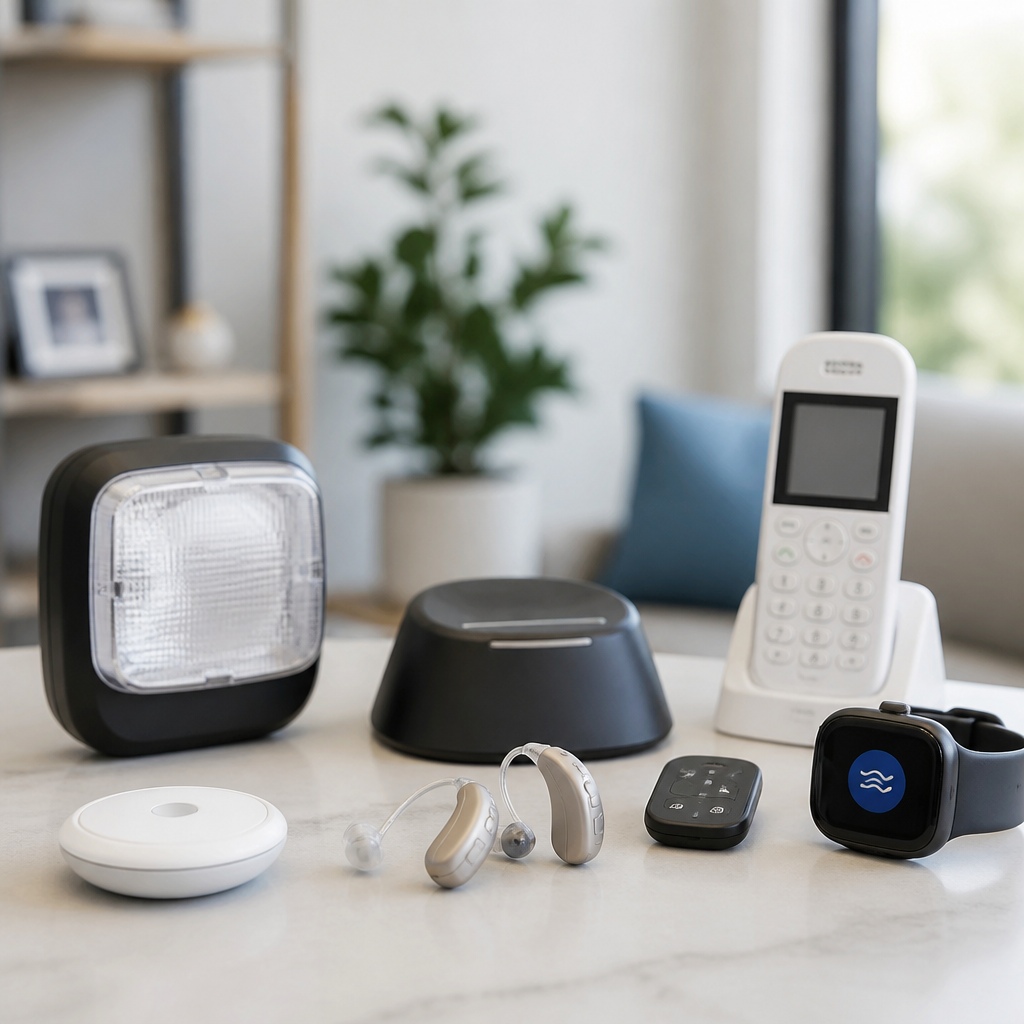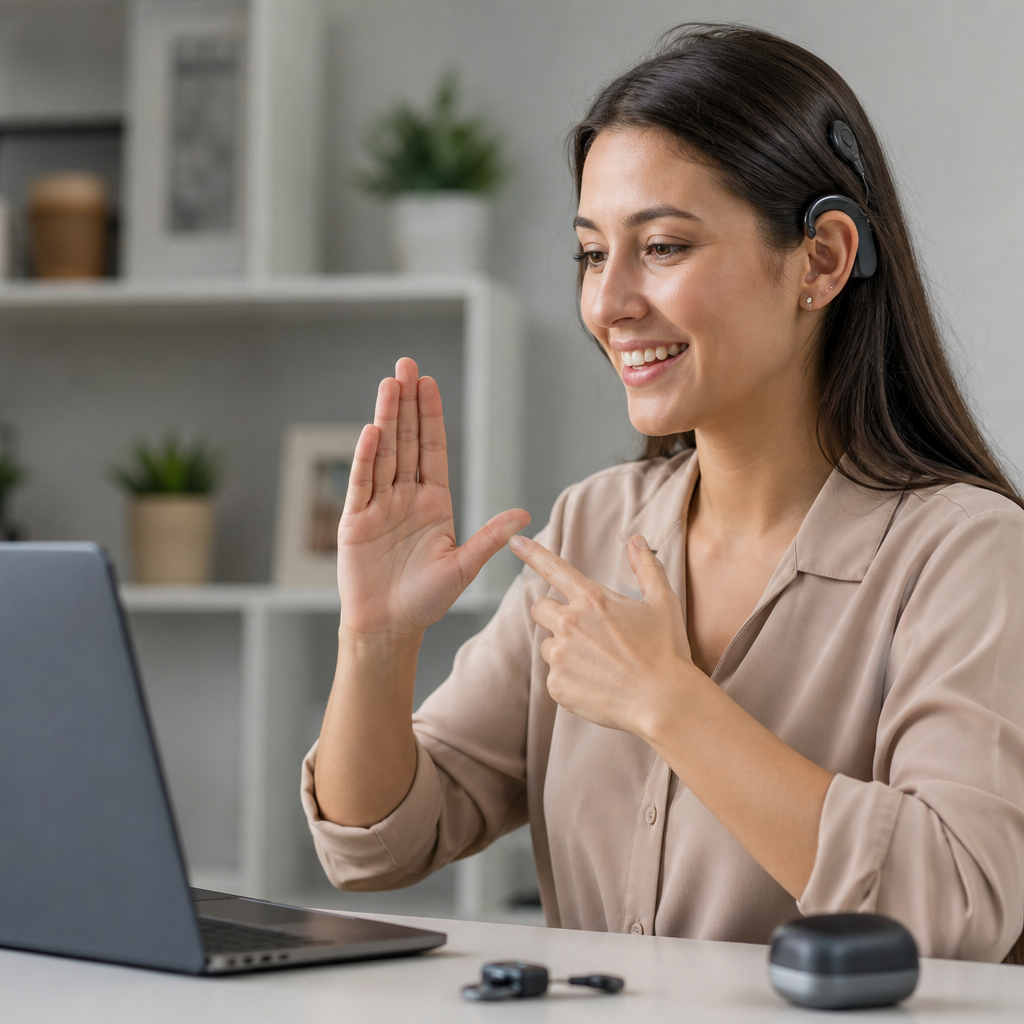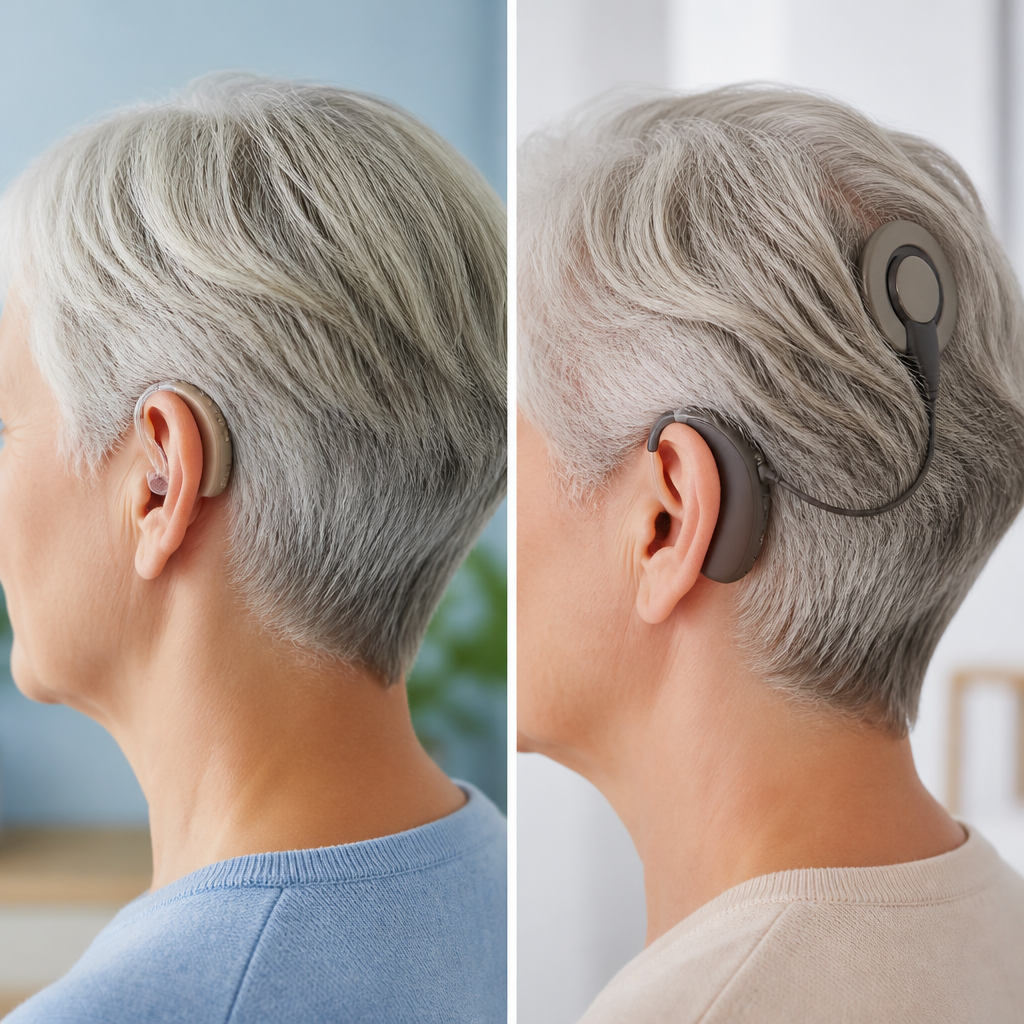
Artificial intelligence is changing accessibility from a compliance checkbox into an everyday business capability, and that shift matters especially for deaf and hard of hearing people who still face routine barriers across websites, customer support, meetings, retail, education, and healthcare. When businesses use AI to improve accessibility, they can reduce friction, widen their market, and build digital and physical experiences that work better for everyone. In practical terms, accessibility means designing products, services, and communications so people with disabilities can use them with equal effectiveness. In this subtopic, AI accessibility includes automated captions, speech recognition, sign language support, image and video analysis, live transcription, multilingual translation, conversational agents, and personalization tools that adapt interfaces to individual needs.
I have seen teams make the mistake of treating these tools as magic. They are not. AI can accelerate work that once required large budgets and specialized staff, but it also introduces risks around accuracy, bias, privacy, and overreliance on automation. A captioning model may miss a technical term, a voice interface may struggle with accented speech, and a chatbot may provide polished but wrong guidance about accommodations. Businesses need a grounded approach that combines AI systems with human review, accessibility standards, and direct feedback from disabled users. That is the difference between using AI as a shortcut and using it as durable infrastructure.
This article serves as a hub for AI and the future of accessibility within the broader technology and tools landscape for the deaf community. It explains where AI creates value, which use cases deserve priority, how to evaluate tools, what legal and operational standards apply, and how to measure results. It also answers a practical question many leaders ask: where should we start? The answer is usually with the moments that most affect access to information and communication. For deaf and hard of hearing users, that means accurate captions, transcripts, visual alerts, clear text alternatives, and support channels that do not depend on hearing.
Businesses should also understand that accessibility improvements driven by AI often produce broader gains. Better captions increase video engagement in noisy environments. Better transcripts make meetings searchable. Better text interfaces reduce support costs. Better localization improves reach in multilingual markets. Accessibility is not a narrow edge case. According to the World Health Organization, more than 1.5 billion people live with some degree of hearing loss globally, and inclusive design often benefits older adults, nonnative speakers, and mobile users as well. The opportunity is both social and commercial, but success depends on choosing the right use cases and implementing them responsibly.
Where AI delivers the biggest accessibility gains
The strongest business applications of AI accessibility solve communication gaps at scale. For deaf and hard of hearing users, the most mature use case is automated captioning and transcription. Tools such as Zoom AI Companion, Microsoft Teams live captions, Google Meet captions, Otter, and Verbit can convert spoken language into text in real time. On public video platforms, YouTube automatic captions provide a starting point, though quality varies by audio conditions and subject matter. In business settings, I advise teams to treat automated output as draft-quality until they validate performance on their own content, especially if they publish legal, medical, technical, or safety-critical information.
Another high-value area is asynchronous communication. AI can summarize meetings, extract action items, and generate searchable transcripts, which helps employees who cannot reliably access spoken discussion in the moment. Customer support teams can use AI to convert phone-first workflows into text-first options through chat, messaging, and email triage. Retailers can add visual product explainers and captioned video demos. Healthcare organizations can use AI transcription as an aid for note-taking and patient communication, but they should never assume it replaces qualified interpreters or established accommodation processes. The right framing is augmentation, not substitution.
AI also improves discoverability and navigation. Large websites often bury accessibility information in policy pages instead of surfacing it at the exact decision point where users need it. Search and recommendation systems can use natural language understanding to return accommodation details, store accessibility features, support options, and product compatibility information more accurately. On ecommerce sites, AI can improve alt text generation and video descriptions, though human editing remains essential for context and brand accuracy. For internal systems, AI assistants can help employees find caption settings, interpreter request forms, training materials, and HR policies without waiting for manual support.
Sign language technology is advancing but should be approached carefully. Some vendors offer avatar-based sign language generation for announcements or public information. This can help in narrow scenarios, yet it is not a full replacement for human signers, interpreters, or deaf-led review. Sign languages have their own grammar, regional variation, and cultural context. Businesses that serve Deaf communities should validate any signing solution with native signers and measure comprehension rather than assuming a technical demo equals meaningful access. In my experience, companies gain more immediate value by improving captions, transcripts, and text workflows first, then piloting signing tools where they fit a specific, tested need.
Core use cases businesses should prioritize first
If a company wants an actionable roadmap, the first priority is audio and video accessibility. Every external video should have accurate captions, and every internal meeting platform should support live transcription with simple controls for enabling it. Recorded webinars, training modules, product walkthroughs, and social clips need edited captions, not just machine defaults. Accuracy standards should be set by content type. A marketing video may tolerate minor timing errors, while compliance training, investor communication, or emergency instructions require rigorous review. Teams should also publish transcripts because transcripts support search indexing, note review, and users who prefer reading to watching.
The second priority is customer service accessibility. Many businesses still route users toward voice calls even when chat or email would be more effective. AI can power text-first support through intent detection, multilingual response assistance, queue routing, and knowledge retrieval. The objective is not to hide customers behind a bot. The objective is to offer equivalent access without forcing a hearing-dependent channel. A bank, for example, can use AI chat to answer routine account questions, escalate complex issues to trained agents, and maintain secure written records. A transit provider can combine messaging with automated service alerts that appear as text, push notification, and email rather than audio-only announcements.
The third priority is workplace access. AI note-taking, live captions, and meeting summaries can materially improve participation for deaf employees, contractors, and candidates. Recruitment is a common weak point. Video interviews without captions, assessments delivered in inaccessible formats, and orientation sessions built around spoken explanation all create unnecessary barriers. Adding captioned conferencing, text follow-up, and searchable documentation changes the experience quickly. Learning and development teams should also apply AI to caption libraries, transcribe legacy content, and tag training assets by topic so employees can locate the exact segment they need without replaying a full hour of audio.
| Business area | AI use case | Main accessibility benefit | Key caution |
|---|---|---|---|
| Video marketing | Automatic captions plus human editing | Improves comprehension and reach | Technical terms often need review |
| Meetings | Live transcription and summaries | Supports real-time participation | Speaker overlap reduces accuracy |
| Customer support | AI chat and message routing | Creates text-first service access | Bot escalation paths must be clear |
| Ecommerce | Alt text and content tagging | Makes media easier to understand | Context and tone need human checks |
| HR and training | Transcript search and content summaries | Improves onboarding and learning access | Sensitive data requires governance |
How to choose the right AI accessibility tools
Tool selection should start with user needs, not vendor demos. I usually begin by mapping communication points where hearing is assumed: checkout videos, onboarding calls, emergency alerts, support flows, staff meetings, and event content. Then I score each moment by volume, business importance, legal exposure, and severity of access barriers. This produces a rational shortlist. A hospital may prioritize patient communication and staff training. A software company may prioritize meetings, product education, and support documentation. A retailer may start with product videos, customer chat, and in-store visual notifications. The principle is simple: fix the highest-impact barriers first.
When evaluating vendors, businesses should ask direct questions about accuracy, languages, latency, privacy, integrations, security, and fallback options. Accuracy claims are often presented as averages, but averages hide failure points. Ask for performance on noisy audio, overlapping speakers, domain terminology, and regional accents. Test with your own recordings. Ask whether custom vocabulary can be added for product names, legal terms, or medical language. Review whether transcripts can be edited efficiently, exported in standard formats like VTT and SRT, and integrated with content systems such as WordPress, YouTube, Vimeo, Salesforce, Zendesk, Slack, or Microsoft 365.
Compliance and governance matter as much as features. In the United States, the Americans with Disabilities Act shapes many accessibility obligations, while Section 508 applies to federal procurement and the Web Content Accessibility Guidelines remain the common technical benchmark for digital content. In Europe, the European Accessibility Act is raising expectations across products and services. For privacy and security, businesses should review data retention, model training policies, and whether sensitive recordings are used to improve vendor models. Regulated sectors should involve legal, security, and accessibility leads together rather than letting a single department buy tools in isolation.
Cost should be evaluated in terms of total workflow impact, not subscription price alone. A cheaper captioning tool that requires heavy manual correction may cost more than a premium option with better speaker identification and vocabulary support. Likewise, an AI chatbot that deflects volume but frustrates users can increase repeat contacts and erode trust. I recommend pilot programs with defined success criteria: caption accuracy on sampled videos, reduction in support resolution time, increase in transcript usage, employee satisfaction scores, and accommodation request outcomes. Procurement decisions improve when accessibility is measured as an operational result rather than a branding claim.
Implementation, testing, and continuous improvement
Successful implementation depends on process. Businesses should establish content standards for captions, transcripts, visual alerts, and text alternatives before rolling out tools broadly. Define who owns editing, who approves quality, where files are stored, how exceptions are handled, and what happens when AI output is wrong. For meetings, publish guidance for speakers: use quality microphones, avoid talking over one another, identify yourself before speaking in large groups, and share agendas in advance. These simple practices improve AI performance because machine transcription is heavily affected by source audio and conversational structure.
User testing is nonnegotiable. The fastest way to discover hidden barriers is to involve deaf and hard of hearing users in procurement, pilots, and audits. Test real tasks, not abstract features. Can a customer complete a warranty claim without making a call? Can an employee follow a town hall in real time and review the transcript later? Can a student access a training video on mute and still understand the lesson? Businesses that only test whether a caption button exists miss the actual question, which is whether communication is effective. Effective accessibility is measured by comprehension, task completion, confidence, and time saved.
Teams should also plan for edge cases. Emergency communications need redundant text channels because AI captioning may not be available or reliable in every setting. Live events need backup workflows, including human captioners or CART providers for high-stakes sessions. Public kiosks should not depend solely on speech input. Video content with poor audio may require re-recording rather than attempted AI repair. There is also a cultural dimension. Accessibility works best when staff understand why it matters and know how to use the tools available. Training managers, moderators, support agents, and content creators is part of implementation, not an optional extra.
Looking ahead, the future of accessibility will be shaped by multimodal AI that can interpret speech, text, images, gesture, and context together. That will enable better live translation, richer visual explanations, smarter alerts, and interfaces that adapt automatically to user preferences. But businesses should resist the temptation to wait for perfect technology. The best results come from deploying proven tools now, measuring outcomes, and improving iteratively. Start with communication barriers that affect customers and employees every day. Audit your current content, test AI tools on real workflows, involve deaf users in decisions, and build accessibility into operations so inclusive access becomes standard rather than exceptional.
Frequently Asked Questions
How can businesses use AI to improve accessibility for deaf and hard of hearing people?
Businesses can use AI to make communication more immediate, consistent, and inclusive across the moments that matter most. One of the most practical uses is automatic speech recognition for live captions in meetings, webinars, training sessions, customer service calls, and public events. AI can also support real-time transcription for in-person conversations at service desks, reception areas, and retail counters, helping reduce the need for repeated explanations or workarounds. For recorded content, AI-powered captioning can dramatically speed up the process of making videos, tutorials, and social media content accessible, especially when paired with human review for accuracy.
Beyond captions, AI can improve accessibility through tools like speech-to-text chat support, multilingual translation, meeting summaries, searchable transcripts, and smart alerts that convert audio cues into visual notifications. On websites and apps, AI can help identify barriers such as unclear language, poor navigation, missing captions, or inaccessible media workflows. In physical environments, AI-enabled kiosks, tablets, and communication apps can make it easier for customers and employees to interact without relying entirely on spoken communication. The strongest approach is not treating AI as a standalone feature, but as part of a broader accessibility strategy that improves communication, service delivery, and equal participation at every touchpoint.
What are the biggest business benefits of using AI for accessibility?
The business case is much broader than compliance. AI-driven accessibility helps companies reduce friction in customer journeys, improve employee experiences, and expand access to products and services for people who may otherwise be underserved. For deaf and hard of hearing audiences, barriers often show up in routine interactions such as making an appointment, joining a meeting, understanding a product demo, or getting support after a purchase. When businesses use AI to remove those barriers, they make it easier for people to engage, convert, return, and recommend the brand to others.
There are also operational benefits. AI can automate parts of captioning, transcription, content tagging, and accessibility monitoring, which helps teams move faster while scaling accessibility across large volumes of content. Better transcripts and summaries can improve internal documentation, training, and knowledge sharing. More accessible meetings can support hiring, retention, and productivity by allowing employees to participate more fully. In addition, organizations that invest in accessible experiences often see broader usability gains that help all users, including people in noisy environments, non-native speakers, mobile users, and anyone who prefers text-based communication. In that sense, accessibility is not just a social responsibility issue; it is a customer experience, workforce, and growth strategy.
Which AI accessibility tools should businesses prioritize first?
The best starting point is usually the set of tools that solve the most common communication barriers quickly and at scale. For many organizations, that means prioritizing AI-generated captions for live and recorded video, real-time transcription for meetings and events, and accessible customer support options such as chat, text-based assistance, and speech-to-text workflows. These tools often create an immediate impact because they improve everyday communication across marketing, sales, HR, support, and operations. If a business produces video content, hosts virtual meetings, runs training sessions, or depends on phone-based interactions, these are typically the highest-value first steps.
After that, businesses should look at AI tools that support quality and consistency, such as accessibility testing platforms, content review systems, transcript search, translation tools, and workflow automation that ensures captions and transcripts are created before content is published. The right priorities depend on where barriers are happening most often. A healthcare provider may focus on appointment communication, telehealth captioning, and patient education materials. A retailer may focus on in-store communication support, accessible product videos, and customer service chat. An employer may focus on meetings, onboarding, and training. The key is to begin with high-frequency user interactions, measure outcomes, and expand from there rather than trying to solve every accessibility issue at once.
Can businesses rely on AI alone for accessibility compliance and inclusion?
No. AI can accelerate accessibility work, but it should not be treated as a complete replacement for human judgment, inclusive design, or formal accessibility standards. Automated captions can contain errors, especially with industry terminology, names, accents, poor audio, or overlapping speakers. AI tools may miss context, misinterpret tone, or fail to recognize when content still excludes users in practice. For example, a transcript may technically exist, but if it is poorly formatted, delayed, inaccurate, or difficult to access, it does not create a truly equitable experience.
The most effective model is human-informed AI. Businesses should pair automation with review processes, user testing, and accessibility policies grounded in recognized standards such as WCAG, ADA-related obligations, and sector-specific requirements where applicable. They should also listen directly to deaf and hard of hearing users, employees, and customers to understand what actually works in real environments. Inclusion depends on reliability, usability, and trust, not just on checking a technical box. AI is a powerful enabler, but meaningful accessibility comes from combining technology with governance, training, feedback, and a commitment to continuous improvement.
How can a business measure whether its AI accessibility efforts are actually working?
Measurement should focus on both technical performance and real-world outcomes. On the technical side, businesses can track metrics such as caption accuracy, transcription turnaround time, percentage of media assets with captions, meeting accessibility coverage, support channel availability, and accessibility issue detection rates across websites and apps. These metrics help teams understand whether AI tools are being deployed consistently and whether they are performing at an acceptable level. However, technical availability alone is not enough to prove success.
The more important signals come from user experience and business impact. Companies should look at customer satisfaction, task completion rates, reduced support friction, lower abandonment during key journeys, employee participation in meetings and training, and feedback from deaf and hard of hearing users specifically. It is also useful to monitor whether accessible content gets higher engagement, whether service interactions become faster and clearer, and whether teams are resolving communication issues earlier. Regular audits, direct user interviews, and accessibility feedback channels can reveal problems that dashboards miss. If people can communicate more easily, access information independently, and participate without extra effort, the accessibility strategy is moving in the right direction.