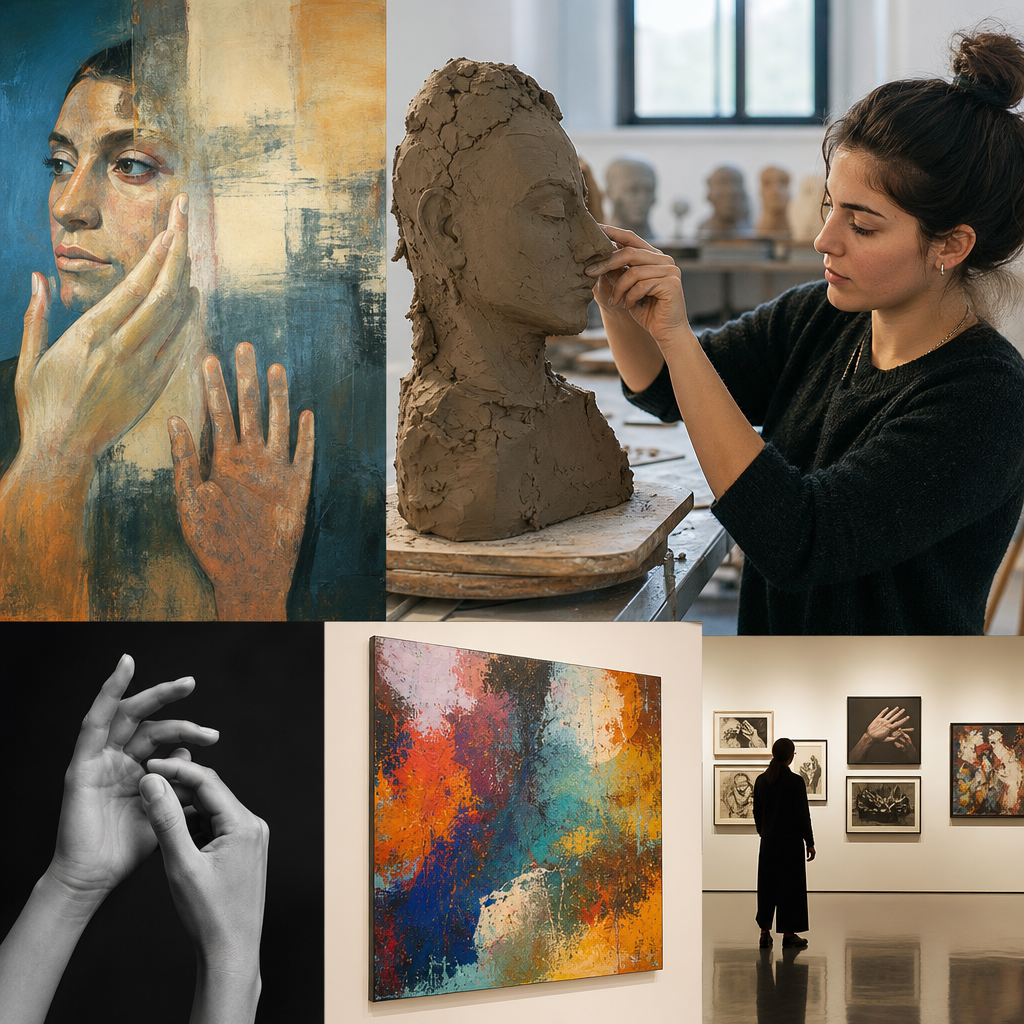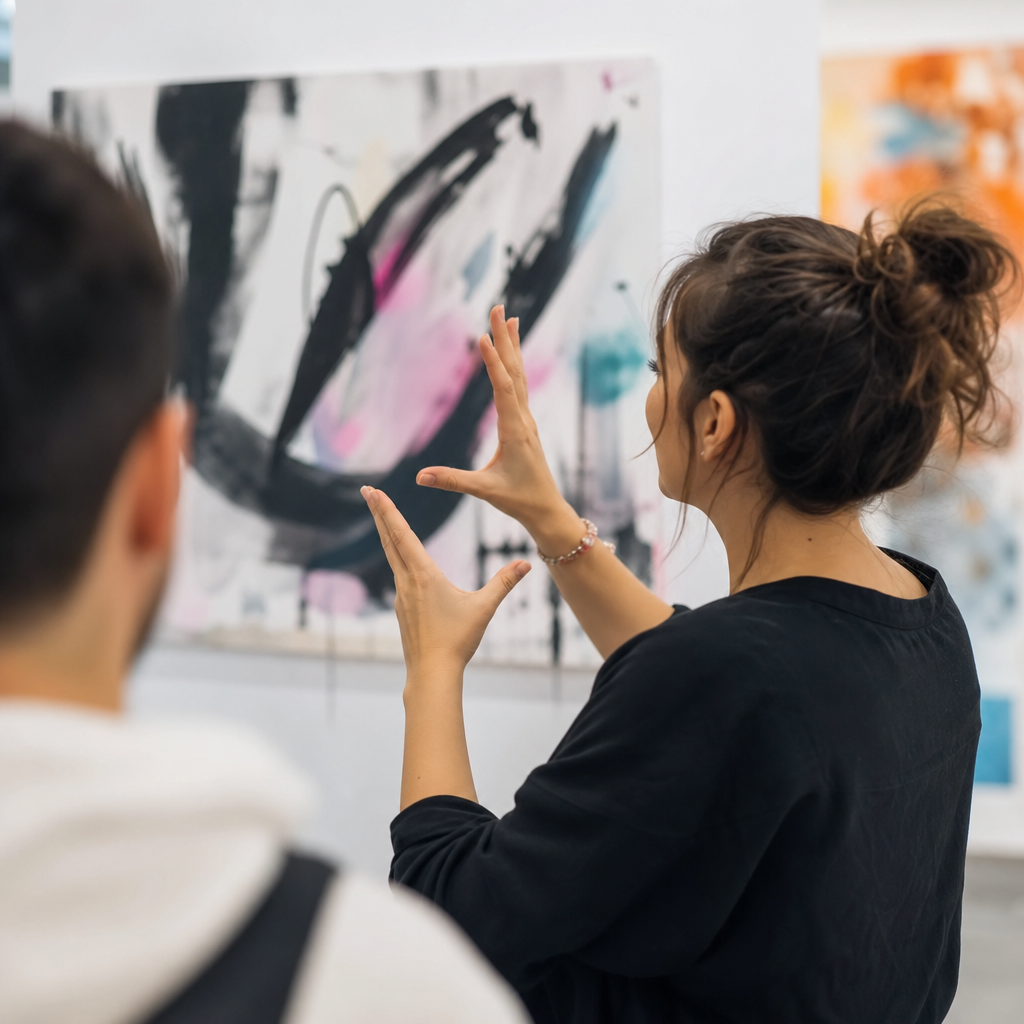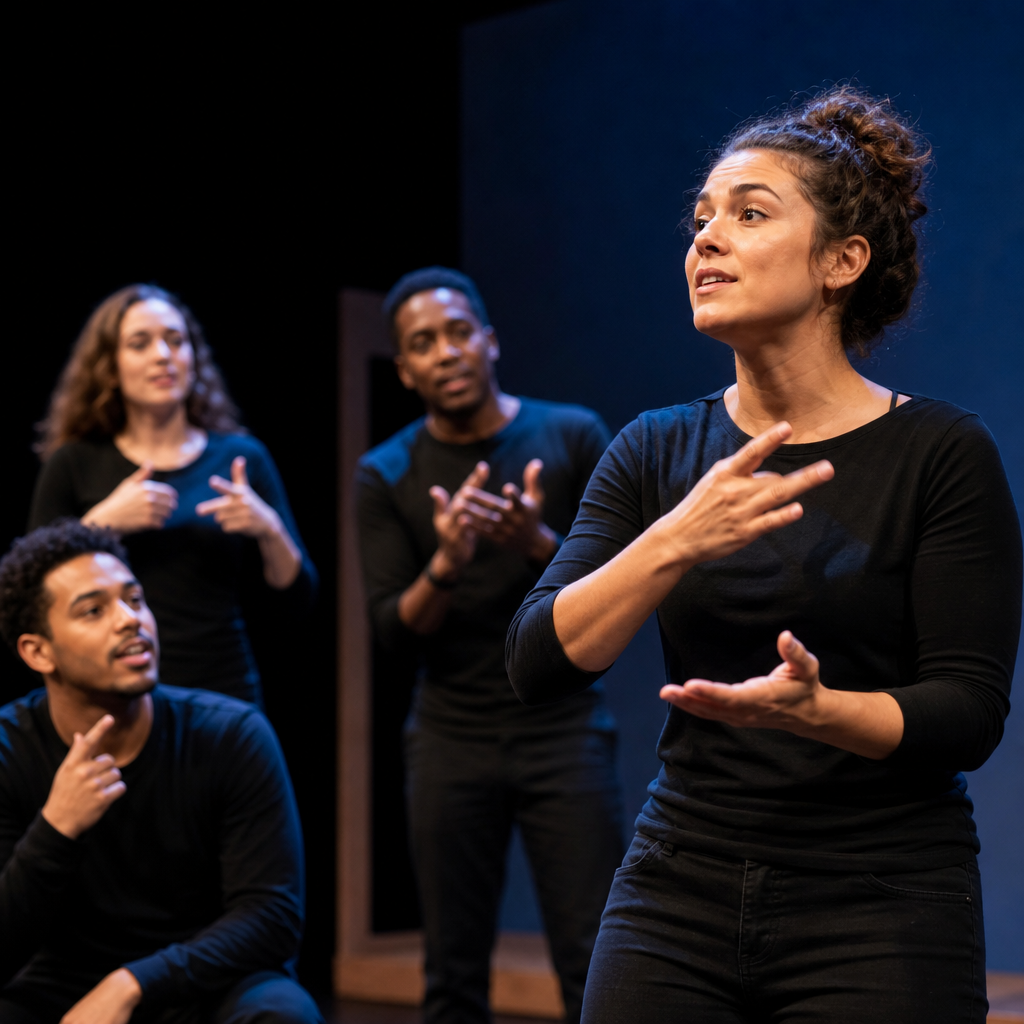

Storytelling in sign language and spoken language reveals how human expression adapts to the body, the senses, and the community that receives a story. In Deaf Culture & Identity, storytelling is not a side topic; it is one of the clearest ways to understand values, memory, humor, artistry, and belonging. A story can be told through voice, but it can also be told through hands, face, gaze, movement, rhythm, and the deliberate use of space. When people compare sign language with spoken language, they often focus first on vocabulary or grammar. In practice, the richer comparison is narrative performance: how a teller builds character, marks perspective, creates suspense, and invites an audience into a shared world.
Sign languages are fully developed natural languages with their own grammar, discourse patterns, and literary traditions. American Sign Language, British Sign Language, Langue des Signes Française, and other sign languages are not manual versions of the surrounding spoken languages. That point matters because signed storytelling is not simply spoken storytelling without sound. It uses visual-gestural structure. Meaning is carried by handshape, movement, location, palm orientation, facial expression, body shift, timing, and spatial mapping. Spoken storytelling, by contrast, relies on the auditory channel, using pitch, volume, pace, stress, and vocal texture alongside words. Both forms can be poetic, precise, funny, and emotionally complex, but they organize narrative information differently.
This matters for anyone exploring Deaf art, storytelling, and expression because narrative is where language, identity, and culture become visible. In classrooms, I have seen students understand Deaf culture more quickly through one strong signed story than through a stack of definitions. A skilled signer can embody several characters, show a setting without naming it directly, and shift between literal description and cinematic depiction in seconds. A skilled spoken storyteller can do parallel work through voice, dialogue, and sound patterning. Studying both side by side helps readers recognize that language is not only a system for conveying facts. It is also a performance medium, a social practice, and a record of collective experience.
What makes storytelling in sign language distinct
The defining feature of sign language storytelling is that the language itself is visual, embodied, and spatial. A signer does not just tell a story; the signer stages it in front of the audience. Characters can be assigned locations in signing space. A house may be established to the left, a road to the right, and a witness at center. Once those positions are set, the teller can refer back to them efficiently and vividly. This creates a narrative map that audiences follow with their eyes. In spoken language, a narrator usually has to restate or verbally cue those relationships more often.
Another key feature is role shift, sometimes called constructed action, where the signer subtly changes body orientation, facial expression, or gaze to take on a character’s perspective. Constructed dialogue can also be signed directly, allowing viewers to feel as if they are watching rather than merely hearing reported speech. This is one reason signed stories are often described as cinematic. They can zoom in, cut between perspectives, and show internal reaction with remarkable economy. None of this makes signed storytelling superior in every context, but it does make it distinct. The visual channel enables forms of immediacy that spoken narration usually creates through different tools.
Classifiers also play a major role. In many sign languages, classifiers are handshapes representing categories of objects, vehicles, people, or forms, and they can show motion, arrangement, and interaction. A storyteller can depict a car turning sharply, a person climbing carefully, or rain hitting windows using structured visual grammar. To a new learner, this may look like mime, but in fluent use it is linguistic and rule-governed. Good signed storytelling depends on control, clarity, and timing, not random gesture. That distinction is essential when discussing Deaf artistic expression seriously.
How spoken storytelling creates narrative power
Spoken language storytelling is shaped by sound. The teller can stretch suspense through pauses, sharpen contrast through stress, and signal irony through tone alone. Accent, breath, and vocal texture add layers of meaning before a listener processes individual words. Oral traditions around the world have relied on these features for centuries, from epic recitation to family anecdotes. Spoken narrative also excels at managing long chains of abstract information, especially when a teller uses verbal signposts such as “meanwhile,” “earlier that day,” or “what mattered most.”
Dialogue in spoken stories can create instant character identity. A slight shift in register can signal age, education, status, or mood. Repetition works differently too. A phrase repeated vocally can become a refrain, joke, or emotional anchor. Sound symbolism, alliteration, rhyme, and meter are additional resources. Poets and oral storytellers have long used them because listeners remember patterned sound. In practical terms, spoken storytelling often supports radio, podcasts, and phone-based communication in ways signed performance does not, because the auditory channel travels well without visual contact.
Still, spoken storytelling is not automatically more accessible or more expressive. It depends on the audience, setting, and language community. In a noisy room, the finest vocal delivery may be lost. In a video setting, a signer may communicate more directly than a speaker who relies on subtle acoustic cues compressed by poor audio. Comparing the two fairly means looking at medium, not assuming one default standard. Each language form develops excellence inside its own channel.
Core differences at a glance
| Feature | Sign language storytelling | Spoken language storytelling |
|---|---|---|
| Primary channel | Visual and spatial | Auditory and temporal |
| Character portrayal | Role shift, facial grammar, body movement | Voice, dialogue, accent, pacing |
| Scene building | Spatial mapping and classifiers | Verbal description and sequencing |
| Rhythm | Movement timing, holds, transitions | Pause, stress, pitch, tempo |
| Audience attention | Requires visual focus and sightlines | Can work without direct eye contact |
| Literary effects | Symmetry, repetition in space, visual metaphor | Rhyme, alliteration, sound patterning |
This comparison helps, but it should not flatten the art. Strong storytellers in either mode constantly blend structure and performance. A Deaf performer may use stillness as powerfully as movement. A spoken narrator may rely more on gesture than on voice alone. The real lesson is that narrative technique is always tied to the affordances of the language channel.
Deaf storytelling traditions and cultural meaning
Within Deaf communities, storytelling carries social memory. Stories pass along experiences with school, family communication, discrimination, humor, and pride. They preserve information about Deaf clubs, residential schools, interpreters, technology shifts, and changing attitudes toward signing. Before widespread online video, much of this cultural transmission happened face to face at gatherings, performances, and community events. Even now, live storytelling remains important because it builds shared attention and immediate feedback, both central features of Deaf social space.
Humor is especially significant. Deaf jokes often depend on visual timing, insider knowledge, or perspective reversal. A hearing audience may miss the point if it is explained only in words, because the joke lives in the signed setup and delivery. The same is true for narratives about communication barriers. A spoken retelling may summarize the event, but a signed performance can show exactly how misunderstanding unfolded between people who occupied different sensory worlds. That difference is not minor. It is where cultural insight resides.
Deaf literature also includes formal genres such as personal narratives, folklore, translated works, original poetry, and performances built around handshape constraints, movement patterns, or visual vernacular. Scholars including Clayton Valli helped document signed poetry as literature rather than novelty. Performers such as Ben Bahan and Ella Mae Lentz demonstrated how signed narratives can carry metaphor, political critique, and emotional depth with high artistic control. These works belong in any serious discussion of Art, Storytelling & Expression because they show Deaf creativity on its own terms.
Performance techniques: face, body, space, and timing
To understand signed storytelling, start with the face. In sign languages, facial expression is not decoration. It can mark questions, conditionals, intensity, affect, or character attitude. The body then layers on stance, scale, and perspective. A slight lean can separate narrator from character. A sharp head turn can mark a change in viewpoint. Timing matters just as much. Holding a sign for an extra beat can create suspense. A rapid transition can signal panic or comedy. Skilled performers manage these elements with the precision actors bring to stage blocking.
Space is equally important. When I evaluate signed narratives, one of the first things I watch is whether the signer establishes referents clearly and returns to them consistently. If the audience loses the spatial map, the story loses coherence. Fluent storytellers maintain that map while varying camera distance, so to speak. They can depict a whole scene, then narrow to a facial reaction, then reopen to group action. This capacity makes signed narratives unusually effective for action, interpersonal conflict, and visual comedy.
Spoken storytellers also use body language, of course, but they do not depend on it in the same grammatical way. Their timing is heard more than seen. Their transitions are often carried by conjunctions, intonation, or explicit markers. Both arts demand control. Neither rewards vagueness. The difference is where the structure sits: in voice and sound for spoken language, and in visible linguistic movement for sign language.
Translation, interpretation, and what gets lost
Can a signed story be translated into spoken language or vice versa? Yes, but never perfectly. Translation across modalities always involves choices. A classifier sequence showing a bicycle skidding on wet pavement may take several spoken sentences to explain. A spoken pun based on rhyme may have no direct signed equivalent. Interpreters and translators therefore aim for functional equivalence, preserving intent, effect, and narrative logic rather than matching form word for word.
One common mistake is assuming captions fully replace signed performance. Captions can convey content, but they usually cannot reproduce spatial grammar, facial nuance, or the aesthetic force of role shift. Likewise, voicing a signed poem may communicate theme while losing patterned symmetry in the signing space. The reverse also applies. A sound-based poem translated into sign may gain visual richness but lose alliteration or sonic texture. This is not failure. It is the normal cost of moving art between language systems.
For educators and publishers, the practical lesson is clear: whenever possible, present signed works in video form and treat translations as companions, not substitutes. If this hub connects to articles on Deaf poetry, visual vernacular, signed theater, or interpretation, that internal structure helps readers understand the broader ecosystem of Deaf expression.
Modern platforms, education, and the future of expression
Digital video has transformed signed storytelling. Platforms such as YouTube, TikTok, and Instagram have allowed Deaf creators to publish performances without waiting for hearing gatekeepers. Short-form stories, satire, advocacy clips, and serialized narratives now circulate globally within hours. This has expanded visibility, but it has also raised quality questions. Viral content is not always culturally grounded, and algorithmic success can favor simplified performance over deeper literary craft. Even so, the net effect has been powerful: more archives, more experimentation, and more intergenerational access.
Education remains uneven. Many schools still treat signed storytelling as enrichment rather than as a core literacy practice for Deaf learners. That is a mistake. Narrative skills support language development, memory, inference, and identity formation. Research in bilingual-bicultural education has long shown that strong first-language development benefits broader academic growth. When Deaf children encounter fluent adult signers telling sophisticated stories, they see what mastery looks like. They also see that their language is capable of beauty, precision, and authority.
The future of this field depends on documentation, criticism, and access. Communities need archives of performances, teacher training, fair compensation for Deaf artists, and serious reviewing standards. Readers exploring Deaf Culture & Identity should treat signed storytelling not as a comparison exercise alone, but as a major art form with its own canon, techniques, and cultural work.
Storytelling in sign language vs spoken language is not a contest over which form is more expressive. It is a study in how language shapes art through different sensory channels. Signed storytelling uses space, classifiers, role shift, and facial grammar to build vivid, embodied narratives. Spoken storytelling uses voice, sound patterning, and auditory pacing to guide listeners through time. Both can move audiences deeply. Both can preserve memory, teach values, and create community. The crucial insight is that signed stories are not lesser versions of spoken ones. They are complete narrative systems with their own literature, performance standards, and cultural significance.
For anyone using this page as a hub for Art, Storytelling & Expression within Deaf Culture & Identity, the next step is simple: watch signed performances, read about Deaf literature, compare translations critically, and learn how Deaf artists talk about their own work. That approach builds better understanding than any abstract definition alone. When you follow the stories, you begin to see the culture clearly.
Frequently Asked Questions
How is storytelling in sign language different from storytelling in spoken language?
Storytelling in sign language differs from spoken storytelling because the language is built through visual, spatial, and bodily expression rather than sound alone. In spoken language, meaning is typically carried through words, tone of voice, pacing, and pauses. In sign language, meaning is expressed through handshape, movement, facial expression, eye gaze, body posture, rhythm, timing, and the use of physical space. That means a signer is not simply “acting out” a spoken story. They are using a complete language system that organizes information in ways that are especially well suited to visual communication.
This creates a different storytelling experience for both the performer and the audience. A signer can shift perspective fluidly, showing what one character sees in one part of the signing space and what another character feels in another. They can establish locations, revisit them, and layer action visually so the audience tracks events almost like watching a scene unfold. Spoken storytellers can also create vivid scenes, of course, but they usually rely more on descriptive wording and vocal delivery. Sign language storytelling often makes the scene itself visible through the body.
The result is not that one form is better than the other, but that each has its own strengths. Spoken storytelling may emphasize sound patterns, voice quality, and verbal imagery. Sign language storytelling may emphasize embodiment, visual detail, spatial relationships, and direct character portrayal. Comparing them reveals how human storytelling adapts to the senses available to a community and how language grows around those strengths.
Why is storytelling so important in Deaf Culture and identity?
Storytelling holds a central place in Deaf Culture because it carries far more than entertainment. It preserves shared experiences, transmits community values, reflects humor, and strengthens cultural continuity across generations. In many Deaf spaces, stories help explain what it means to navigate the world visually, how Deaf people build connection, and how cultural knowledge is passed from one person to another. Through stories, community memory stays alive.
This importance is also tied to belonging. Stories often communicate experiences that Deaf audiences recognize immediately, such as misunderstandings with hearing institutions, moments of visual cleverness, pride in sign language, or the humor that comes from everyday Deaf life. When people see those experiences represented in a culturally fluent way, storytelling becomes affirming. It says that these lives, perspectives, and ways of being are worth remembering and sharing.
In addition, Deaf storytelling is deeply artistic. It is a space where language, performance, timing, and visual creativity come together. Skilled signers use facial expression, role shifting, movement, and rhythm to create memorable performances that can be funny, moving, critical, or poetic. Because of that, storytelling is not only a cultural record but also a celebrated art form. It helps define identity by showing how language and culture are lived, felt, and performed within the Deaf community.
What role do facial expressions, body movement, and space play in sign language storytelling?
Facial expressions, body movement, and space are essential parts of sign language storytelling because they carry meaning, structure, and emotional depth. They are not optional extras added for dramatic effect. In sign languages, facial expressions can mark questions, intensity, attitude, character emotion, and narrative tone. A shift in the eyes or mouth can change how a line is understood. Body movement can show who is speaking, where the action is happening, and how a character responds physically and emotionally.
Space is especially powerful. Signers can assign locations in front of them to represent people, places, or ideas, then return to those locations throughout the story. This allows audiences to follow relationships and events visually. For example, one side of the space may represent one character and another side a second character, making dialogue and perspective shifts clear without repeated verbal explanation. A signer can also “zoom in” on a detail or “pull back” to show a wider scene using movement and framing with the body.
Together, these features create a rich narrative environment. Instead of merely describing action, the signer often constructs it in real time. Audiences do not just hear about a person running, looking, hesitating, or laughing; they see those qualities shaped through language. This is one reason sign language storytelling can feel highly immediate and immersive. It draws on the full expressive capacity of the body while remaining linguistically precise.
Can the same story change when it is told in sign language instead of spoken language?
Yes, the same story can change significantly when it moves between sign language and spoken language, even when the core plot remains the same. That is because stories are never carried by words alone. They are shaped by the medium of expression, the cultural expectations of the audience, and the tools available in the language itself. A story told in sign language may become more spatial, more embodied, and more visually dynamic. A spoken version may rely more on verbal description, sound-based humor, or subtle vocal tone.
Some elements transfer easily, such as major events, character relationships, or central themes. But other elements may need to be reimagined rather than translated directly. For instance, a joke based on visual timing or a role shift in sign language may not have the same impact in spoken form unless it is adapted creatively. Likewise, a spoken story that depends heavily on rhyme, alliteration, or vocal impersonation may need a different strategy in sign language to achieve a similar effect.
This does not mean one version is less faithful. It means storytelling is a living act of interpretation. The language shapes what becomes vivid, memorable, and emotionally resonant. In many cases, a story told in sign language is not just a copy of a spoken original, but a fully realized performance in its own right. Understanding that helps people appreciate sign language storytelling as an original expressive tradition, not simply a visual substitute for speech.
What can storytelling in sign language and spoken language teach us about human communication?
Comparing storytelling in sign language and spoken language teaches us that human communication is remarkably flexible, creative, and deeply connected to the body and the senses. People often assume language is mainly about words or sound, but storytelling shows that meaning can be organized through many channels. Voice, silence, gesture, facial expression, timing, movement, and space all help shape how stories are understood. Sign language makes that especially visible because it reveals how much language can do without relying on sound at all.
It also teaches us that communication is social and cultural, not just technical. Stories are created for communities. They reflect what a group notices, values, laughs at, remembers, and passes on. In Deaf communities, storytelling demonstrates how visual attention, shared experience, and collective identity influence the way narrative is built and received. In spoken-language communities, oral traditions show how sound, cadence, and listening practices shape memory and performance. Both forms remind us that language grows within human relationships.
Perhaps most importantly, this comparison challenges narrow ideas about what counts as rich or sophisticated expression. Sign language storytelling is not lesser because it is visual, and spoken storytelling is not lesser because it is auditory. Each reveals a different dimension of human artistry. Together, they show that storytelling is one of the clearest proofs that language is adaptive, embodied, and profoundly human.