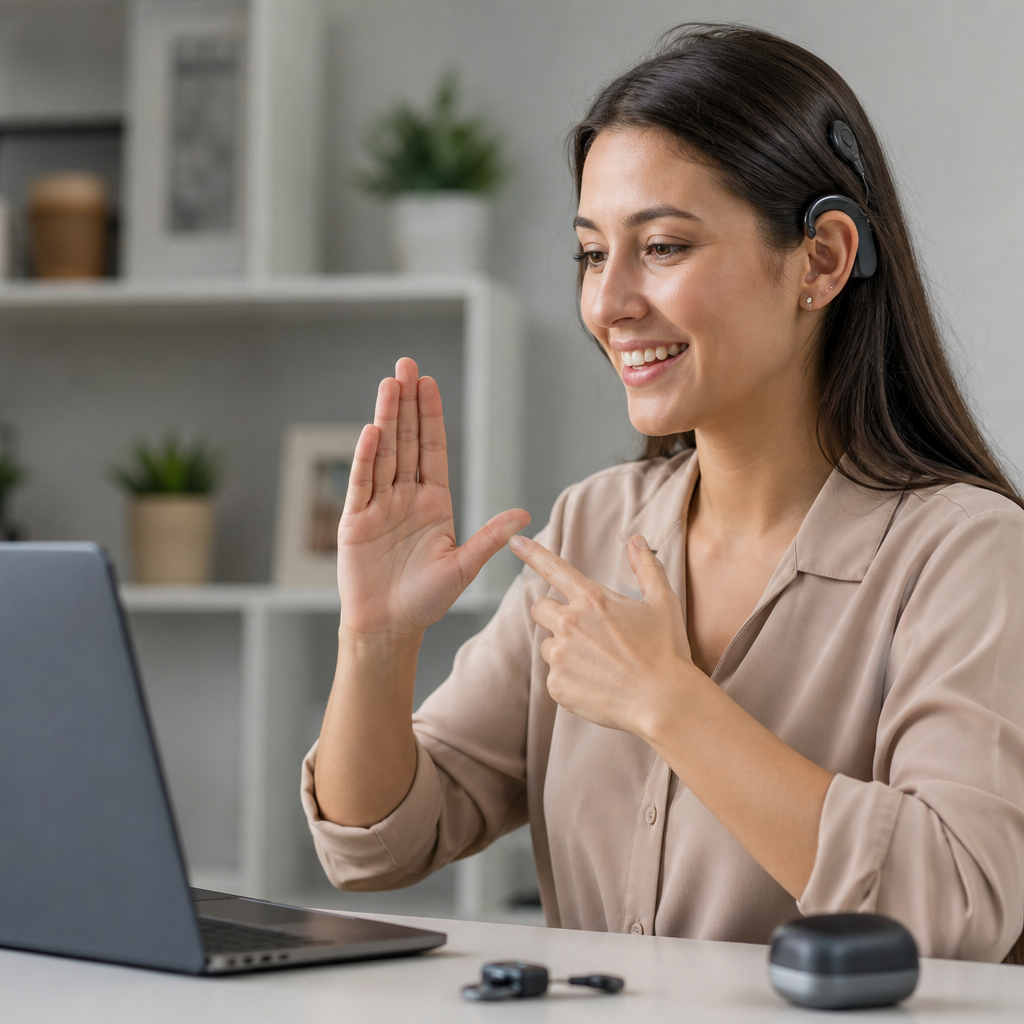

Live captioning and pre-recorded captions both turn speech into on-screen text, but they serve different production workflows, accuracy expectations, and accessibility needs. In practical terms, live captioning happens as words are spoken during events such as webinars, classes, broadcasts, meetings, and video calls. Pre-recorded captions are created after audio is finalized for content like training videos, films, tutorials, product demos, and social clips. For deaf and hard of hearing viewers, that distinction affects comprehension, latency, speaker identification, punctuation quality, and overall usability. For publishers, it affects cost, staffing, turnaround time, compliance, and platform choice.
Having worked with both real-time caption vendors and post-production caption editors, I have seen teams assume the two are interchangeable. They are not. A caption file delivered for a polished course module follows a different quality process than captions created during a live keynote with multiple speakers and unstable audio. The tools overlap, especially now that automatic speech recognition is built into Zoom, Microsoft Teams, YouTube, Google Meet, and streaming platforms, but the standards for success differ. A live caption feed must prioritize speed and continuity. A pre-recorded caption workflow should prioritize accuracy, timing, readability, and editing control.
This matters because captions are not just a convenience feature. They are a core access service and, in many settings, a legal requirement. Schools, employers, government agencies, healthcare systems, and media publishers may need captions under accessibility laws and platform policies. Captions also support broader audiences: viewers in noisy places, multilingual audiences, people with auditory processing differences, and anyone who watches with the sound off. As this hub for captioning and transcription tools explains, understanding live captioning vs pre-recorded captions helps you choose the right method, the right technology, and the right quality benchmark for every use case.
What Live Captioning Means in Practice
Live captioning is the real-time conversion of spoken language into text during an ongoing event. It is commonly delivered by a trained CART captioner, a respeaker who repeats speech into a speech engine, or an automatic speech recognition system. The defining feature is immediacy. Captions appear seconds after speech occurs, often with some delay because the system needs enough audio context to generate text. In high-quality human-supported workflows, latency may be only a few seconds. In automated systems, timing can be faster, but error rates usually rise when audio quality drops or speakers overlap.
Typical live captioning environments include board meetings, hybrid conferences, university lectures, worship services, courtrooms, customer events, live streams, and emergency briefings. Each environment introduces challenges. A panel discussion may include interruptions and audience questions. A science lecture may include specialized vocabulary like CRISPR, cytokines, or Kubernetes. A city council stream may feature poor microphones and remote speakers dialing in from cars. Because the event cannot pause for editing, preparation matters. The best live caption providers request agendas, speaker names, glossaries, and slide decks in advance so they can build custom dictionaries and reduce term errors.
Accuracy in live captioning is always a balance among speed, audio clarity, and context. Human captioners generally outperform raw automation for complex or high-stakes events, especially where proper nouns, legal terminology, medical language, or multiple speakers are involved. Automated live captions are improving rapidly and work well for informal meetings, internal calls, and lower-risk content, but they still struggle with accents, crosstalk, unstable bandwidth, and domain-specific jargon. If the event concerns compliance, public access, or critical instructions, relying on unedited auto-captions alone is usually a weak accessibility decision.
What Pre-Recorded Captions Include
Pre-recorded captions are created after a video or audio asset is complete. That single fact changes everything. Because the editor can replay the content, correct transcription mistakes, set precise timecodes, identify speakers consistently, and follow caption style rules, pre-recorded captions should be substantially more accurate and easier to read than live captions. They are delivered in formats such as SRT, VTT, SCC, STL, or platform-specific files, then embedded or uploaded to video hosting systems, learning platforms, social channels, and broadcast workflows.
In production, pre-recorded captioning usually starts with a transcript, either generated by a human transcriber, an AI speech engine, or a blended workflow. An editor then segments the text into readable caption frames, synchronizes it with speech, checks punctuation, applies sound cues where needed, and validates file formatting. Good captions do more than mirror words. They preserve meaning, indicate important non-speech information such as [music], [laughter], or [door slams], and maintain sensible line breaks. Timing is not cosmetic; poor timing increases cognitive load and makes captions harder to follow even when the words are technically correct.
For video libraries, pre-recorded captioning scales better over time because assets can be reviewed once and reused everywhere. A training department can caption onboarding modules, a media team can caption a webinar archive, and a nonprofit can caption public education videos for YouTube and its website using the same master files. Once that foundation exists, translations, searchable transcripts, and clip repurposing become easier. That is why pre-recorded captions are often the anchor for a broader transcription strategy rather than a one-off deliverable.
Key Differences: Speed, Accuracy, Cost, and Use Cases
The simplest way to compare live captioning vs pre-recorded captions is this: live captioning optimizes for immediacy, while pre-recorded captions optimize for precision. That difference shapes every decision. Live captioning is used when an audience needs text access right now. Pre-recorded captions are used when content will be watched repeatedly and quality can be refined before publication. One is event support. The other is media production.
| Factor | Live Captioning | Pre-Recorded Captions |
|---|---|---|
| Timing | Created during the event | Created after recording is finalized |
| Primary goal | Immediate access | High accuracy and readability |
| Typical accuracy | Varies by audio, speaker overlap, and tool | Higher because editing and review are possible |
| Latency | Usually a short delay | No live delay because captions are timed before release |
| Best use cases | Meetings, classes, webinars, broadcasts, events | Courses, films, tutorials, marketing videos, archives |
| Common tools | CART, Zoom, Teams, Meet, StreamText, 1CapApp | Caption editors, ASR plus review, Rev, 3Play Media, Amara |
| Cost pattern | Often billed per event time or scheduled block | Often billed per media minute or workflow volume |
Cost is nuanced. A one-hour live event with a professional CART provider can cost more than auto-captions, but it may be the correct choice if the audience depends on near-real-time accuracy. Pre-recorded captioning often becomes economical at scale because AI can generate a strong first draft and editors can focus on correction and timing. However, cheap captions are not always usable captions. I have reviewed vendor files that looked affordable until quality assurance revealed missing speakers, broken line breaks, and terminology errors that changed meaning. Total cost includes remediation.
Use case should drive the choice. If a hospital is hosting a live patient education session, live captions may be necessary during the event, followed by edited captions for the archived recording. If a software company publishes a product tutorial, pre-recorded captions are the obvious baseline because users may pause, replay, and depend on exact instructions. The most effective accessibility programs do not ask which method is better in the abstract. They map methods to context.
Captioning Quality Standards and Readability Rules
Not all captions that display text are equally accessible. Quality depends on accuracy, synchronization, completeness, placement, and readability. Widely used guidance comes from FCC broadcast expectations, WCAG accessibility principles, and style practices adopted by media teams, universities, and caption service providers. Exact house rules vary, but strong captions consistently reflect spoken content, appear long enough to read, avoid obscuring essential visuals, and identify speakers when that matters for understanding.
Readability rules are especially important for pre-recorded captions. Editors typically limit line length, preserve natural phrase boundaries, and avoid awkward splits between articles and nouns or verbs and objects. For example, a caption break after “download” and before “the report” reads more naturally than splitting “the” from “report.” Speaker labels should be concise and consistent. Sound cues should only be included when they provide meaningful context. Excessive notation creates clutter; missing notation can remove critical information. Good editing respects both language and visual pacing.
Live quality standards are more forgiving because viewers understand that speech is unfolding in real time. Even so, preparation has measurable impact. In one conference workflow I managed, simply collecting speaker names, acronyms, and product terms beforehand reduced visible errors dramatically. Another consistent lesson is that microphone discipline matters as much as software quality. A premium speech engine cannot rescue muffled audio from a laptop across a conference room. If you want better captions, improve the audio chain first.
Tools, Workflows, and Choosing the Right Solution
The captioning and transcription tools market now spans built-in meeting features, enterprise accessibility services, specialist vendors, and editing platforms. For live events, common options include Zoom live transcription, Microsoft Teams captions, Google Meet captions, human CART providers, and streaming connectors such as StreamText. For pre-recorded media, teams often use YouTube Studio, Adobe Premiere Pro, Otter, Descript, Rev, 3Play Media, Amara, or platform-native caption managers in Brightcove, Vimeo, Kaltura, and Panopto. The right stack depends on risk level, content volume, and who will maintain quality control.
A practical selection framework starts with five questions. Is the content live or on demand? How accurate must it be? Does it contain specialized vocabulary? What file formats or integrations are required? Who will review and approve captions before publication? If you cannot answer the last question, your process is incomplete. Automation is useful, but accountability still matters. Someone must verify that captions are correct, synchronized, and attached to the right asset version.
For this subtopic hub, the strongest internal path usually branches into live captioning services, automatic transcription software, caption file formats, video platform workflows, and accessibility QA. Those areas connect directly. Teams that understand how an SRT differs from a VTT file make fewer publishing mistakes. Teams that know when to escalate from auto-captions to a human provider avoid preventable access failures. Captioning works best when procurement, production, and accessibility review are treated as one system rather than separate tasks.
When to Use Both Together
Many organizations need both live captioning and pre-recorded captions for the same piece of content. A conference keynote may require live captions for attendees, then edited captions for the replay posted later. A university lecture may use live captions in class, then publish corrected captions and a transcript in the learning management system. This combined approach is often the most practical because it serves immediate access without sacrificing archive quality.
The key is not to treat the live output as final by default. Raw live captions often include timing drift, punctuation gaps, and recognition errors that are acceptable in the moment but distracting on replay. A post-event cleanup pass can transform usable live access into durable media quality. That is especially important for training, compliance documentation, and public-facing content that may be referenced for months or years.
Live captioning and pre-recorded captions solve related but different accessibility problems. Live captioning delivers immediate text access during events where waiting is not an option. Pre-recorded captions deliver polished, accurate, time-synced text for media that will be published, reused, searched, translated, and archived. If you remember one principle, make it this: choose live captioning for immediacy, choose pre-recorded captions for precision, and use both when content moves from event to archive.
For teams building a stronger accessibility program, the benefit is clear. Matching the caption method to the use case improves comprehension for deaf and hard of hearing audiences, reduces compliance risk, and raises the overall quality of your content operations. It also creates better outcomes for everyone else who relies on captions in noisy spaces, quiet workplaces, multilingual contexts, or mobile viewing. Captioning is not a box to check. It is part of how information becomes truly usable.
Audit your current meetings, videos, and publishing workflows, then decide where live captioning, pre-recorded captions, or a combined model fits best. From there, standardize tools, assign review ownership, and build caption quality into every release.
Frequently Asked Questions
What is the main difference between live captioning and pre-recorded captions?
The main difference comes down to timing and workflow. Live captioning is created in real time while a person is speaking, which makes it essential for webinars, virtual meetings, classroom lectures, live broadcasts, conferences, and video calls. Because the captioner or speech recognition system is working as the audio happens, live captions usually include a slight delay and may contain occasional errors, especially when speakers talk quickly, overlap, use technical terms, or have inconsistent audio quality.
Pre-recorded captions, by contrast, are created after the audio and video have been finalized. That gives editors time to review the dialogue, correct mistakes, identify speakers, add punctuation, and sync the captions precisely to the spoken words. As a result, pre-recorded captions are generally more accurate, better timed, and easier to read. In short, live captioning prioritizes immediacy, while pre-recorded captions prioritize precision and polish. Both are important accessibility tools, but they are used in different situations and are built around different production needs.
Which option is more accurate: live captioning or pre-recorded captions?
In most cases, pre-recorded captions are more accurate than live captioning. Since they are created after the content is recorded, captioners and editors can replay the audio, verify names and terminology, correct grammar and spelling, and fine-tune caption timing for readability. This review process is especially important for training content, tutorials, marketing videos, films, and product demonstrations, where viewers may rely on every word being correct and clearly presented.
Live captioning can still be highly effective, but it naturally operates under more pressure. A human captioner, CART provider, respeaker, or automated speech recognition system must keep up with speech in real time, often without the benefit of editing or second passes. Accuracy can vary based on internet stability, microphone quality, background noise, accents, number of speakers, and whether specialized vocabulary is provided in advance. For accessibility, both forms are valuable, but if the goal is the highest possible level of caption accuracy and synchronization, pre-recorded captions are usually the stronger choice.
When should you use live captioning instead of pre-recorded captions?
You should use live captioning whenever the content is happening in the moment and viewers need immediate access to spoken information. Common examples include live webinars, online classes, team meetings, public events, sports broadcasts, worship services, panel discussions, and livestreamed presentations. In these situations, there is no opportunity to wait until the session ends and add captions later. The audience needs real-time support so they can follow along as the event unfolds.
Live captioning is particularly important for deaf and hard of hearing viewers, but it also benefits people in noisy environments, non-native speakers, attendees with attention or processing differences, and anyone who wants to reinforce understanding while listening. It can also improve engagement in large events where audio quality may vary from speaker to speaker. If the content is time-sensitive and interactive, live captioning is the right fit. Pre-recorded captions can always be added later to create a cleaner archived version, but during the event itself, live access is what matters most.
Why are pre-recorded captions better for videos like tutorials, training modules, and social media clips?
Pre-recorded captions are often the best choice for on-demand video because they allow for careful editing, consistent formatting, and exact synchronization with the final audio track. For tutorials, training modules, software demos, product explainers, films, and social clips, viewers may pause, replay, or closely study what is being said. That means captions need to be highly reliable, easy to read, and timed well enough that they support comprehension rather than distract from it.
Because editors can work from a finished file, pre-recorded captions can include cleaner line breaks, accurate punctuation, correct brand names, speaker labels when needed, and non-speech elements such as music cues or important sound descriptions. This is especially valuable when accessibility compliance, professionalism, and user experience are priorities. Pre-recorded captions also support SEO and discoverability when paired with transcripts, and they can improve viewer retention on platforms where many people watch videos with the sound off. For content that will be reused, shared widely, or represent a brand long term, pre-recorded captions offer a much more refined final result.
Do live captioning and pre-recorded captions both support accessibility for deaf and hard of hearing viewers?
Yes, both play an important role in accessibility, but they support different viewing situations. Live captioning provides immediate access to spoken content during real-time events, making it possible for deaf and hard of hearing participants to follow discussions, presentations, and announcements as they happen. Without live captions, a webinar, class, meeting, or livestream can become difficult or impossible to fully access in the moment.
Pre-recorded captions support accessibility in on-demand settings by offering a more complete and polished reading experience. They are typically more accurate, more readable, and better synchronized, which can make a big difference when viewers are learning, reviewing instructions, or watching longer-form content. Ideally, organizations should think of live and pre-recorded captions as complementary rather than competing tools. Live captioning ensures access now, while pre-recorded captions ensure high-quality access later. Together, they help create a more inclusive experience for deaf and hard of hearing viewers and for many others who benefit from on-screen text.