The future of deaf education is being shaped by technology, language access, policy reform, and a growing recognition that deaf learners thrive when schools build instruction around communication rather than deficit. Deaf education refers to the systems, methods, services, and institutions designed to support students who are deaf or hard of hearing, from early intervention through secondary school and beyond. In practice, that includes bilingual programs using sign language and written language, mainstream settings with interpreters, listening and spoken language models, residential schools for the deaf, family coaching, assistive technology, and specialized teacher preparation. I have worked with programs reviewing accessibility plans and curriculum delivery, and the strongest systems share one trait: they treat access as foundational, not supplemental.
This topic matters because educational outcomes for deaf students still vary widely by region, family resources, and school quality. Research from organizations such as the World Health Organization and national education agencies consistently shows that early language deprivation, delayed identification, and inconsistent accommodations can affect literacy, academic progress, and social development. At the same time, advances in newborn hearing screening, cochlear implant mapping, remote interpreting, captioning, visual learning platforms, and universal design are expanding what effective deaf education can look like. Families now face more choices than previous generations, but more choices do not automatically produce better outcomes. Schools need coherent systems, trained staff, and measurable standards.
As a hub for deaf education systems, this article explains the major models, the innovations changing classroom practice, and the policy decisions that will define success over the next decade. It also addresses the questions families, teachers, and administrators ask most often: What is the best language approach? How should schools balance inclusion with specialized support? Which technologies genuinely improve learning? What does a high-quality deaf education system include? The answers are practical. Strong systems identify hearing levels early, provide immediate language access, involve families as partners, monitor progress with appropriate assessments, and give students direct access to peers and adults who share their communication modes. The future is not one single method. It is a more responsive, evidence-based, student-centered ecosystem.
Core Models in Deaf Education Systems
Deaf education systems usually operate through four broad models: specialized schools for the deaf, mainstream schools with support services, resource or cluster programs within general schools, and hybrid arrangements that combine in-person and remote services. Each model can succeed or fail depending on execution. A residential or day school for the deaf often offers direct instruction in sign language, a concentrated peer group, deaf role models, and staff experienced in visual pedagogy. Those advantages are difficult to replicate in a mainstream classroom where a deaf student may be the only one using an interpreter.
Mainstream placement is often chosen because it offers proximity to home, broader course options, and inclusion with hearing peers. However, inclusion is not simply a seat in a classroom. It requires qualified interpreters, captioned media, acoustically treated rooms, teacher training, and time for collaboration. In audits I have seen, schools frequently overestimate access because supports exist on paper. Real access means the student can follow spontaneous discussion, ask questions easily, and participate in labs, group work, and extracurriculars without constant friction.
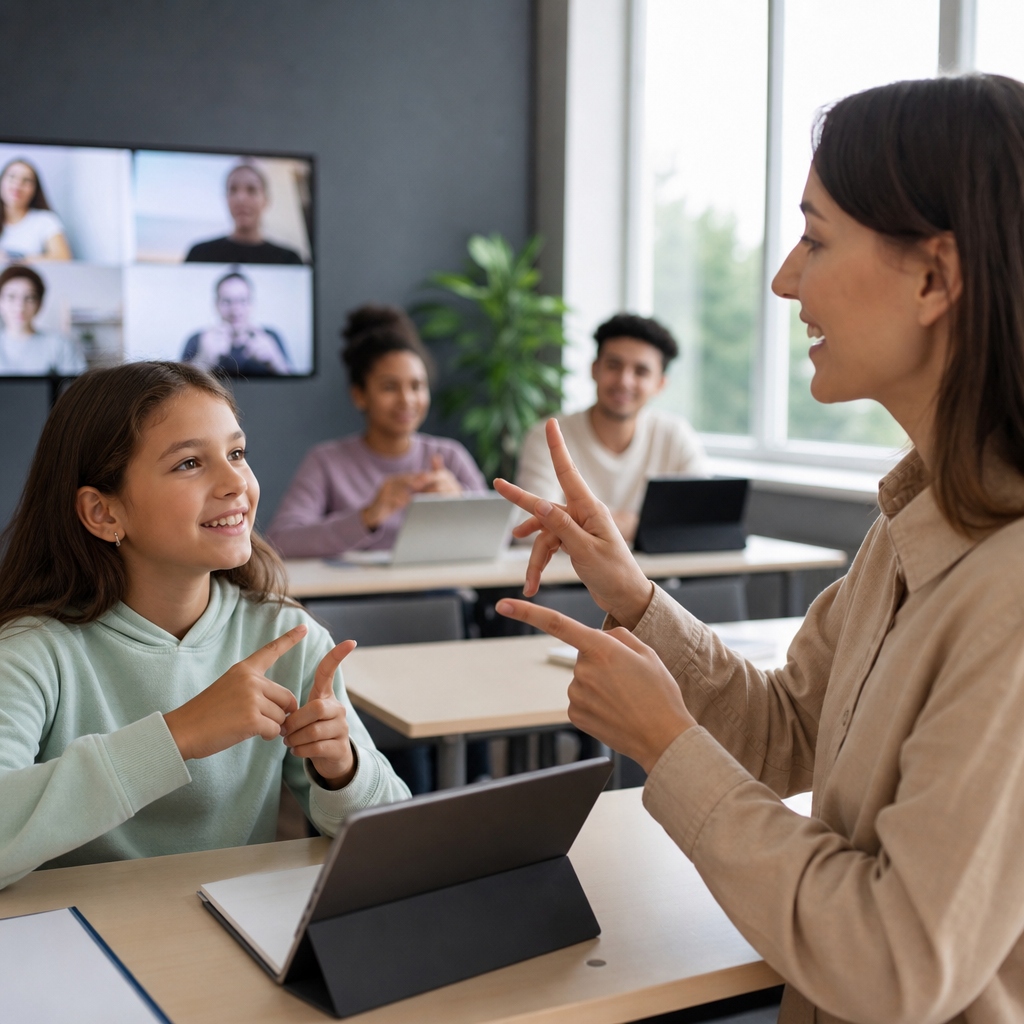
Cluster programs sit between specialized and fully mainstream settings. They bring several deaf and hard of hearing students together in one school or district, allowing economies of scale for interpreters, teachers of the deaf, speech-language services, and assistive listening systems. Hybrid models are growing quickly. A student may attend a local school but receive teletherapy, remote sign language instruction, virtual tutoring, or online mentoring from deaf professionals. This flexibility is especially important in rural areas where low-incidence disability services are hard to staff consistently.
No single model is best for every learner. Student language background, additional disabilities, family goals, travel distance, mental health, and academic profile all matter. The trend is toward systems that can move students between levels of support without delay rather than locking families into a single philosophy early and permanently.
Language Access and the Shift Toward Bilingual Thinking
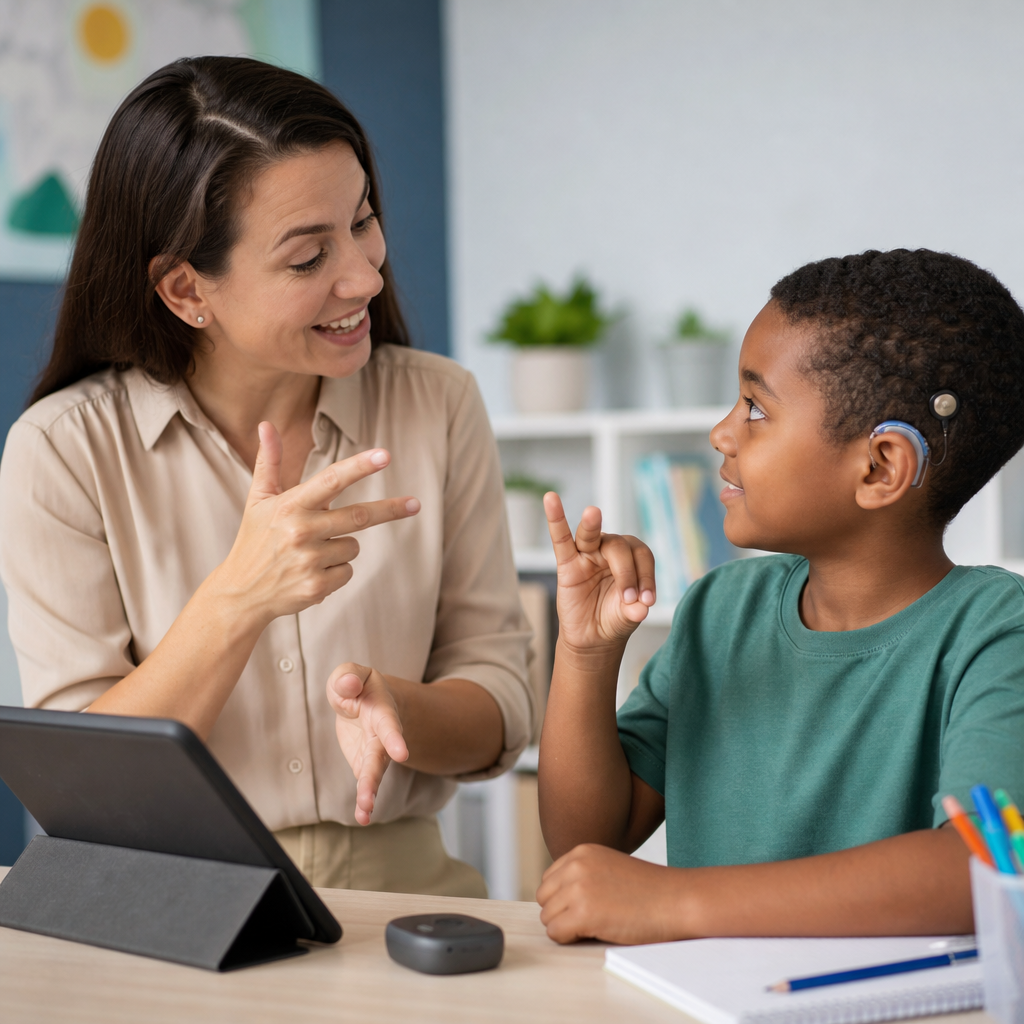
The most important trend in the future of deaf education is the growing consensus that early, rich language exposure matters more than ideological debates about one communication mode. For many students, that means access to a natural sign language as early as possible, alongside spoken language opportunities when appropriate. Bilingual approaches usually pair a national sign language, such as American Sign Language or British Sign Language, with the written majority language. The goal is not to replace speech training but to prevent language deprivation and build a full cognitive and academic foundation.
In strong bilingual programs, sign language is used for direct instruction, classroom discussion, and concept development, while reading and writing are taught explicitly with attention to vocabulary, syntax, morphology, and background knowledge. Teachers do not assume that a deaf child will absorb written language incidentally. They teach it systematically, often using visual scaffolds, repeated reading, and contrastive analysis between sign and print. Students benefit because they can access complex content immediately through a language they fully understand while building literacy over time.
Listening and spoken language programs also continue to evolve, particularly for students with hearing aids or cochlear implants. The most effective versions are data-driven and realistic about variability. Devices can improve access to sound, but they do not restore typical hearing. Fatigue, background noise, distance from the speaker, and rapid classroom talk still create barriers. Schools that understand this combine auditory support with visual access, rather than framing sign, captions, or note support as failure.
The practical question is not sign versus speech. It is whether the child has complete, consistent, age-appropriate access to language every day. Systems that answer yes are the systems most likely to improve long-term outcomes.
Technology Innovations Reshaping Classroom Access
Technology is transforming deaf education, but the best tools solve defined access problems instead of adding novelty. Automatic speech recognition has improved classroom captioning substantially, especially when paired with teacher microphones and trained caption editors. Platforms such as Google Meet, Microsoft Teams, and Zoom normalized live captions during remote learning, and many schools now use them in regular instruction. Accuracy still drops with overlapping talk, specialist vocabulary, and strong accents, so human review remains important for high-stakes settings.
Assistive listening technology remains essential. Modern frequency modulation and digital modulation systems transmit the teacher’s voice directly to hearing aids or cochlear implants, reducing the effect of distance and ambient noise. Sound-field systems can also improve listening conditions for the entire class. In schools I have assessed, these systems deliver measurable benefit only when staff know how to charge, pair, test, and troubleshoot them daily. Hardware without implementation discipline does little.
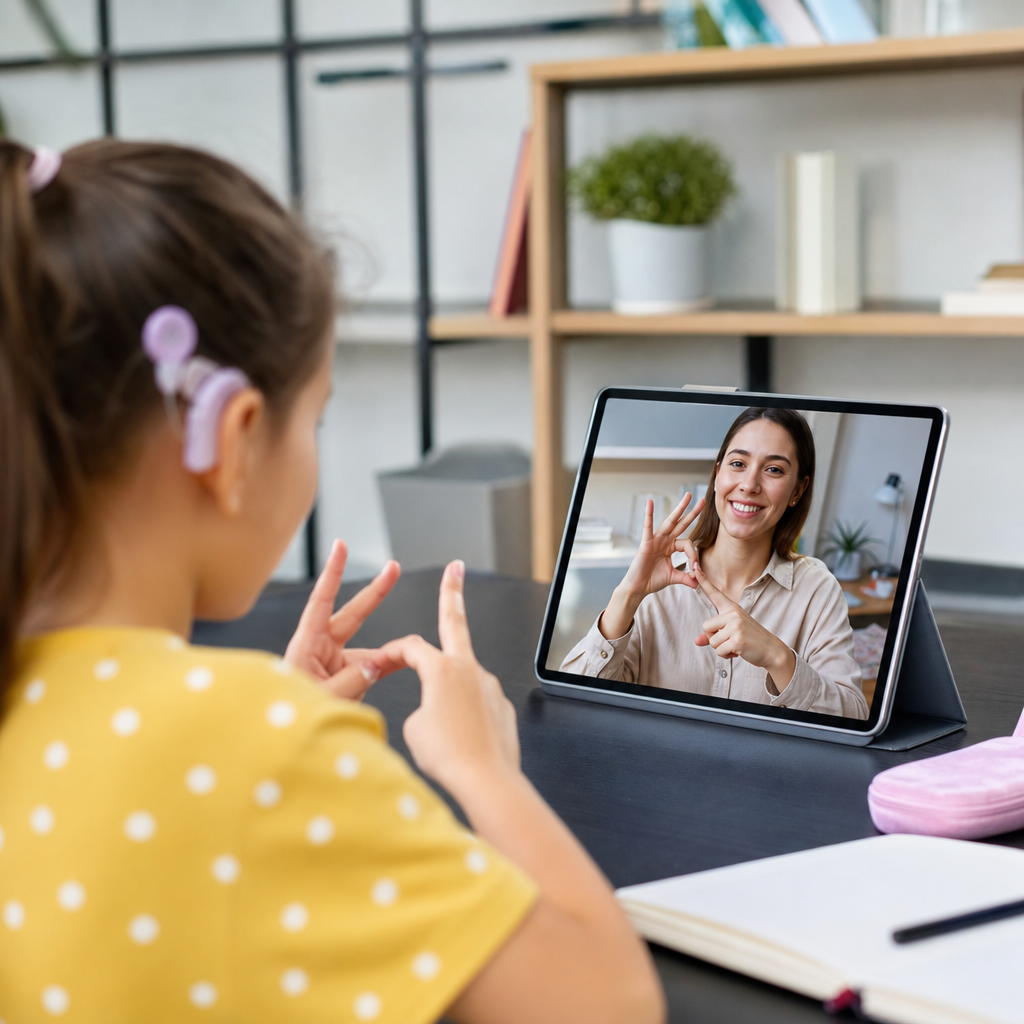
Visual learning tools are expanding faster than most districts realize. Interactive whiteboards, recorded mini-lessons with captions and sign overlays, vocabulary videos, and learning management systems allow deaf students to preview content and review it at their own pace. Emerging applications include sign language avatars for limited use cases, AI-based transcript summarization, and camera-based lecture capture that preserves both the instructor and the interpreted feed. These tools can improve autonomy, but they should not replace qualified teachers, interpreters, or direct interaction.
| Innovation | Primary Use | Best Fit | Key Limitation |
|---|---|---|---|
| Live captioning | Real-time text access during lessons | Lectures, assemblies, online classes | Errors rise with noise and multiple speakers |
| DM/FM systems | Direct audio transmission to devices | Students using hearing aids or implants | Requires daily testing and teacher compliance |
| Video remote interpreting | Access to interpreters at distance | Rural districts, short-notice coverage | Can be weaker for fast interaction or labs |
| Captioned video libraries | Asynchronous review of content | Homework, revision, flipped learning | Quality depends on accurate captions |
The future lies in integrated access ecosystems: captions, assistive listening, visual materials, interpreters, and accessible platforms working together. Districts that budget only for devices, rather than workflows and training, will continue to underperform.
Teacher Preparation, Interpreting Quality, and Workforce Gaps
One of the clearest constraints on the future of deaf education is workforce quality. A system is only as strong as its teachers of the deaf, sign-fluent classroom teachers, educational audiologists, speech-language pathologists, and interpreters. Shortages are widespread. In many regions, schools rely on itinerant specialists covering multiple campuses, which reduces direct service time and weakens collaboration with classroom staff. Interpreter shortages are equally serious, and educational interpreting requires distinct skills from community or conference work. A student following algebra, chemistry, or literature needs interpreters who can manage academic discourse, classroom routines, and developmental language needs.
Teacher preparation is changing in response. Stronger programs now include coursework in language development, deaf studies, audiology basics, literacy instruction, accessibility law, and assessment bias. They also give trainees supervised practice in bilingual classrooms, mainstream settings, and early intervention. That breadth matters because deaf learners are highly diverse. Some use sign language as a first language, some rely primarily on spoken language, some move across modes, and some have additional learning needs that alter instructional planning.
Professional standards also need sharper enforcement. Schools should verify interpreter qualifications, monitor classroom access, and build planning time into schedules. Teachers need training in pacing, turn-taking, visual attention cues, and accessible assessment design. I have seen simple changes produce immediate gains: pausing before key terms, sharing slides in advance, facing the class while speaking, and structuring discussion so only one person speaks at a time. These are not special favors. They are baseline instructional practices in accessible classrooms.
Long term, the field needs better recruitment pipelines, scholarships, mentoring for deaf educators, and salary structures that reflect specialist expertise. Without that, innovations in policy and technology will remain unevenly distributed.
Inclusion, Identity, and Student Well-Being
The future of deaf education is not only academic. It is social, cultural, and emotional. Deaf students need access to peers, identity development, and adults who model successful deaf lives. When schools focus narrowly on accommodations, they can miss the human reality of isolation. A mainstream student may appear integrated while still missing humor, side conversations, lunchroom interactions, and leadership opportunities. That cumulative exclusion affects confidence and belonging.
High-quality systems address this directly. They create deaf peer networks across schools, support clubs and mentoring, include deaf history and culture in the curriculum, and provide mental health services that are communication-accessible. Residential and day schools for the deaf have often led in this area because students can interact directly all day without mediation. Mainstream schools can improve by scheduling interpreter-supported extracurriculars, using cohort models, and connecting students with regional deaf communities.
Identity is not a secondary issue. Students who can communicate fully and see themselves reflected in school are more likely to advocate for their needs, persist through academic challenges, and transition successfully to higher education or employment. The best systems understand that achievement and belonging reinforce each other.
Policy, Assessment, and What Effective Systems Will Do Next
Future progress depends on policy discipline. Early hearing detection and intervention programs need seamless referral pathways so families move quickly from screening to audiology, language counseling, and educational planning. Schools need funding formulas that reflect the real cost of interpreters, captioning, audiology services, and specialist staff. Accessibility also has to be built into procurement. If a district adopts a learning platform, video library, or testing system that cannot support captions, transcripts, or interpreter visibility, it creates barriers at scale.
Assessment is another major reform area. Standardized measures often fail to capture what deaf students know when language access is weak or norms are inappropriate. Better systems use multiple measures: curriculum-based assessments, language samples, literacy diagnostics, content mastery tasks, and functional listening or access reviews where relevant. They distinguish between a knowledge gap and an access gap. That distinction changes everything about intervention.
The next generation of deaf education systems will be coordinated, bilingual-capable, technologically competent, and accountable for real access. They will track language growth early, train staff continuously, involve families honestly, and treat deaf students as a diverse population with varied strengths rather than a uniform category. For schools and families navigating this field, the priority is clear: choose programs that deliver full communication access, qualified professionals, and measurable progress. Start by auditing your current system, asking direct questions about language, staffing, technology, and student outcomes, then use those answers to build a better path forward.
Frequently Asked Questions
1. What trends are shaping the future of deaf education?
The future of deaf education is being driven by several connected trends: expanded language access, more inclusive technology, stronger policy advocacy, and a growing shift away from deficit-based models of disability. Increasingly, educators and families recognize that deaf and hard of hearing students do best when schools focus on communication access from the start rather than treating deafness as a problem to be fixed. This means building learning environments where students can fully access instruction through sign language, spoken language supports, written language, visual teaching strategies, and assistive technologies as appropriate to their individual needs.
Another major trend is the rise of bilingual and bimodal approaches. Many programs now emphasize sign language alongside written language development, and in some cases spoken language as well. These models support both academic growth and identity formation by giving students a fully accessible language foundation early in life. At the same time, schools are using more sophisticated tools such as real-time captioning, video-based instruction, hearing technology integration, remote interpreting, and digital classroom platforms designed with accessibility in mind. Together, these changes point toward a future in which deaf education becomes more personalized, language-rich, and responsive to the diverse ways deaf learners communicate and learn.
2. How is technology improving learning opportunities for deaf and hard of hearing students?
Technology is expanding access in ways that were difficult to imagine even a generation ago. In classrooms, students may benefit from captioned video, speech-to-text tools, interactive whiteboards, visual alert systems, video conferencing with sign language interpreters, and learning platforms that allow teachers to present content in multiple formats. These tools can reduce barriers to participation and help students access lectures, discussions, assignments, and peer collaboration more independently. For students who use hearing devices, technologies such as FM systems, Bluetooth-compatible classroom audio, and cochlear implant or hearing aid connectivity can also improve access to spoken information in noisy environments.
Just as important, technology supports flexibility beyond the physical classroom. Deaf students can now access remote tutoring, online sign language resources, digital libraries, recorded lessons with captions, and teletherapy services for speech, language, or auditory support. However, the most effective use of technology happens when it is part of a broader educational strategy rather than a standalone solution. A captioning app, for example, does not replace a qualified teacher of the deaf, a fluent signing environment, or a strong language plan. The future lies in using technology to strengthen human teaching, increase communication access, and create more equitable learning opportunities across settings.
3. Why are bilingual programs becoming more important in deaf education?
Bilingual programs are gaining attention because they reflect what research and lived experience have shown for many years: deaf children need full access to language as early as possible. When schools provide a natural sign language along with strong instruction in written language, students are more likely to build a solid foundation for literacy, cognitive development, academic learning, and social-emotional growth. A bilingual approach does not assume that one communication method works for every child. Instead, it recognizes that accessible language is essential, and that sign language often plays a critical role in ensuring children can fully understand, express themselves, and engage with learning from the beginning.
These programs also support identity and belonging. Deaf students often thrive when they can interact with peers and adults who share their language and experiences. Exposure to deaf role models, deaf culture, and a community where communication is direct and accessible can strengthen confidence and engagement in school. In practical terms, bilingual deaf education may involve instruction in sign language, explicit teaching of reading and writing, visual literacy strategies, and carefully designed bridges between languages. As more educators move toward communication-centered instruction, bilingual models are increasingly seen not as specialized alternatives, but as powerful, evidence-informed approaches to student success.
4. What role do policy reform and educational rights play in the future of deaf education?
Policy reform is central to the future of deaf education because access, services, and placement decisions are deeply shaped by laws and school systems. Deaf and hard of hearing students have legal rights to appropriate education, communication access, and support services, but the quality of implementation varies widely. Stronger policies can help ensure that students are not merely placed in classrooms, but are truly able to participate in them. This includes access to qualified interpreters, captioning, teachers trained in deaf education, early intervention services, assistive technology, and individualized educational planning that reflects the student’s actual communication needs.
Reform is also important because traditional measures of inclusion sometimes overlook whether a student has meaningful access to instruction and peer interaction. A school may appear inclusive on paper while still leaving a deaf student isolated or unable to follow classroom communication in real time. Future-focused policy discussions increasingly emphasize language acquisition, communication equity, accountability, and family-informed decision-making. They also push for earlier identification, stronger support from birth through adolescence, and better coordination between general education, special education, and deaf-specific services. In short, the future of deaf education depends not only on innovation in classrooms, but also on systems that protect students’ rights and require genuine access.
5. What does an effective future-ready deaf education program look like?
An effective future-ready deaf education program is one that is built around access, language, and individualized support. It begins with the understanding that deaf learners are not a single group with identical needs. Some students use sign language as their primary language, some rely more on spoken language, some use both, and others benefit from multiple communication supports depending on context. A strong program responds to that diversity with flexible instruction, qualified staff, and a clear commitment to ensuring every student can fully access teaching, discussion, assessment, and social interaction throughout the school day.
In practice, this kind of program often includes early language-rich intervention, bilingual or multimodal communication options, deaf-aware curriculum design, collaboration with families, and access to specialized professionals such as teachers of the deaf, interpreters, speech-language providers, and audiologists. It also uses technology thoughtfully, incorporates deaf culture and identity development, and prepares students for postsecondary education, careers, and independent life. Perhaps most importantly, a future-ready program measures success by more than compliance or placement. It asks whether students are developing strong language, academic confidence, social connection, and the tools to advocate for themselves. That broader vision is what will define the most successful deaf education models in the years ahead.