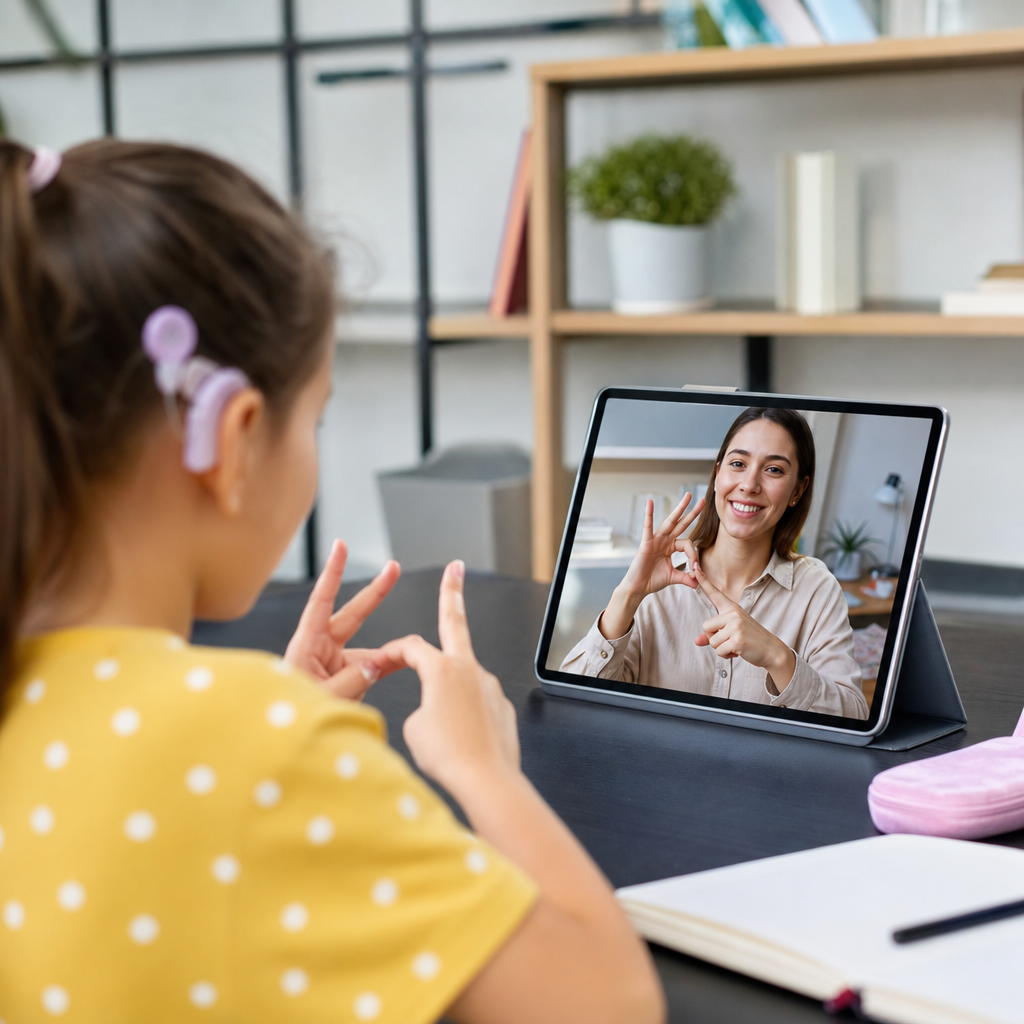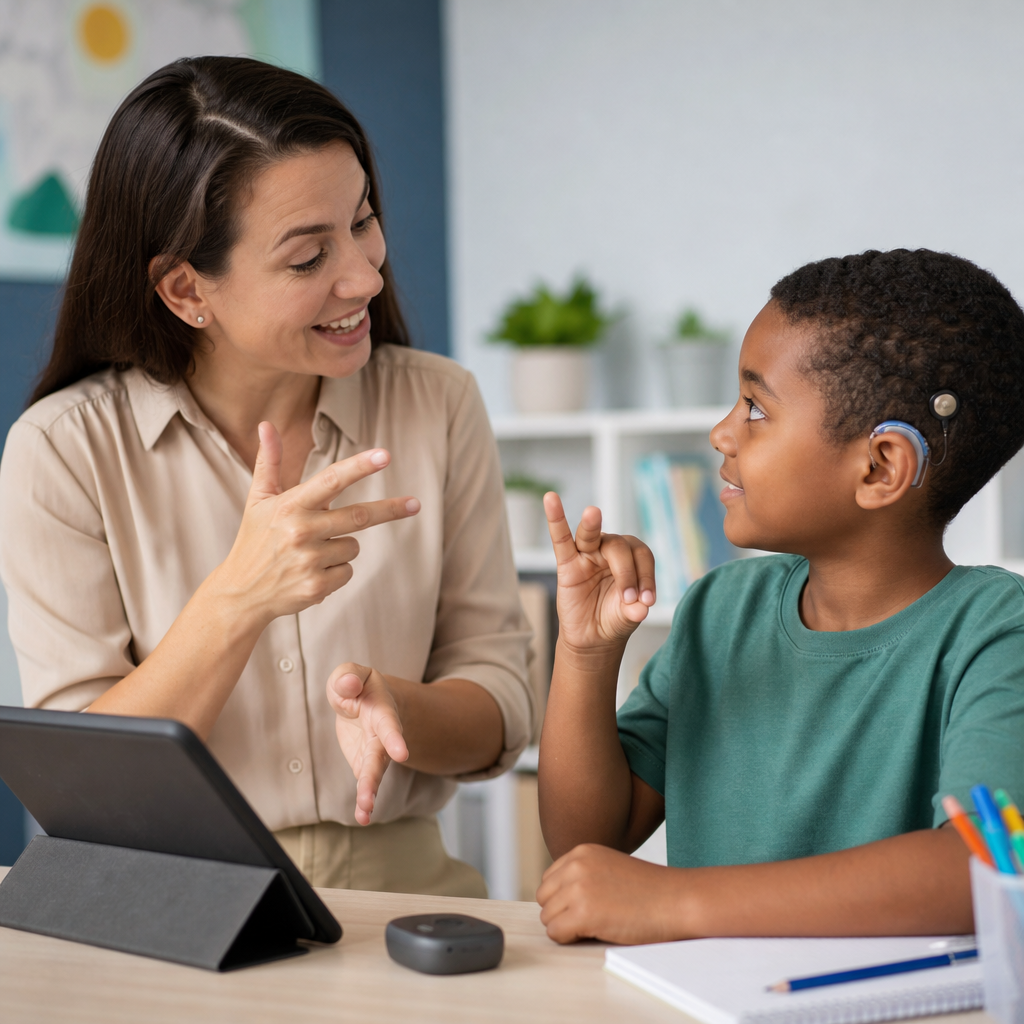

Teaching a deaf child at home works best when parents build a clear system of language access, routine practice, and the right learning tools from the start. In this context, tools for parents teaching deaf children at home include sign language courses, speech and listening programs, captioned media, visual schedules, literacy apps, tutoring platforms, hearing technology support resources, and assessment methods that help adults track progress. I have worked with families who began with a single alphabet chart and quickly realized that home learning improves only when every activity is accessible, intentional, and repeated across daily life. That matters because deaf children do not simply need louder instruction; they need instruction designed around visual communication, consistent language exposure, and direct teaching of vocabulary, reading, and concepts that hearing children often absorb incidentally.
Home education in this area also sits at the intersection of language development, disability access, and curriculum planning. Some children use American Sign Language, British Sign Language, or another national sign language as their primary language. Others use spoken language supported by hearing aids, cochlear implants, cued speech, or total communication. Many families combine methods, especially in the early years, while they learn what gives their child the strongest access to language. The central goal is not to force one approach, but to make sure the child has full, reliable access to communication and learning content every day. Courses and learning tools matter because they give parents structure, reduce guesswork, and help transform the home into a place where language, literacy, numeracy, and confidence grow together.
This hub article covers the main categories parents should understand before choosing resources. It explains how to select sign language courses, how to evaluate literacy and speech tools, what makes a visual learning resource effective, which technology platforms support remote instruction, and how to combine all of those into a workable home program. Used well, these tools help children build vocabulary, reading comprehension, self-expression, and independence. Used poorly, they create fragmented learning and fatigue. The difference usually comes down to access, consistency, and fit.
Start with language access before academic content
The first question parents should ask is simple: how does my child access language most completely? That answer shapes every course and learning tool that follows. If a child has limited access to spoken language, even excellent phonics software may fail without visual support. If a child is acquiring sign language, the family needs high-quality sign instruction, signed story resources, and opportunities to interact with fluent signers. If the child uses amplification successfully, parents still need to check listening conditions, background noise, and fatigue, because hearing technology does not restore natural hearing.
In practice, I advise families to make a language access profile. List the child’s preferred communication mode, hearing technology, current vocabulary level, reading level, and environments where learning works best. Include practical details such as whether captions are easy to follow, whether the child can discriminate similar speech sounds, and whether they respond faster to pictures, signs, fingerspelling, print, or spoken prompts. This profile prevents common mistakes, like buying expensive online courses that are audio-heavy or choosing sign videos recorded by beginners with unclear handshapes.
Parents should also distinguish between communication access and academic performance. A child may appear behind in reading when the real problem is that instruction has not been linguistically accessible. Once lessons are delivered through fluent signing, accurate captioning, strong visuals, and checked comprehension, progress often changes quickly. That is why language access is not one tool among many; it is the foundation for every other tool.
Choose sign language courses that teach real communication
For many families, the most important course is the one that helps everyone communicate fluently at home. Good sign language courses do more than teach isolated vocabulary lists. They teach grammar, facial expression, classifiers, receptive skills, fingerspelling, everyday routines, and conversation repair. Parents need resources that show signs clearly from multiple angles, explain regional variation where relevant, and model natural interaction, not just dictionary-style clips.
When evaluating a sign course, look for instruction led by deaf teachers or fluent native or near-native signers. Programs from organizations such as Gallaudet University, the National Association of the Deaf, the British Deaf Association, local deaf service agencies, and accredited community colleges tend to be stronger than random app libraries. A strong beginner sequence should cover family terms, routines, emotions, question forms, time concepts, home instructions, and story signing. It should also include practice tasks, quizzes, and live feedback if possible.
Apps can help with review, but they rarely replace structured teaching. I have seen parents memorize many signs from an app yet still struggle to hold a natural conversation because they never learned turn-taking, non-manual markers, or how sign order differs from spoken language. The best approach is layered: a formal course for structure, video dictionaries for quick reference, and regular conversation practice with deaf adults, tutors, or community groups. Fluency grows from interaction, not from flashcards alone.
Build literacy with visual reading tools and explicit vocabulary teaching
Reading instruction for deaf children usually requires more explicit teaching than many parents expect. Because incidental overheard language is reduced, vocabulary gaps can affect comprehension long before decoding becomes the issue. Effective literacy tools therefore combine phonics or word study, direct vocabulary instruction, visual context, repeated reading, and discussion in the child’s strongest language. Parents should choose materials that make meaning visible rather than assuming children will infer it from spoken explanation.
Strong options include leveled digital readers with clear illustrations, captioned read-aloud libraries, interactive ebooks with sign support, and structured phonics programs adapted for deaf or hard of hearing learners. Epic, Raz-Kids, Reading A-Z, Starfall, and Bookshare can all be useful in the right context, but parents must match the platform to the child’s language profile. For a signing child, pairing ebooks with pre-taught signed vocabulary and post-reading retells works better than silent independent reading alone. For a child using listening and spoken language, closed captions plus guided listening checks can reinforce word recognition and syntax.
Parents should preteach three kinds of vocabulary before reading: topic words, academic words, and relational language. Topic words are content-specific terms such as habitat or fraction. Academic words include compare, describe, and predict. Relational language covers before, after, between, equal, and cause, the words that often block understanding in school texts. A simple routine works well: introduce the word visually, show it in print, sign or explain it, give an example, and ask the child to use it in a sentence or signed response. Repetition across the week matters more than one long lesson.
Use technology platforms that support accessibility, not just convenience
Online learning tools save time, but only if they are accessible. Parents should test every platform for caption quality, sign language availability, visual clarity, and ease of interaction. Auto-generated captions can be helpful, yet they are not reliable enough for all instruction, especially with technical vocabulary or children who read below grade level. Recorded lessons should allow replay, speed adjustment, and full-screen viewing. Live tutoring platforms should support pinned video, strong lighting, and minimal lag so signs, lip patterns, or speech cues remain clear.
The table below summarizes common course and learning tool categories for home teaching.
| Tool category | Best use | What to look for | Common limitation |
|---|---|---|---|
| Sign language courses | Family communication and language foundation | Deaf instructors, grammar instruction, live practice | Apps often teach vocabulary without fluency |
| Captioned video libraries | Content learning and language exposure | Accurate captions, replay control, clear visuals | Captions may outpace reading level |
| Literacy platforms | Reading practice and vocabulary building | Leveled texts, visual supports, teacher dashboards | Can overemphasize clicking over comprehension |
| Speech or auditory training tools | Listening practice for children using amplification | Audiologist guidance, quiet audio, measurable goals | Not appropriate as a sole language source |
| Visual schedule and routine apps | Independence and behavior support | Custom images, timers, simple interface | Require consistent parent follow-through |
| Remote tutoring platforms | Specialist instruction at home | Accessible video, whiteboard tools, session notes | Variable tutor quality and access cost |
Useful mainstream tools include Zoom for tutoring with pinned video, Google Classroom for assignment organization, Seesaw for visual responses, and YouTube only when captions and signing quality are checked carefully. Specialized supports may come from teletherapy providers, deaf education programs, or regional service centers. The key is to judge tools by access and outcomes, not popularity. If the child cannot fully perceive the lesson, the platform is the wrong platform.
Support math, science, and daily learning with visual structure
Parents often focus heavily on language arts, but deaf children also need accessible tools for math, science, and general knowledge. These subjects benefit from visual sequencing, manipulatives, diagrams, and preteaching of concept language. In math, children may understand number operations yet miss instructions because words like fewer, difference, estimate, and remainder have not been taught clearly. In science, terms such as observe, classify, energy, and dissolve need repeated exposure in sign, print, and hands-on experiments.
Effective home tools include base-ten blocks, fraction circles, magnetic number lines, science kits with picture instructions, interactive whiteboard apps, and visual note templates. Khan Academy can be helpful for older learners if parents slow the pace, add captions, and pause to explain vocabulary. Mystery Science, National Geographic Kids, and museum education portals provide strong visual material, but lessons improve when parents preview and adapt them. For example, before a plant growth activity, teach seed, root, stem, soil, measure, and predict. During the activity, ask the child to record changes with drawings, signs on video, or short written notes. This turns passive watching into language-rich learning.
Daily living can also become instruction. Cooking teaches measurement, sequencing, and descriptive language. Shopping teaches categories, prices, comparison, and planning. Household routines support literacy when labels, checklists, and picture schedules are visible. The best home learning tools are not always expensive. Often they are the ones that make language explicit throughout the day.
Include listening and speech tools carefully when they fit the child
Some deaf children benefit from auditory-verbal therapy materials, articulation practice apps, and listening games, especially when they use hearing aids or cochlear implants effectively. These tools can strengthen speech perception, sound awareness, and spoken language production. However, they should be selected with guidance from an audiologist, teacher of the deaf, or speech-language pathologist who understands hearing levels, device mapping, and realistic goals. A common mistake is using listening tools as if they can substitute for complete language access. They cannot.
Parents should ask specific questions before investing time: What listening skill is being targeted? Is the child detecting sound, discriminating words, identifying phrases, or comprehending connected speech? How will progress be measured? Which acoustic conditions are required? Good tools are goal-based and short. Ten focused minutes of Ling six sound checks, discrimination practice, or auditory memory tasks can be productive. An hour of frustrating listening drills usually is not.
Balanced families pair these tools with visual language support, not against it. If a child misses spoken input, repeat it with sign, print, or pictures. If device fatigue appears, shift to a visual task. The objective is learning, not proving loyalty to one method. Children progress when adults adapt instruction to access conditions in real time.
Create a home learning system that is measurable and sustainable
The most effective parents do not collect tools randomly; they build a repeatable system. Start with weekly goals in language, reading, math, and communication. Choose one primary course or platform per goal, then add one support tool, not five. Track what the child can do independently, what requires prompting, and what breaks down because of language, attention, or task design. A simple planner or spreadsheet is enough if it is updated consistently.
I recommend a cycle of teach, practice, apply, and review. Teach new content directly in the child’s strongest language. Practice with a structured course, app, or workbook. Apply the skill in real life, such as reading a recipe, signing a story retell, or measuring ingredients. Review with a quick check at the end of the day or week. This system reveals whether a tool is truly working. If skills do not transfer beyond the app, the tool is not enough.
Families should also build a support network. That may include a teacher of the deaf, deaf mentor, sign tutor, audiologist, speech-language pathologist, literacy specialist, or parent community group. Home teaching improves dramatically when parents can ask targeted questions and compare observations. Use this hub as a planning base, then explore deeper resources on sign courses, literacy tools, tutoring options, accessibility technology, and subject-specific adaptations. The right tools for parents teaching deaf children at home are the ones that create full access, steady progress, and confident communication. Audit your current setup, replace any inaccessible resource, and commit to one stronger system this week.
Frequently Asked Questions
1. What are the most important tools parents need when teaching a deaf child at home?
The most important tools are the ones that create consistent language access every day. For many families, that starts with a strong communication foundation, which may include sign language courses, visual learning materials, speech and listening programs, or a combination of methods based on the child’s needs. A parent does not need to buy every program available. What matters most is choosing tools that help the child clearly understand language, respond consistently, and practice skills in ways that fit daily home life.
In practical terms, the core set of tools often includes a beginner-friendly sign language resource, captioned books or videos, visual schedules, literacy apps, and simple progress tracking methods. If a child uses hearing aids or cochlear implants, families also benefit from hearing technology support resources that explain troubleshooting, device checks, and listening goals. Many parents also find that tutoring platforms or virtual sessions with deaf educators, speech-language professionals, or auditory specialists help them stay organized and confident.
A good home teaching setup should support language, reading, communication, and routine. For example, a visual schedule helps a child know what is happening next, while captioned media strengthens word recognition and comprehension. Sign language resources help create direct access to meaning, and literacy tools reinforce vocabulary and sentence structure. The best tool is not always the most expensive one. It is the one the family uses consistently, understands well, and can build into everyday learning without creating stress or confusion.
2. How can parents choose between sign language tools, speech and listening programs, or using both?
The best choice depends on the child’s hearing profile, communication access, educational goals, and how the family can realistically support learning at home. For some children, sign language provides the clearest and fastest path to full language access. For others, speech and listening programs may play a central role, especially when hearing technology provides useful sound access. In many cases, a combined approach is the most effective because it gives the child more than one way to receive and express language.
Parents should focus first on access, not ideology. A child learns best when language is fully available and repeated often. If a child is missing spoken information, becoming frustrated, or showing delays in understanding, visual language tools such as sign language instruction, picture supports, and captioned materials can make a major difference. If the child benefits from sound through hearing aids or cochlear implants, then structured speech and listening activities can also support growth in listening skills, speech clarity, and auditory memory. These approaches do not have to compete with each other. When used thoughtfully, they can strengthen overall communication.
One practical way to decide is to observe the child across normal routines. Ask simple questions: Does the child understand directions better with visual support? Do they respond consistently to spoken language alone? Are they more engaged when signs, print, and speech are combined? Families often gain clarity by working with a qualified deaf educator, speech-language pathologist, auditory-verbal professional, or early intervention specialist. The goal is to build a system that helps the child access language all day long, not just during formal teaching time.
3. What kinds of home learning tools help deaf children develop reading and language skills?
Reading and language skills grow best when parents use tools that connect meaning, vocabulary, print, and repeated practice. Strong options include visual storybooks, literacy apps, captioned videos, interactive read-aloud routines, and word games that emphasize comprehension rather than memorization alone. If a child uses sign language, parents can pair signs with printed words and pictures to build strong links between language and text. If a child uses spoken language, reading aloud with clear visual support, repetition, and captions can strengthen understanding and retention.
Captioned media is especially useful because it helps children connect language to print in real time. When a child watches a captioned show, educational video, or story presentation, they can see words while also following visual context. This supports vocabulary growth, sentence awareness, and comprehension. Parents can pause and discuss key words, facial expressions, and story events to deepen learning. Visual dictionaries, picture-based vocabulary cards, and writing prompts also help children expand both receptive and expressive language.
Many families do best with a simple routine: preview words, read or watch together, discuss the meaning, then revisit the same material later in the week. Repetition matters. A child may need to see a new word many times in meaningful contexts before fully using it. Parents should choose tools that allow interaction, not just passive exposure. A strong literacy app, for example, should let the child match words to images, build sentences, answer questions, and review errors. Over time, these tools become much more effective when they are tied to daily experiences such as cooking, getting dressed, playing outside, or talking about family events.
4. How can parents create a successful daily routine for teaching a deaf child at home?
A successful home routine is clear, visual, predictable, and flexible enough to match the child’s energy and attention span. Parents often get the best results when they break learning into short, purposeful blocks rather than trying to recreate a full school day. For example, the day might include a morning communication activity, a short literacy lesson, a listening or sign practice session, a hands-on task such as cooking or sorting, and evening review through books or captioned media. The key is not the length of each activity but the consistency of language-rich interaction.
Visual schedules are one of the most effective tools for making home teaching work. They show the child what comes next and reduce uncertainty, which supports attention and independence. Parents can use picture cards, written checklists, or digital schedule apps depending on the child’s age and reading level. In addition, it helps to keep materials in one place so transitions are easy. A home learning basket with books, flashcards, notebooks, devices, and visual supports can make daily teaching feel more manageable.
Routine also works best when learning is embedded into normal life. Parents can teach vocabulary while preparing meals, practice sequencing during chores, and build conversation during play. If the child uses hearing devices, daily listening checks and device management should become part of the routine as well. The strongest home programs usually combine formal lessons with natural interaction. This balance helps the child see language as something useful and meaningful, not just something practiced during “school time.” Families do not need perfect schedules. They need routines that are realistic, repeatable, and built around the child’s access to communication.
5. How should parents track progress and know whether their home teaching tools are working?
Parents should track progress by watching for growth in communication, comprehension, participation, literacy, and independence over time. The best assessment methods are often simple and repeatable. A parent can keep a notebook, spreadsheet, or app-based log that records what the child understood, what they signed or said, which reading tasks were easy or difficult, and how well they followed routines. Short video clips taken over several weeks can also be useful because they show changes in attention, vocabulary use, speech clarity, signing accuracy, and confidence.
It helps to measure progress with specific goals rather than general impressions. For example, instead of writing “reading is improving,” a parent might track whether the child can identify ten new vocabulary words, answer who and what questions from a short story, follow a three-step visual direction, or independently use a schedule. If the child is in a speech and listening program, parents might record response to sound, discrimination of words, or ability to repeat phrases. If sign language is central, they might track new signs learned, sentence combinations, or comprehension during conversation.
Parents should also pay attention to signs that a tool is not working well. Frequent frustration, low engagement, limited understanding, or lack of progress after consistent use may mean the tool is too advanced, not accessible enough, or poorly matched to the child’s communication mode. In those cases, it is wise to simplify the materials, increase visual support, or consult a professional. Progress does not always happen in a straight line, but with the right tools, parents usually begin to see better participation, stronger language use, and more confidence in daily communication. The goal is not perfection. It is steady, meaningful growth that helps the child learn more effectively at home.