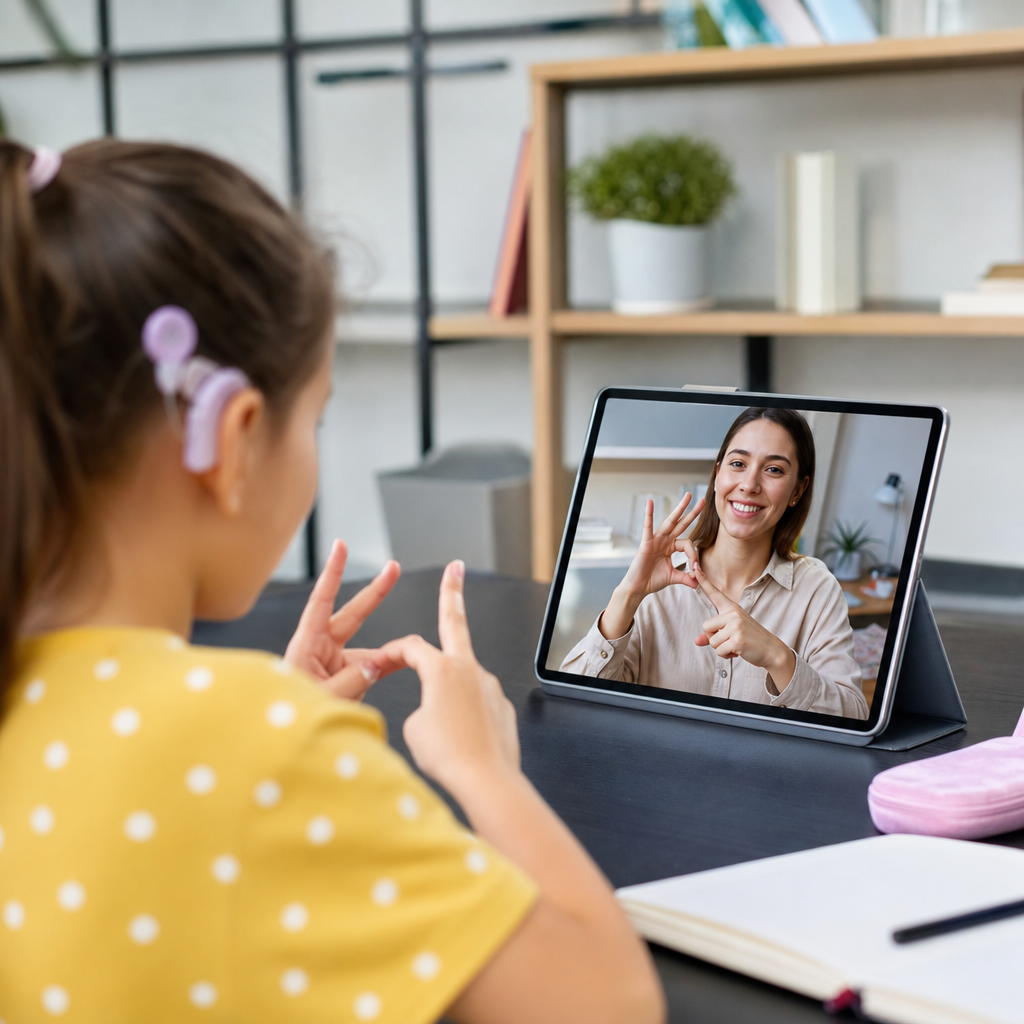
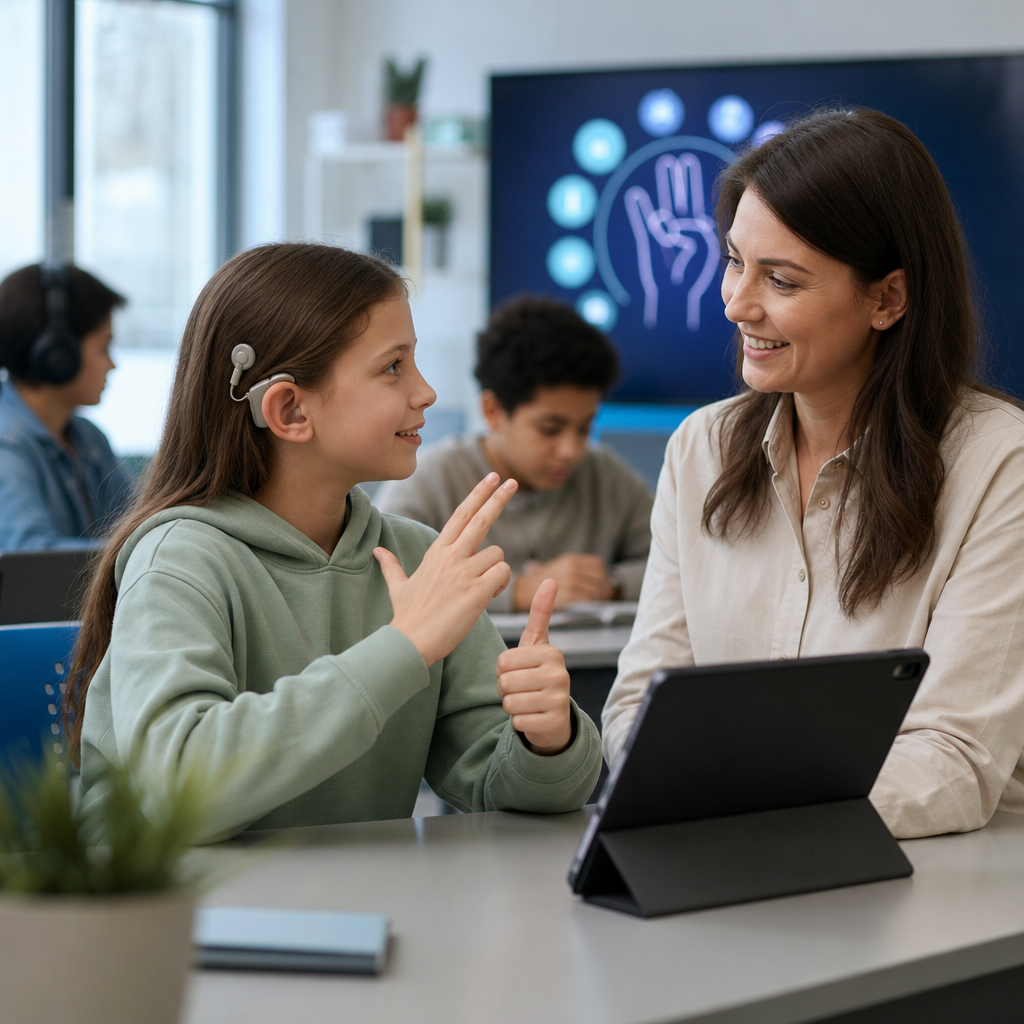
The future of EdTech in deaf education is being shaped by a simple requirement: learning tools must deliver language, content, and access at the same time. In deaf education, EdTech refers to digital platforms, hardware, software, and classroom systems designed to support teaching and learning for deaf and hard of hearing students. That includes captioning tools, sign language video libraries, visual learning apps, speech-to-text systems, hearing assistive technology, learning management systems, and online courses built with accessibility from the start. Courses and learning tools matter here because access is not an add-on. If a student cannot reliably receive instruction, participate in discussion, or demonstrate knowledge, the course design has already failed.
I have worked with schools evaluating classroom technology for deaf learners, and the strongest pattern is clear: the best tools are not the most expensive, but the ones that match language needs, device realities, and teacher capacity. Deaf students are not a single user group. Some primarily use a national sign language such as ASL or BSL. Some rely on spoken language supported by hearing aids or cochlear implants. Some are bilingual in sign and written language. Some have additional learning needs, which changes how visual load, pacing, and interface design should work. That is why the future of EdTech in deaf education is not one breakthrough device. It is a practical ecosystem of accessible courses, flexible communication supports, and measurable learning tools.
This topic matters because outcomes are heavily influenced by access to language-rich instruction, early intervention, qualified teachers, and appropriate materials. Technology can widen those opportunities when it is designed well. It can also create new barriers when platforms depend on audio-only lessons, auto-generated captions with poor accuracy, or assessments that assume every learner processes language in the same way. For schools, districts, and families looking at courses and learning tools, the goal is not technology for its own sake. The goal is independent access, stronger literacy, fuller participation, and better pathways into higher education and employment.
As a hub for courses and learning tools, this article maps the major categories shaping the field: accessible course design, sign-centered content, AI-driven support tools, classroom communication systems, analytics, teacher training, and procurement standards. It also explains how to evaluate platforms before adoption and where common mistakes happen. If you are comparing tools for K-12 programs, online learning, tutoring, or blended classrooms, the principles are the same. Start with language access, insist on usability, verify performance with real students, and choose systems that support teaching rather than forcing teachers to work around avoidable barriers.
Accessible course design is becoming the foundation, not a feature
The future of digital courses for deaf learners starts with accessible instructional design. A strong course offers synchronized human-reviewed captions, transcripts, visual navigation, plain-language instructions, and assessment options that do not rely solely on listening. In practice, that means recorded lectures should include edited captions with speaker identification when needed, not raw machine output. Video lessons should avoid split attention by placing critical visuals and sign support where students can process both. Written instructions should be concise and consistent across modules. Platforms should support keyboard navigation, mobile use, and downloadable materials for low-bandwidth environments.
Universal Design for Learning, WCAG guidance, and accessibility practices used in higher education are increasingly influencing deaf education platforms. The reason is straightforward: accessible courses improve outcomes for more than one group. Captions help students reviewing complex vocabulary. Transcripts support note-taking and translation. Visual structure reduces cognitive load. In courses I have audited, completion rates improve when teachers chunk video into shorter segments, add pre-teaching vocabulary cards, and include visual exemplars before assignments. Accessibility is not only a compliance issue. It is a course quality issue, and it directly affects comprehension, stamina, and confidence.
Sign language content is moving from supplementary to core instruction
One of the biggest shifts in deaf education technology is the move toward sign language as a core delivery mode rather than a side resource. Modern platforms increasingly embed sign language explanations, bilingual glossaries, and signer-led tutorials directly into lessons. This matters because many deaf learners understand new concepts more efficiently when introduced in a fully accessible language first, then connected to written English or another written language. A math lesson, for example, becomes more effective when key terms such as denominator, equivalent fraction, and ratio are introduced through clear sign explanations before students face dense textbook definitions.
High-quality sign-based content is not just video recording. It requires careful linguistic planning, pacing, regional variation awareness, and subject-matter accuracy. Providers that do this well build searchable video libraries, topic tags, and side-by-side text supports. Gallaudet resources, signed academic dictionaries, and specialized classroom media projects have shown how valuable this model can be. The future direction is even stronger: interactive sign avatars for limited use cases, teacher-created video annotations inside learning management systems, and bilingual course pathways where students can move between sign-led explanation and text-based practice without losing context.
AI tools are helping, but human review remains essential
Artificial intelligence is already changing courses and learning tools in deaf education, especially in captioning, transcription, summarization, translation support, and personalized practice. Speech-to-text tools such as Otter, Microsoft Teams transcription, Google Meet captions, and Zoom captioning have improved everyday classroom access. Some platforms can now generate study guides, identify discussion themes, and convert recorded instruction into searchable notes. For teachers managing mixed classrooms, these features save time and improve availability of content after class.
Still, AI is not a complete solution. Auto-captions regularly fail with technical vocabulary, overlapping speech, accents, and classroom noise. Sign language translation remains especially limited because sign languages have distinct grammar, rely on facial markers and spatial structure, and do not map cleanly word-for-word from spoken language. I have seen schools overestimate what AI can do, then discover that students missed key content because chemistry terms, names, or dates were mistranscribed. The right approach is assisted automation: use AI for speed, then apply human review for educational accuracy and language appropriateness.
| Tool category | Primary benefit | Main limitation | Best use case |
|---|---|---|---|
| Auto-captioning platforms | Fast access to spoken content | Errors with jargon and noisy rooms | Live classes with post-editing |
| Sign language video libraries | Direct language access | Production takes time and expertise | Core lessons and vocabulary review |
| Interactive literacy apps | Self-paced practice with visuals | Quality varies widely | Supplemental reading support |
| FM and remote microphone systems | Improves signal-to-noise ratio | Depends on hearing profile | Students using spoken language access |
Classroom communication systems are becoming more integrated
Courses and learning tools do not work in isolation. They depend on communication systems that make live teaching accessible. In deaf education, that can include CART services, remote interpreting, video relay-supported interactions, soundfield systems, FM or DM systems, classroom microphones, and shared digital whiteboards. The most effective schools now think in terms of integrated access layers. A student may watch a captioned lesson in the LMS, join a live class with an interpreter pinned on screen, review teacher notes in a transcript, and submit understanding through video in sign language. That is not redundancy. It is good instructional architecture.
The integration challenge is technical and procedural. Platforms need stable video layouts, interpreter visibility, screen-sharing compatibility, and reliable archiving. Teachers need routines for turn-taking, chat monitoring, and visual attention cues. Administrators need procurement standards that ask whether systems work together across devices. A learning platform that cannot display captions clearly on tablets, or a conferencing tool that hides the interpreter when slides are shared, will underperform no matter how strong the curriculum is. Future-ready deaf education programs are choosing interoperable systems instead of isolated tools.
Literacy, language development, and subject learning need specialized tools
General education software rarely addresses the specific language-development patterns seen in many deaf learners, so specialized tools remain important. Reading platforms for deaf students should support explicit vocabulary instruction, morphology, background knowledge building, and visual scaffolds. Writing tools should provide models, sentence expansion prompts, and opportunities for signed planning before drafting. In science and social studies, concept mastery improves when students can access diagrams, signed explanations, and concise text summaries together. The point is not to simplify content. It is to make disciplinary language visible and learnable.
Some of the most useful tools I have seen are not flashy. Digital vocabulary notebooks with image support, replayable sign-linked glossaries, and teacher-authored mini-lessons often outperform generic adaptive apps. For mathematics, tools that show multiple representations step by step are especially effective. For literacy, bilingual story platforms and captioned read-alouds can strengthen engagement when paired with guided discussion. The future lies in tighter alignment between language goals and academic content, so courses no longer treat access support as separate from learning objectives.
Data, analytics, and assessment are improving intervention decisions
EdTech is also changing how schools monitor progress. Modern platforms can track lesson completion, quiz performance, vocabulary retention, discussion participation, and time on task. Used carefully, that data helps teachers identify where access breaks down. If a student repeatedly replays a captioned segment, misses items tied to a vocabulary set, or disengages during text-heavy modules, the issue may be language load rather than motivation. Good analytics do not replace teacher judgment, but they make patterns visible earlier.
Assessment design remains a critical issue. Deaf students may understand a concept yet struggle with the linguistic framing of a question. That is why strong digital assessment systems allow multiple response modes, including signed video, visual matching, constructed response, and scaffolded prompts. Rubrics should separate content mastery from language form when appropriate. Schools using progress monitoring tools need to validate whether the assessment truly measures the intended skill. The future of EdTech in deaf education will belong to systems that combine actionable data with fairer, linguistically informed evaluation.
Teacher training and procurement will determine what succeeds
No course platform or learning tool succeeds without trained educators. Schools often buy software with excellent accessibility claims, then provide minimal implementation support. In practice, teachers need time to learn caption editing workflows, interpreter-friendly slide design, bilingual lesson sequencing, and accessible discussion management. They also need examples from their own grade band and subject area. A secondary science teacher, for instance, needs very different support than an early literacy specialist.
Procurement decisions should be evidence-driven. Before adoption, schools should request accessibility conformance documents, test mobile and desktop performance, verify caption export options, and run pilot sessions with deaf students and teachers. Ask concrete questions: Can students submit signed video responses? How accurate are captions with domain-specific vocabulary? Can the platform pin interpreters and preserve visibility during screen sharing? Does the vendor provide training and support updates? The future of EdTech in deaf education will not be determined only by innovation labs. It will be determined in procurement meetings, pilot classrooms, and professional development sessions where real usability is tested.
What the next generation of deaf education technology will look like
Over the next several years, the strongest advances will come from convergence rather than single products. Expect learning platforms to combine captioning, transcript search, signer overlays, multilingual support, analytics, and flexible assessment inside one environment. Expect more creator tools that let teachers build sign-supported lessons without specialist video teams. Expect better interoperability between LMS platforms, conferencing tools, and accessibility services through standard integrations. Expect stronger mobile design, because many students access schoolwork through phones or shared family devices outside school hours.
There will also be growing pressure for proof. Schools and families will ask not whether a tool is innovative, but whether it improves vocabulary growth, reading comprehension, course completion, and student agency. Vendors that cannot show clear accessibility performance and educational impact will struggle. The winning model is practical: accessible by default, flexible across communication modes, tested with deaf users, and aligned with curriculum goals. For anyone building or choosing courses and learning tools, that is the path forward. Audit your current stack, involve deaf learners in evaluation, and invest in tools that deliver real access from the first lesson.
Frequently Asked Questions
What does EdTech in deaf education include, and why is it evolving so quickly?
EdTech in deaf education includes a wide range of digital tools and systems designed to make learning more accessible, language-rich, and academically effective for deaf and hard of hearing students. This can include captioning platforms, speech-to-text software, sign language video libraries, visual learning applications, interactive whiteboards, hearing assistive technology, classroom audio systems, learning management systems, and communication tools that support both live instruction and independent learning. What makes deaf education unique is that technology cannot focus on content delivery alone. It must also support language access and communication access at the same time.
The field is evolving quickly because expectations around accessibility have changed. Schools, families, and educators are no longer looking for add-on accommodations that are applied after lessons are built. They increasingly want tools that are accessible from the beginning. That means students should be able to access spoken information through captions or transcription, visual concepts through high-quality media, and language development through tools that align with sign language, written language, and classroom communication needs. As digital learning becomes more common, the pressure on schools to choose flexible, inclusive tools has grown significantly.
Another reason for rapid change is that deaf learners are not a single, uniform group. Students may use American Sign Language, spoken language, cued speech, bilingual approaches, cochlear implants, hearing aids, or a combination of supports. Effective EdTech must work across these different profiles without lowering academic rigor. The future of EdTech in deaf education is therefore being shaped by platforms that can adapt, personalize, and integrate multiple access options into one learning environment rather than forcing students to rely on separate systems.
How can future EdTech tools improve language access for deaf and hard of hearing students?
Future EdTech tools can improve language access by making communication visible, flexible, and immediate. In deaf education, language access is not just about translating speech into text. It also involves ensuring that students can fully understand instruction, participate in discussion, and build strong language foundations over time. The most effective tools will combine real-time captioning, accurate speech-to-text features, visual vocabulary support, sign language integration, and multimedia content that presents ideas in more than one form.
For example, a strong future-ready platform might allow a student to watch a lesson with synchronized captions, pause to view key terms explained through signed video, and then review the same material later with interactive visual supports. This kind of layered access matters because it helps students connect language and content rather than treating them as separate tasks. It also benefits students with varied language backgrounds, including those who are still developing proficiency in written English or who learn best through sign-supported instruction.
Improvement will also come from better classroom integration. Teachers need tools that work seamlessly during live lessons, group work, and assessments. If a platform offers captions but cannot support teacher feedback, peer collaboration, or accessible testing, it only solves part of the problem. The future is likely to center on systems that support access across the full learning cycle. That includes instruction, practice, discussion, homework, and progress monitoring. When EdTech is designed this way, it strengthens both academic achievement and language development in a much more meaningful way.
Will artificial intelligence play a major role in the future of deaf education technology?
Yes, artificial intelligence is likely to play a major role, but its value will depend on how carefully it is designed and implemented. AI already supports tools such as automated captioning, speech recognition, language translation, personalized learning pathways, and content recommendation systems. In deaf education, these features can be extremely useful because they can increase speed, flexibility, and responsiveness in the classroom. A teacher may be able to generate captions in real time, provide instant transcripts, or adapt reading materials based on student performance much more efficiently than in the past.
At the same time, AI is not automatically reliable enough to be trusted without oversight. Deaf and hard of hearing students are especially affected when captions are inaccurate, when sign language is poorly represented, or when language complexity is not matched to their learning needs. A small transcription error can change the meaning of a lesson, a science term, or a classroom instruction. That is why AI tools in deaf education must be evaluated for accuracy, consistency, and accessibility before they are relied upon in high-stakes settings.
The most promising use of AI is as a support system rather than a replacement for skilled educators, interpreters, speech-language professionals, and deaf education specialists. AI can help scale access by making content easier to caption, search, organize, and adapt. It can also help identify where students may need extra support. However, the human side of deaf education remains essential because language development, cultural responsiveness, and communication preferences are deeply personal. The future will likely favor AI-powered tools that are transparent, customizable, and built with direct input from deaf users and educators.
What should schools look for when choosing EdTech for deaf education programs?
Schools should look for accessibility, language support, instructional quality, and ease of implementation all at once. A common mistake is choosing a tool because it seems innovative or popular without asking whether deaf and hard of hearing students can truly use it independently and effectively. Strong EdTech for deaf education should offer reliable captioning, visual clarity, compatibility with assistive devices, support for signed or multilingual resources where appropriate, and interfaces that do not rely heavily on audio-only instruction.
Schools should also examine whether the tool supports actual teaching goals, not just compliance requirements. A platform may technically offer captions, but if those captions are delayed, inaccurate, or unavailable in student-created content, the learning experience still suffers. Decision-makers should ask whether the tool supports discussion, collaboration, assessment, feedback, and content review in accessible ways. They should also consider whether teachers can customize instruction, whether families can access learning materials, and whether the platform works across devices used at school and at home.
Training and long-term support matter as much as the product itself. Even excellent tools can fail if staff are not trained to use them well. Schools should look for vendors that understand deaf education specifically rather than accessibility in only a general sense. The best choices usually come from a combination of classroom testing, educator feedback, student input, and technical review. When schools evaluate EdTech through the lens of language, content, and access together, they are much more likely to invest in tools that make a lasting educational difference.
How might the future of EdTech change classroom experiences for deaf students?
The future of EdTech could make classroom experiences more interactive, independent, and inclusive for deaf students by reducing the barriers that often interrupt learning. In many classrooms, deaf students still face delays in access when they have to wait for interpretation, clarification, note-sharing, or adapted materials. Future technologies can reduce that delay by delivering accessible content in real time and allowing students to revisit lessons in formats that work for them. This creates a more direct path to participation and understanding.
Classroom experiences may also become more personalized. Instead of using one mode of delivery for every student, teachers may be able to present lessons through combinations of text, visuals, signed media, captioned video, and interactive activities that students can adjust based on their needs. This is especially important in deaf education, where communication preferences and language histories vary widely. Technology that supports this flexibility can help students engage more fully with grade-level content while also strengthening confidence and independence.
Perhaps most importantly, future EdTech has the potential to move deaf students from the margins of classroom design to the center of it. When accessibility is built into the core structure of lessons, deaf learners do not have to spend as much energy working around barriers. They can focus more on analysis, creativity, collaboration, and mastery. That shift changes more than convenience. It changes educational quality. The strongest future for EdTech in deaf education is one where access is not treated as an extra feature, but as the foundation of excellent teaching and learning.