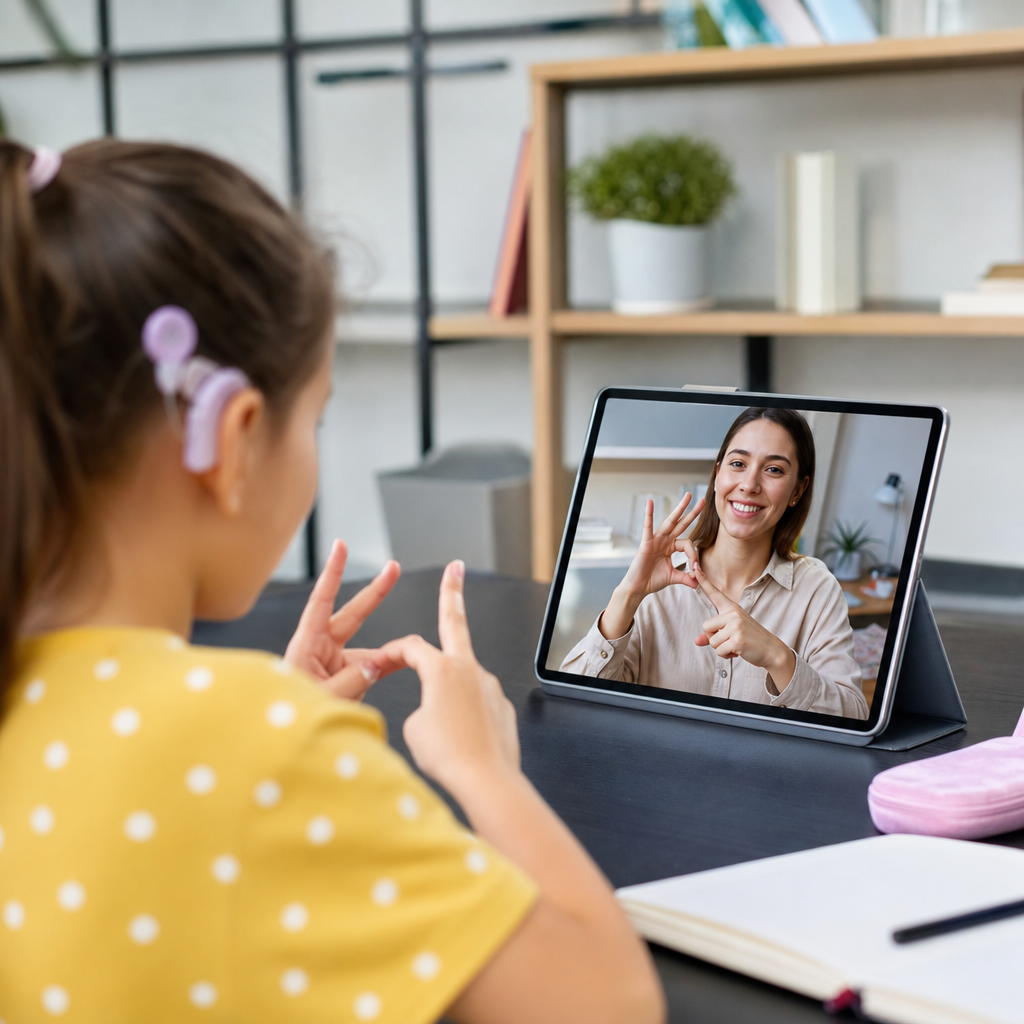

Deaf schools are educational settings designed to teach students who are deaf or hard of hearing through communication methods, academic supports, and community structures that match how those students access language and learning. In practice, the term can describe several models: residential schools for the deaf, day schools, bilingual programs using a signed language and a written or spoken language, mainstream placements with specialized support, and regional programs operated by public districts. I have worked with families comparing these options, and the first point I clarify is simple: deaf education is not one system. It is a set of systems built around language access, hearing technology, legal rights, and student identity.
Understanding what deaf schools are matters because early access to language strongly influences literacy, social development, and long-term academic outcomes. A child who cannot fully access classroom communication is not merely missing instructions; that child may also lose incidental learning, peer interaction, and chances to build vocabulary every minute of the school day. Deaf education systems exist to solve that access problem. They do so through direct instruction in sign, speech, listening, reading, and writing; through visual teaching methods; and through specialists such as teachers of the deaf, speech-language pathologists, audiologists, interpreters, and dorm staff in residential settings. Families often arrive with urgent questions: Will my child learn sign language, spoken language, or both? How do schools use hearing aids or cochlear implants? What is the difference between a deaf school and mainstream inclusion? The answers depend on the student’s language profile, additional needs, and local services.
At their best, deaf schools do more than accommodate hearing differences. They create an environment where communication is direct, not filtered; where peers share similar experiences; and where curriculum, assessment, and social life are designed with visual access in mind from the start. That distinction is important. In many general education settings, support is added after barriers appear. In strong deaf education programs, access is built into the school day, from classroom seating and lighting to signed announcements, captioned media, and explicit vocabulary instruction. This article explains how deaf schools work, how programs differ, what services students receive, and how families can evaluate the right placement within today’s broader deaf education systems.
What Deaf Schools Are and Who They Serve
A deaf school is a school organized to educate students who are deaf, hard of hearing, or deafblind, though some students also have additional disabilities or complex communication needs. The age range may include early intervention, preschool, elementary, middle, and high school, and many schools extend support into transition services for college, employment, and independent living. Some are state schools established by statute, some are local public programs, and some are private institutions. The core feature is not the building itself; it is the school’s ability to provide full access to instruction and social communication.
Students in deaf schools are not a uniform group. Some use American Sign Language, British Sign Language, or another national signed language as their primary language. Some rely mainly on spoken language supported by hearing aids, cochlear implants, FM or DM systems, and speech therapy. Some switch across modes depending on setting. Others are still developing a first language after late identification or inconsistent access. In real school planning meetings, this diversity is the central challenge and the central opportunity. Good programs do not force every student into one communication expectation. They match placement, staffing, and instructional design to the student’s documented needs.
Deaf schools also serve an important cultural role. For many students, especially those who have been the only deaf child in a mainstream school, entering a deaf school means finally seeing adults and peers who communicate like they do. That can improve confidence and participation quickly. Families often notice that students become more willing to ask questions, join clubs, and take academic risks when they are no longer spending all day trying to catch fragments of conversation.
Types of Deaf Education Programs
There is no single model of deaf schooling. Residential schools are perhaps the most widely recognized. These schools often serve students across large geographic regions and provide dormitory living during the week. Because students are together beyond classroom hours, residential settings can offer dense language exposure, extracurricular activities in sign, and strong peer communities. State schools for the deaf in the United States are a common example, and many have long histories dating back to the nineteenth century.
Day schools for the deaf provide specialized deaf education without residential housing. They are often located in cities or regional centers and may attract students who can commute daily. These schools typically offer smaller class sizes, teachers trained in deaf education, audiology support, and a communication-rich environment while allowing students to remain at home with family each evening.
Mainstream placements with support are another major branch of deaf education systems. In this model, a student attends a general education school and receives services such as interpreting, note-taking, captioning, itinerant teacher support, or assistive listening technology. This works well for some students, especially when language access is consistently monitored and the school understands deaf-specific instructional needs. However, mainstream placement can fail when support exists on paper but not in practice, such as when interpreters are unavailable, classroom discussion moves too quickly, or teachers show videos without captions.
Bilingual-bicultural programs use a signed language for direct instruction while teaching reading and writing in the majority written language and often spoken language skills as well. These programs recognize that fluent access to a natural signed language can support cognition, social development, and literacy. Oral or auditory-verbal programs, by contrast, prioritize spoken language through listening technology and structured speech instruction. Many current schools use blended models because student profiles vary.
| Program Type | How It Works | Best Fit | Main Limitation |
|---|---|---|---|
| Residential deaf school | Students learn and often live in a fully accessible language environment | Students needing immersive communication access and peer community | Distance from home and limited local availability |
| Day school for the deaf | Specialized instruction during the day, home each evening | Families wanting deaf-specific services without boarding | Usually available only in larger regions |
| Mainstream with supports | General education classroom plus interpreting, technology, and itinerant services | Students succeeding academically and socially in mixed settings | Access quality can vary sharply by school |
| Bilingual signed-language program | Signed language used directly for instruction, written language taught explicitly | Students who benefit from strong visual language foundations | Requires qualified fluent staff, which can be scarce |
How Teaching and Communication Work in Deaf Schools
The daily operation of a deaf school begins with communication planning. Schools decide how announcements are delivered, how teachers present new vocabulary, how students participate in discussion, and how technology supports access. In strong programs, visual access is designed intentionally: teachers face the class while speaking or signing, lighting avoids shadows on hands and faces, seating allows everyone to see one another, and instructional videos are captioned before use. These may sound like small details, but they determine whether a lesson is fully accessible or only partially available.
Instruction in deaf schools is usually more explicit than in general settings because incidental language exposure cannot be assumed. Teachers often preteach vocabulary, model academic discourse, and check comprehension through direct questioning rather than relying on students to absorb information from background talk. Reading instruction may include phonological strategies for some students, but it also emphasizes morphology, syntax, background knowledge, and visual language links. In schools using sign, teachers connect signed concepts with printed English or another written language so students can bridge across languages rather than memorize isolated words.
Specialists are central to the system. Teachers of the deaf adapt curriculum and monitor language development. Educational audiologists manage hearing technology, classroom acoustics, and listening access. Speech-language pathologists work on expressive and receptive language, articulation when appropriate, and pragmatic communication. Interpreters may support students in mixed settings or secondary classes with hearing teachers. Counselors, psychologists, and transition coordinators address social-emotional needs, career planning, and college readiness. In residential schools, dorm staff reinforce communication, study routines, and independent living skills after classes end.
Assessment is another operational difference. Deaf schools should not rely solely on standardized tests normed on hearing populations without interpretation. They combine formal measures with language samples, classroom observation, audiological data, and progress monitoring tied to the student’s communication mode. That broader assessment approach helps teams distinguish between a true learning disability and a delay caused by inadequate access to language.
Services, Technology, and Student Support
Modern deaf education systems depend on coordinated support services. Hearing aids and cochlear implants can improve access to sound, but they do not restore typical hearing, and performance varies by environment, mapping, age of implantation, and the student’s auditory profile. In classrooms, schools often add FM or DM systems that send a teacher’s voice directly to the student’s device, reducing background noise. Sound-field systems, acoustic treatment, and routine equipment checks are also standard practice in effective programs.
Technology alone is never enough. Captioning is essential for videos, online learning platforms, assemblies, and after-school content. Real-time captioning, often provided through CART, can be critical for older students in lectures or large events. Visual alert systems support safety by using lights or screens for alarms and announcements. For students who sign, video relay and secure video platforms can extend communication with families and specialists. During remote learning, schools that already understood visual pedagogy adapted better because they knew how to manage camera framing, interpreter visibility, turn-taking, and caption quality.
Support also includes social and emotional development. Deaf students may face isolation, especially if they are one of few deaf children in a district. Deaf schools often respond with peer mentoring, identity development programs, leadership activities, and clubs where communication is direct. This matters academically. Students who feel understood are more likely to engage, persist, and self-advocate. I have seen placement success turn not on test scores alone, but on whether a student finally had friends, accessible humor, and adults who expected independence rather than dependence.
Placement Decisions, Legal Rights, and Family Questions
Choosing among deaf education options is rarely simple. The right placement depends on language access, academic progress, social connection, transportation, family goals, and the quality of the actual program, not just the label attached to it. A mainstream school with a skilled teacher of the deaf, reliable interpreting, strong captioning, and collaborative staff may be an excellent fit. A deaf school with weak literacy instruction or limited secondary coursework may not be. Families should ask for classroom observations, communication policy details, staff credentials, graduation outcomes, and examples of how the school measures language growth.
Legal frameworks shape these decisions. In the United States, the Individuals with Disabilities Education Act requires schools to provide a free appropriate public education through an individualized education program. For deaf and hard of hearing students, teams must consider communication needs, opportunities for direct communication with peers and professionals, academic level, and access to instruction in the student’s language and communication mode. Section 504 of the Rehabilitation Act and the Americans with Disabilities Act also matter, especially for accommodations and access in public settings. Other countries use different statutes, but the same principle applies: deaf students are entitled to meaningful educational access, not token support.
Families should also think long term. A strong deaf education system prepares students for transition after high school through self-advocacy, technology management, literacy, interpreting logistics, and career exploration. Some students move between settings over time as needs change. Early flexibility is not failure; it is responsive planning. The most successful teams review placement regularly, watch for communication breakdowns, and adjust before frustration becomes academic loss.
Why Deaf Schools Still Matter
Deaf schools remain essential because access is not automatic, even in an era of advanced hearing technology and inclusive policy. Devices help many students, but they do not remove the need for direct language access, visual teaching, and deaf-aware professionals. Mainstream inclusion can work, yet it often depends on unusually strong local implementation. Deaf schools provide a proven alternative where communication is central rather than peripheral. They preserve signed languages, develop leadership within deaf communities, and offer a setting where students can learn without constantly negotiating access.
The key takeaway is that deaf education systems should be judged by outcomes that matter: language growth, literacy, academic progress, social belonging, independence, and readiness for adult life. No single communication approach or school model fits every child. What works is an evidence-based match between the student and the environment. Parents, educators, and policymakers should evaluate whether a program offers full communication access, qualified staff, appropriate technology, and a peer community that supports healthy development. If you are exploring deaf schools, start by observing programs, asking hard questions, and focusing on where the student can truly access learning every day.
Frequently Asked Questions
What is a deaf school, and who is it designed to serve?
A deaf school is an educational setting created to serve students who are deaf or hard of hearing in ways that align with how they access language, instruction, and social interaction. Rather than treating hearing loss as a single experience, deaf schools are built around the understanding that students have different communication preferences, different levels of hearing, and different academic needs. Some students use American Sign Language or another signed language as their primary language, some use spoken language supported by hearing technology, and some use a combination of methods. A well-designed deaf school supports those differences while making learning fully accessible.
These schools may serve children from early childhood through high school, depending on the program. In many cases, they also provide related services such as speech-language support, audiology, counseling, and family guidance. The goal is not only to teach standard academic subjects like reading, math, science, and history, but also to make sure students can participate directly in classroom communication without constant barriers. That can have a major effect on confidence, language development, peer relationships, and overall school engagement.
It is also important to know that the term “deaf school” does not refer to just one type of program. It can include state residential schools for the deaf, day schools, bilingual-bicultural programs, regional public school programs, and mainstream settings with specialized deaf education services. What connects these models is the focus on accessible communication, appropriate instruction, and a school environment where deaf and hard of hearing students are understood and supported.
How do deaf schools work on a day-to-day basis?
Deaf schools work by organizing teaching, communication, and student support around accessibility from the start. In a typical school day, students attend classes in core academic subjects, electives, and activities just as they would in other schools, but instruction is delivered in ways students can fully access. Depending on the school’s model, teachers may use a signed language, spoken language, cued communication, interpreters, assistive listening systems, visual teaching tools, captioning, or a combination of these supports. The key difference is that access is planned into the learning environment rather than added only after problems appear.
Classrooms often place a strong emphasis on clear visual communication. Teachers may structure lessons so students can see the instructor, the board, classmates, and any interpreter or support staff at the same time. Schools may use smartboards, visual schedules, captioned media, and seating arrangements that improve sightlines and participation. For students who use hearing aids or cochlear implants, staff may also coordinate the use of FM or DM systems and monitor listening conditions such as classroom noise and acoustics.
Beyond academics, deaf schools usually build in support services that are especially relevant for deaf and hard of hearing learners. These can include audiology services, speech and language therapy, social-emotional support, language development monitoring, and instruction in self-advocacy. Many programs also pay close attention to communication access during lunch, sports, clubs, assemblies, and informal peer interaction, because learning and belonging happen throughout the school day, not only during lessons.
In residential schools, students may live on campus during the week, which adds another layer of structure and community. In day schools and regional programs, students return home daily but still benefit from a school environment designed around shared communication access. In every case, the overall model works best when language access, academic instruction, and student identity development are treated as connected parts of education.
What types of deaf schools or deaf education programs are available?
There are several types of deaf schools and deaf education programs, and each one serves students in a somewhat different way. One common model is the residential school for the deaf. These schools often serve students from a wide geographic area and may offer a rich campus community where signed communication, deaf culture, and peer connection are central parts of daily life. Residential programs can be especially meaningful for students who benefit from full communication access across both academic and social settings, including after-school hours.
Another model is the day school for the deaf, where students attend classes during the day and return home afterward. Day schools usually offer many of the same accessibility features as residential schools but without the boarding component. They can be a strong option for families who want specialized deaf education while remaining closely connected to their local home life and routines.
Bilingual programs are also important in deaf education. These programs often use a signed language, such as American Sign Language, alongside English in written form and sometimes spoken form as well. The idea is to support strong language development by recognizing signed language as a full language of instruction while also teaching literacy and broader academic skills. Many families are drawn to this model because it emphasizes direct access to language and learning from an early age.
In addition, some students are educated in mainstream public schools with specialized support. In this arrangement, a student may spend most or all of the day with hearing peers while receiving services such as interpreters, teachers of the deaf, note-taking support, captioning, or assistive listening technology. Regional public school programs offer another variation, grouping deaf and hard of hearing students within a district or cooperative program so they can receive targeted services while still being part of the broader public school system.
No single option is automatically best for every child. The right fit depends on factors such as language access, communication mode, academic profile, social needs, technology use, family goals, and the quality of the actual program being considered. When families compare options, it helps to look beyond labels and ask how instruction is delivered, how students communicate with peers and staff, and how consistently access is provided throughout the day.
How do deaf schools support language development, academics, and social growth?
Strong deaf schools support the whole student, which means they do much more than provide access to lessons. One of their most important roles is supporting language development in a consistent, fully accessible way. For deaf and hard of hearing students, language growth can be affected by how much direct access they have had to communication from infancy onward. A high-quality deaf education program recognizes this and works intentionally to build language through everyday instruction, conversation, storytelling, literacy activities, and interaction with fluent communication partners.
Academically, these schools use strategies that match students’ strengths and needs rather than assuming one method works for everyone. Teachers may adapt instruction visually, explicitly teach vocabulary, reinforce comprehension through multiple modes, and monitor progress closely in reading, writing, math, and content subjects. Because the environment is designed for access, students can spend more of their energy on learning rather than on trying to fill in communication gaps. That often leads to stronger engagement and clearer understanding of classroom material.
Social growth is another major focus. In settings where students can communicate directly with peers and adults, they often have more natural opportunities to build friendships, solve problems, participate in group work, and develop a positive sense of identity. For many students, being around other deaf or hard of hearing peers can reduce isolation and help them feel seen and understood. They may also gain role models through deaf teachers, staff members, coaches, or older students who show different pathways to success.
Many deaf schools also teach self-advocacy skills, which are critical both in school and later in life. Students learn how to explain their communication needs, request accommodations, manage hearing technology when relevant, and navigate environments that are not automatically accessible. In that sense, a good deaf school is not only teaching academic content; it is helping students build language, confidence, independence, and community connection all at once.
How can families decide whether a deaf school is the right choice for their child?
Choosing a deaf school is a highly individual decision, and the best starting point is to focus on access. Families should ask a simple but powerful question: in this setting, how will my child fully understand instruction, participate socially, and develop language every day? The answer should be clear, practical, and consistent. It should cover classroom teaching, peer interaction, extracurriculars, support services, and communication across the entire school environment.
When evaluating a program, families may want to look at the school’s communication philosophy, the qualifications of teachers and support staff, class size, available therapies and audiology services, technology support, academic expectations, and the presence of deaf role models. It is also worth asking how the school measures student progress and how it responds if a child needs something different. A program may sound impressive in general, but what matters most is whether it can meet the specific needs of a particular student.
School visits are especially valuable. Observing classrooms, meeting teachers, and watching how students communicate with one another can tell families a great deal. If possible, families should notice whether communication appears direct and natural, whether students are engaged, and whether the environment feels inclusive rather than merely accommodated. Talking with other parents and, when appropriate, current students or alumni can also provide useful perspective.
In many cases, the decision is not about choosing between a “good” option and a “bad” option, but between different educational models that offer different strengths. Some children thrive in residential or day schools for the deaf, while others do well in mainstream or regional programs with strong support. The right choice is the one that provides real language access, meaningful relationships, appropriate challenge, and room for the child to grow academically and personally. Families do not need