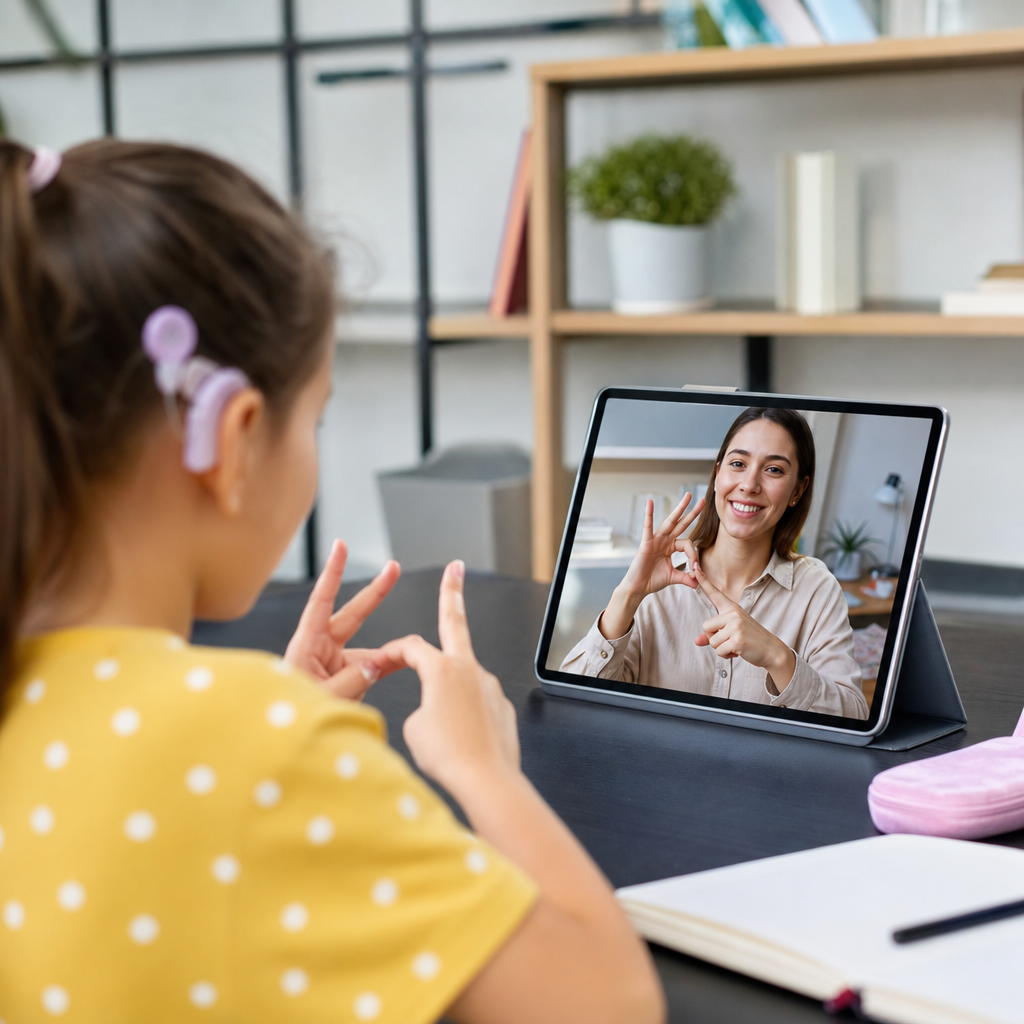

Deaf education systems shape how deaf and hard of hearing children gain language, literacy, academic knowledge, and access to community life. The term covers the policies, teaching methods, school models, support services, and cultural assumptions that influence learning from early intervention through secondary school and beyond. In practice, it includes everything from newborn hearing screening and family coaching to classroom communication methods, assistive technology, interpreter services, and transition planning. Because deaf learners are not a single uniform group, effective systems must respond to varied hearing levels, language backgrounds, additional disabilities, and family goals.
Understanding deaf education matters because early educational decisions have lifelong effects. I have seen families asked to choose communication approaches within months of diagnosis, often before they understand the differences between spoken-language therapy, sign bilingual programs, cued speech, or total communication. Those choices affect language exposure, social development, and academic access. Research across education, audiology, and language development consistently shows that children need full access to language as early as possible. When access is delayed, the effects can appear later in reading, executive function, and mental health, even when intelligence is typical.
A strong deaf education system does not begin with a school building. It begins with timely identification, accurate assessment, family-centered support, and a clear plan for communication access. It also requires trained teachers of the deaf, speech-language pathologists, educational audiologists, interpreters, and administrators who understand both disability law and deaf culture. In many countries, debates about mainstreaming, inclusion, and specialized schools can become polarized. The better question is simpler: which setting gives this child consistent access to instruction, peers, and language every day? Good systems answer that question based on evidence, not ideology.
This guide explains how deaf education systems work, the main program models, the legal and instructional foundations behind them, and the practical factors families and educators should evaluate. It is designed as a hub article, so it covers the full landscape clearly enough to orient a parent, teacher, school leader, or student beginning deeper research. By the end, you should understand the major structures, the common tradeoffs, and the standards that separate meaningful access from nominal placement.
Core Foundations of Deaf Education Systems
Every deaf education system rests on four foundations: language access, communication access, instructional quality, and belonging. Language access means the child can fully acquire at least one natural language, whether signed, spoken, or both. Communication access means the child can actually receive and express information in real educational settings such as group discussion, science labs, lunch periods, assemblies, and online learning. Instructional quality refers to the curriculum, teacher expertise, assessment practices, and intervention methods used to build literacy and content knowledge. Belonging means the student has peers, identity development, and social participation rather than isolated physical placement.
These foundations are often confused. A child may be physically included in a neighborhood school but still miss large portions of instruction because of poor acoustics, limited interpreting quality, or teacher talk during visual tasks. Another child may attend a school for the deaf and gain strong identity and sign fluency but still need more rigorous literacy intervention or expanded advanced coursework. Access is not a label; it is an observable condition. When I review a program, I look for concrete indicators: Can the student follow spontaneous classroom discussion without lag? Does the student have direct communication with teachers and peers? Are assessments adapted appropriately without lowering standards?
Two additional concepts are essential. First, deaf and hard of hearing students are heterogeneous. Some use hearing aids, some have cochlear implants, some use American Sign Language or another national sign language, some depend primarily on spoken language, and some combine methods depending on context. Second, educational planning should distinguish medical hearing status from functional classroom access. An audiogram shows hearing thresholds. It does not show whether a child can understand rapid peer conversation in noise, pick up incidental learning, or process a whole lesson through fatigue.
Major Program Models and How They Differ
Deaf education systems usually organize services through several recognizable models. Mainstream programs place students in general education classrooms, often with supports such as itinerant teacher services, FM or DM systems, captioning, or interpreters. This model can work well for students with strong self-advocacy skills, reliable access technology, and staff who understand deaf-specific accommodations. However, mainstreaming often fails when support is minimal or when the student is the only deaf learner in the school and lacks both communication access and social connection.
Resource or cluster programs bring multiple deaf and hard of hearing students together within a general school or district. Students may spend part of the day in general education and part in specialized instruction. In my experience, these programs often outperform isolated placements because they create peer groups and allow staff specialization while preserving access to broader school activities. Their quality depends on staffing levels, scheduling, and whether specialized teachers collaborate closely with general educators.
Schools for the deaf provide a concentrated environment where visual access, deaf role models, and sign language are built into daily life. For many students, especially sign-dominant learners or those who have struggled in mainstream settings, these schools offer direct instruction without constant mediation. They can support identity development, leadership, and language fluency in ways mainstream settings rarely match. The limitation is not inherent educational quality but availability. In some regions, families face long commutes, residential placement, or fewer elective options than large district schools.
Bilingual-bicultural programs teach through a sign language as a primary language while also developing reading and writing in the surrounding spoken language. Spoken-language or auditory-verbal programs emphasize listening and spoken communication, often using amplification and structured speech-language therapy. Total communication programs use multiple methods, typically speech, sign support, print, gesture, and visual aids. Cued speech systems represent spoken language visually through handshapes near the mouth. No single approach fits every child. The right program depends on the student’s language access, family communication, technology benefit, and educational progress over time.
| Model | Primary Strength | Common Risk | Best Fit Example |
|---|---|---|---|
| Mainstream with supports | Access to local peers and full general curriculum | Social isolation and missed discussion in noisy rooms | Student with strong spoken language, DM system, and informed teachers |
| Cluster or resource program | Specialized staff plus peer group | Inconsistent coordination between settings | District serving several deaf students across grade levels |
| School for the deaf | Direct communication and deaf community access | Travel distance or limited local availability | Sign-dominant student needing full visual environment |
| Bilingual-bicultural program | Strong first-language foundation and identity development | Weak results if staff sign fluency is poor | Child thriving with sign language and literacy bridging |
| Auditory-verbal or spoken-language program | Intensive listening and speech development | Underestimating listening fatigue or uneven device benefit | Young implant user with consistent auditory access and family coaching |
Early Intervention, Language Development, and Family Decision-Making
The most important period in deaf education often occurs before kindergarten. Early intervention services usually begin after newborn hearing screening and diagnostic audiology confirm hearing status. High-quality early intervention helps families understand hearing technology, communication options, developmental milestones, and the realities of everyday access. It should not pressure families into one philosophy. It should provide balanced information, connect them with deaf adults and other parents, and monitor whether the child is actually acquiring language.
Language deprivation is the central risk to avoid. A child does not benefit from a communication plan that looks promising on paper but fails in real life. If spoken input through hearing aids or cochlear implants is not producing robust language growth, the response should be immediate and practical, not delayed by hope. Adding sign language does not prevent spoken-language development; for many children it protects cognitive and social development while speech and listening continue. Families deserve regular data on vocabulary growth, expressive language, receptive comprehension, and interaction quality, not just device settings and therapy attendance.
Family communication is a major predictor of success. Children learn through thousands of routine exchanges during meals, play, errands, and conflict resolution. When schools assess readiness, they should ask whether the child can discuss feelings, ask follow-up questions, understand narratives, and access overheard information at home. These are stronger indicators than a narrow list of isolated words. Effective systems coach families in responsive communication, visual attention strategies, shared reading, and language-rich routines from infancy onward.
Teaching Methods, Curriculum Access, and Assessment
Effective deaf education is not simply general teaching made louder or more visual. It uses specialized methods that account for language modality, incidental learning gaps, and the demands of literacy development. Teachers of the deaf often preteach vocabulary, make discourse structures explicit, build background knowledge deliberately, and check comprehension more often than in typical classrooms. In bilingual settings, educators bridge signed and written language through contrastive analysis, story retell, fingerspelling, and explicit work on grammar differences. In spoken-language settings, teachers may combine auditory training with visual supports, note-taking systems, and strategic seating.
Reading instruction deserves special attention because deaf students have historically faced large achievement gaps in literacy. The reasons vary. Some students have limited phonological access, some have delayed early language, and some receive instruction that does not align with their language profile. Strong programs use evidence-based literacy components: phonological or phonemic work where appropriate, morphology, syntax, vocabulary, comprehension strategy instruction, and extensive access to meaningful texts. They also track growth with valid measures rather than assuming grade-level textbooks equal grade-level access.
Assessment must distinguish content knowledge from language barriers. A science test may appear to show weak understanding when the real issue is inaccessible wording or interpreter lag. Best practice includes multimodal assessment, classroom observation, language sampling, curriculum-based measurement, and collaboration across specialists. Standardized tests still matter, but they should be interpreted cautiously. The key question is whether results reflect what the student knows or what the test demands linguistically and auditorily.
Support Services, Technology, and Legal Rights
Deaf education systems rely on coordinated support services. Common services include educational audiology, speech-language therapy, sign language interpreting, captioning, note-taking support, counseling, occupational therapy, and transition planning. Assistive technology may include hearing aids, cochlear implants, remote microphone systems, sound-field systems, real-time captioning, alerting devices, and video relay access. These supports are powerful, but none replaces direct planning for communication access. A remote microphone can improve signal-to-noise ratio, yet it does little for peer discussion if classmates are not using pass-around microphones or if group work is chaotic.
Acoustics are frequently underestimated. Classrooms with high reverberation, HVAC noise, scraping chairs, and hard surfaces create listening conditions that undermine even excellent devices. Standards from organizations such as the American National Standards Institute have influenced classroom acoustic recommendations, and many school audits now measure background noise and reverberation time. Visual environment matters too. Poor lighting, backlit windows, and teachers who speak while turning away all reduce access for sign users, speechreaders, and students relying on facial cues.
Legal protections differ by country, but the core principle is consistent: students are entitled to meaningful educational access, not token accommodation. In the United States, planning may involve the Individuals with Disabilities Education Act, Section 504, and the Americans with Disabilities Act. Similar frameworks exist elsewhere through disability discrimination law, special education statutes, and language rights policies. Families should expect written plans, measurable goals, service accountability, and regular review. If a placement is failing, the system should change the plan rather than blame the student.
Building Inclusive Pathways and Planning for the Future
The strongest deaf education systems treat school placement as one part of a larger developmental pathway. Students need opportunities to build identity, self-advocacy, academic confidence, and future planning alongside language and literacy. That means access to deaf peers and adults, explicit instruction in requesting accommodations, and honest conversations about fatigue, communication breakdowns, and independence. A student who can explain why captioning quality matters or when an interpreter is needed is better prepared for college, training, and work.
Secondary programs should include transition services early, ideally by early adolescence. These services cover career exploration, assistive technology management, postsecondary disability support, vocational rehabilitation, and community participation. Real-world preparation matters. Students may need practice using interpreters in internships, managing cochlear implant troubleshooting during travel, or comparing accessibility services across colleges. Systems that delay transition planning until the final year of school leave students scrambling.
For families and educators evaluating any deaf education program, the practical test is direct: Does the child have complete daily access to language, instruction, peers, and identity-building experiences? Are progress measures showing real growth in language, literacy, and content learning? Are staff trained specifically in deaf education rather than relying on generic inclusion language? Strong deaf education systems answer yes through evidence, collaboration, and flexibility. Use this guide as your starting point, then review individual topics in depth, ask sharper questions, and advocate for access that is observable, measurable, and worthy of the learner.
Frequently Asked Questions
What is a deaf education system, and what does it include?
A deaf education system is the full network of policies, programs, teaching approaches, and support services that shape how deaf and hard of hearing children learn from infancy through secondary school and, in many cases, into transition planning for adult life. It is not limited to a single classroom or school. Instead, it includes early identification through newborn hearing screening, family guidance after diagnosis, early intervention services, language access planning, preschool and K-12 instructional models, related therapies, assistive technology, interpreter services, curriculum access, and the legal protections that govern educational rights.
In practical terms, a deaf education system determines how a child will access language, literacy, academic content, and social participation. It also influences whether the child learns through sign language, spoken language, or a bilingual approach; whether they attend a neighborhood school, a specialized program, or a school for the deaf; and what kinds of accommodations are provided in daily learning. Strong systems recognize that deaf students are not one uniform group. Children differ in hearing levels, language exposure, family preferences, additional disabilities, cultural identities, and communication needs. Because of that, effective deaf education systems are designed to be flexible, evidence-informed, and responsive over time rather than based on a one-size-fits-all model.
What are the main communication approaches used in deaf education?
Deaf education includes several communication approaches, and each is built around different ideas about how deaf and hard of hearing children should access language and instruction. Common approaches include sign-based education, oral or listening-and-spoken-language approaches, total communication, and bilingual-bicultural models. In sign-based settings, students may learn and use a natural sign language such as American Sign Language, often with direct visual access to instruction. Oral approaches focus on developing spoken language and listening skills, typically supported by hearing technology, speech therapy, and structured auditory practice. Total communication generally combines multiple tools, including speech, signs, fingerspelling, visual supports, and print, with the goal of using whatever helps the child communicate and learn.
Bilingual-bicultural models are especially important in current discussions because they treat a signed language as a full first language and the surrounding written or spoken majority language as a second language. In this framework, language access is central, and deaf culture is recognized as part of the student’s educational and social development. No single approach is automatically best for every child. The most effective choice depends on early language access, family capacity, available professionals, student progress, and the child’s changing needs over time. Families and educators should focus on whether the student is gaining strong language foundations, meaningful academic access, and the ability to participate fully in school and community life.
What school options are available for deaf and hard of hearing students?
Deaf and hard of hearing students may be educated in several types of settings, and the right option varies widely by child. Some attend neighborhood public schools with accommodations such as interpreters, captioning, note-taking support, assistive listening systems, or services from a teacher of the deaf. Others are placed in specialized district or regional programs where a larger number of deaf students learn together and staff have more concentrated expertise in deaf education. Another option is a school for the deaf, where communication access is often built into the entire environment and students may have stronger opportunities for peer connection, identity development, and direct instruction from professionals experienced in deaf education.
There are also hybrid and evolving models, including co-enrollment programs, inclusive settings with deaf mentors, bilingual programs, and online or blended supports for students in areas with limited local services. Choosing among these options should involve more than the label of “least restrictive environment” or assumptions about what appears most typical. The core question is whether the student has full and consistent access to language, instruction, peers, and extracurricular life. A setting is only appropriate if the child can truly understand classroom communication, build relationships, develop academically, and receive services from qualified professionals. Placement decisions should be reviewed regularly because a student’s needs may change as they grow, and what works at one stage may not remain the best fit later on.
How do support services and technology help deaf students succeed in school?
Support services and technology are often essential to making education accessible, but they are most effective when they are part of a larger, well-coordinated plan rather than treated as simple add-ons. Common supports include educational interpreters, speech-language services, audiology support, captioning, note-taking assistance, classroom acoustic modifications, preferential seating, and consultation from teachers of the deaf and other specialists. Students may also use hearing aids, cochlear implants, FM or DM systems, real-time captioning, visual alert systems, tablets with communication apps, and other assistive tools that improve access to spoken or signed communication.
At the same time, technology does not replace language-rich teaching, qualified staff, or meaningful inclusion. For example, a child with hearing aids or cochlear implants still may not have complete access to fast-paced classroom discussion, group work, background comments, or noisy learning environments. An interpreter can provide access, but interpreter quality, subject knowledge, and pacing matter greatly. Captioning can be valuable, but it must be accurate and readable at the student’s language level. The best educational plans look at the whole day, not just formal instruction. That includes lunch, assemblies, peer conversations, field trips, testing, and after-school activities. When support services are chosen carefully and monitored consistently, they help students gain clearer access to content, stronger participation, and a more equal opportunity to learn alongside others.
Why are early intervention and family involvement so important in deaf education?
Early intervention and family involvement are foundational because language development begins long before formal schooling. When deaf and hard of hearing children receive early identification, families can connect sooner with professionals, community resources, and communication options that support healthy development. This period is critical for building language, attachment, communication routines, and confidence. Family coaching may include information about hearing technology, sign language learning, communication strategies during daily routines, access to deaf adults as mentors, and guidance on creating rich, responsive interaction at home. The central goal is to make sure the child has strong, consistent access to language from the very beginning.
Family involvement remains important throughout the school years because educational success depends heavily on continuity between home and school. Families often serve as advocates, decision-makers, and key observers of a child’s progress, stress, and communication needs. They help shape choices about placement, services, language goals, and social support. Just as importantly, families influence a child’s sense of identity and belonging. When families are informed, supported, and respected, they are better able to make decisions that fit their child’s needs rather than react to pressure or incomplete information. Effective deaf education systems do not place the burden entirely on parents, but they do treat families as essential partners whose insight and involvement can significantly improve language outcomes, academic growth, and long-term well-being.