
Video Relay Service, usually shortened to VRS, is a telecommunications service that lets Deaf and hard of hearing people who use sign language place and receive phone calls through a live interpreter connected by video. Instead of typing messages back and forth, the caller signs to a communications assistant on a screen, the assistant voices that message to the hearing person on the phone, then signs the spoken response back in real time. In practical terms, VRS works like a bridge between American Sign Language and spoken English, or between another signed language and the local spoken language, making telephone access faster, more natural, and more expressive for signers.
This matters because phone communication still sits at the center of daily life. People call employers, schools, landlords, doctors, government offices, banks, and family members. Email and text have expanded options, but many critical tasks still move fastest by voice call. For Deaf users whose primary language is a signed language, VRS reduces friction that older tools could not eliminate. It preserves facial expression, pacing, and conversational nuance that are hard to capture in typed systems. It also supports more equal access in moments when timing matters, such as confirming a prescription, reporting a utility outage, or speaking with a teacher before class starts.
Within the broader landscape of communication apps, VRS is a foundational category. It sits alongside text relay, video remote interpreting, captioned telephone services, messaging apps, videoconferencing platforms, and accessibility features built into mainstream smartphones. Each tool solves a different communication problem. I have worked with organizations choosing accessibility tools, and the most common mistake is treating them as interchangeable. They are not. VRS is specifically designed for telephone conversations between a signed-language user and a voice telephone user. That purpose shapes the staffing model, regulatory rules, privacy expectations, app design, and device setup.
Understanding VRS also helps readers evaluate the wider ecosystem of Deaf communication technology. Once you know what VRS does, it becomes easier to see where other tools fit: direct video calling between signers, live caption apps for spoken meetings, interpreted telehealth sessions, emergency communication tools, and mobile platforms that combine contacts, call history, and relay access in one interface. This article serves as the hub for that subtopic by explaining the core service, how it works, who qualifies, what equipment is needed, which limitations matter, and how VRS connects to related communication apps people use every day.
How Video Relay Service Works
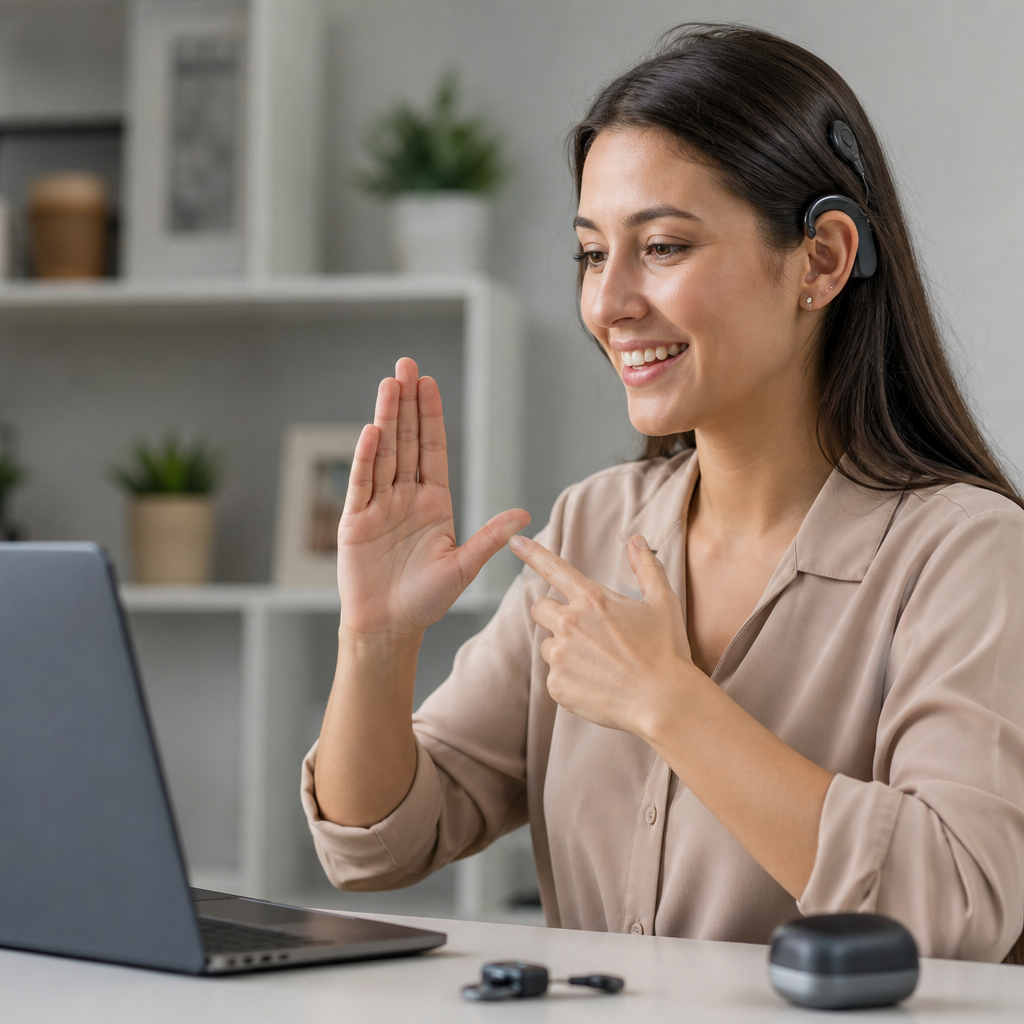
VRS is a relay call handled through a dedicated app or videophone connected to an interpreter at a provider’s call center. The Deaf caller opens the app, signs to the interpreter on video, and the interpreter places an outbound voice call to the hearing party. When the hearing person speaks, the interpreter signs the response back. The process is synchronous, which means both sides communicate live, rather than sending delayed messages. Because signed languages rely heavily on expression, body movement, and visual grammar, the video feed is not a cosmetic extra. It is the channel that carries the language itself.
In the United States, VRS is regulated by the Federal Communications Commission under the Telecommunications Relay Service framework. Eligible users can receive service from certified providers, and calls are generally funded through a relay support mechanism rather than per-minute consumer charges. Providers issue ten-digit numbers so Deaf users can be called directly, just like hearing users with standard phone service. That number portability matters. It allows employers, clients, schools, and relatives to save one regular number in their contacts instead of learning a separate system.
Call quality depends on several technical factors: camera clarity, lighting, upload speed, latency, and interpreter availability. A strong broadband connection improves signing accuracy because small visual details matter. Poor lighting can obscure handshape, and lag can disrupt turn-taking. Modern VRS apps therefore emphasize stable video codecs, simple contact management, and push notifications for missed calls. Some also support caller ID, speed dial, voicemail, and call transfer, bringing the experience closer to conventional telephony rather than making relay feel like a special exception.
VRS Compared With Other Communication Apps
People often ask whether VRS is the same as video remote interpreting, caption apps, or mainstream video chat. The short answer is no. VRS is for phone calls between a signing user and a voice user. Video remote interpreting, often called VRI, places an interpreter into the same room or remote session for conversations that are not standard phone calls, such as a hospital intake desk using a tablet. Automated caption apps convert speech to text, which can help late-deafened or hard of hearing users who prefer reading English instead of signing. Mainstream video chat apps work well when both people can communicate directly in sign or speech without relay.
| Tool | Best Use | Key Limitation |
|---|---|---|
| Video Relay Service | Phone calls between ASL user and voice telephone user | Requires interpreter and reliable video connection |
| Video Remote Interpreting | Interpreting for appointments, service counters, or meetings | Not a substitute for direct phone relay access |
| Captioned Telephone or Caption Apps | Users who understand spoken language and prefer text support | Less effective for native signers who do not rely on spoken English |
| Mainstream Video Calling Apps | Direct calls between signers or between people using speech | No built-in relay to a standard voice phone line |
That distinction matters when choosing communication apps for work, school, and healthcare. A Deaf employee may use direct video meetings with signing colleagues, captioned meetings with hearing colleagues, and VRS for calling an insurance company. A college student might text classmates, use a campus interpreter for lectures, and rely on VRS to contact financial aid offices that only answer by phone. The right tool depends on language preference, context, urgency, and whether the other party can communicate directly without accommodation.
Who Uses VRS and Why It Matters
VRS is most valuable for Deaf people whose primary or preferred language is a signed language, especially ASL users in the United States. For many native signers, ASL is not simply English on the hands. It has its own grammar, syntax, and discourse patterns. That linguistic reality is why typing on a TTY or relying only on captions may be slower or less precise than signing to an interpreter. VRS lets users communicate in the language they know best while still reaching the voice-based telephone system used by businesses and institutions.
In real-world use, the benefits show up in speed and conversational ease. Scheduling a repair visit through typed relay can take substantially longer than a signed conversation relayed live by voice. Calling a pediatrician about a child’s fever, talking with a recruiter after an interview, or clarifying a billing error all involve interruptions, emotional tone, and rapid clarification. VRS handles those exchanges better because interpreters can convey intent, register, and turn-taking naturally. That can reduce misunderstandings and make hearing callers less likely to hang up out of confusion.
VRS also supports independence. Before mobile relay apps became common, many Deaf users had to plan calls around specialized hardware or rely on others to place calls. Today, a smartphone, tablet, or dedicated videophone can bring relay access into kitchens, offices, dorms, and waiting rooms. That mobility changes outcomes. I have seen users resolve workplace problems faster simply because they could call immediately instead of delaying until they got home to a fixed device. Access delayed is often access denied, especially when offices close, slots fill, or issues escalate.
Devices, Features, and Setup
Most people now access VRS through mobile apps on iOS or Android, desktop software, or dedicated home videophones. The dedicated devices still matter because they are optimized for wide-angle cameras, large displays, and always-on readiness. They can feel more comfortable for long calls, especially for households with multiple signers. Mobile apps, however, have expanded reach dramatically. They support contact lists, recent calls, direct dialing, notifications, and integration with address books. Some providers include multilingual support, business directories, and options for handling voicemail or unavailable contacts.
Setup usually involves registration with a certified provider, identity verification, acceptance of service rules, and assignment or transfer of a ten-digit phone number. Providers may ask for a physical address because relay systems must route emergency calls appropriately. Users should also test front camera placement, bandwidth, and lighting before relying on the service for important conversations. A plain background, chest-up framing, and steady internet make a noticeable difference. These are not cosmetic preferences; they improve interpreter accuracy by making handshape, movement, and nonmanual signals easier to read.
For organizations serving Deaf clients, implementation goes beyond downloading an app. Reception teams need clear procedures for returning relay calls, staff should understand that VRS interpreters voice exactly what the caller signs, and callback systems must accept relay numbers as legitimate contact numbers. Too many businesses still mistake relay calls for spam or refuse to speak after hearing the interpreter’s introduction. Training front-line staff solves much of that problem. A simple script acknowledging relay and continuing the call can remove a major barrier in customer service, hiring, education, and care coordination.
Privacy, Regulations, and Service Limitations
VRS providers and interpreters operate under strict confidentiality expectations, and professional interpreters follow recognized ethical standards, including impartiality and message accuracy. That said, users should understand the boundaries. VRS is excellent for routine and many sensitive calls, but certain situations may demand extra caution, such as legal strategy discussions, complex medical consent, or calls involving specialized terminology. In those cases, users may prefer an interpreter with subject-matter experience or another accommodation path. Confidentiality is strong, but communication quality still depends on matching the context to the right resource.
Emergency calling deserves special attention. VRS can connect emergency calls, but location accuracy is more complicated than dialing from a fixed landline. Registered address information must be current, and users should know how their provider handles 911 routing. In practice, that means reviewing emergency features before a crisis happens, not during one. Some users also keep text-to-911 options and local emergency app tools available as backups. Redundancy is smart accessibility planning. No single communication tool should carry all the risk in urgent situations.
There are also limits tied to interpreter supply, peak demand, internet reliability, and language variation. Wait times can increase during busy periods. Regional signs, DeafBlind communication preferences, or specialized fields like engineering and oncology may require additional support. VRS is highly effective, but it is not magic. It works best when broadband is stable, the user has clear signing visibility, and the conversation falls within the service model of relay telephony rather than on-site interpreting or full meeting facilitation.
How VRS Fits the Communication Apps Hub
As a hub topic within Technology and Tools for the Deaf Community, VRS connects directly to every major communication app category. It links outward conceptually to direct sign-to-sign video calling, messaging apps with accessibility features, speech-to-text apps for meetings, interpreter scheduling platforms, captioned phone tools, and emergency communication technology. If you are building a personal toolkit, start by asking one basic question: do I need direct communication, visual language relay, or text support? VRS answers the second need better than any other app class.
For families, educators, employers, and service providers, the practical takeaway is straightforward. Do not assume one app solves every accessibility need. Match the tool to the communication task, respect language preference, and make sure staff understand how relay calls work. If your organization interacts with Deaf customers or employees, test your phone workflows, accept ten-digit relay numbers, and document a policy for handling interpreter-mediated calls. If you are a Deaf or hard of hearing user exploring communication apps, compare providers, review device options, and choose a setup you can use quickly under everyday pressure. The best communication tool is the one that reliably works when life does not slow down.
Frequently Asked Questions
What is a Video Relay Service (VRS), and how does it work?
Video Relay Service, or VRS, is a type of telecommunications relay service that allows Deaf and hard of hearing people who use sign language to make and receive phone calls through a live interpreter, often called a communications assistant. Instead of relying on typed messages, the caller uses a videophone, smartphone, tablet, or computer with a camera to sign naturally to the interpreter on screen. The interpreter then voices that signed message to the hearing person on a standard telephone call. When the hearing person responds, the interpreter signs the spoken reply back to the Deaf caller in real time.
In simple terms, VRS acts as a bridge between sign language users and voice telephone users. The process is designed to feel as close as possible to a regular phone conversation, with back-and-forth communication happening live. This makes VRS especially valuable for people who communicate most comfortably and accurately in American Sign Language, or ASL, rather than through written English. Because sign language has its own grammar, structure, and nuances, VRS can support more natural, fluid, and expressive conversations than text-based relay methods.
Who uses VRS, and who benefits the most from it?
VRS is primarily used by Deaf and hard of hearing individuals who communicate in sign language as their first or preferred language. For many users, especially native ASL signers, VRS offers a more accessible and efficient alternative to older relay systems that depended on typing. It can be used for everyday personal calls, conversations with family and friends, work-related communication, medical appointments, school matters, customer service, and many other situations where direct, real-time interaction is important.
The people who benefit most from VRS are those who want the speed, tone, and nuance of a live conversation without the limitations of text. Because sign language is visual and expressive, VRS helps preserve meaning that might otherwise be lost in typed relay. It can also improve independence by allowing Deaf users to place calls on their own schedule without needing a friend or family member to interpret. Hearing callers benefit as well, since they can simply speak normally on the phone while the communications assistant handles the interpretation between spoken language and sign language.
How is VRS different from text relay or captioned telephone services?
VRS differs from text relay and captioned telephone services mainly in how the conversation is delivered. With text relay, the Deaf or hard of hearing user types a message to an operator, who then reads it aloud to the hearing person and types back the spoken response. Captioned telephone services, by contrast, are typically designed for people who can speak for themselves but need captions to understand what the other caller is saying. VRS is distinct because it uses live video and sign language interpretation rather than text or captions.
This difference matters because ASL is not simply signed English. It is a complete language with its own syntax and cultural context. Many Deaf users find that VRS is faster, more natural, and less tiring than typing long conversations. It also allows for facial expressions, body language, and other visual cues that are essential parts of sign language communication. In many cases, VRS can make phone calls feel more direct and more personal, especially when the conversation is complex, emotional, or time-sensitive.
What equipment or technology is needed to use Video Relay Service?
To use VRS, a person generally needs a device with a screen, camera, microphone, internet connection, and access to a VRS provider. This may include a dedicated videophone, a tablet, a smartphone, or a computer with compatible software or an app. Because the conversation happens through live video, a stable broadband connection is important for clear signing and accurate interpretation. Good lighting and a camera position that shows the user’s hands, face, and upper body also help ensure effective communication.
Many VRS providers offer user-friendly platforms designed specifically for sign language calls, and some may provide equipment or support during setup. Once registered, users can often place calls much like any other phone call, either by dialing directly through the provider’s app or using a videophone interface. The goal is to make access straightforward and reliable so users can communicate in real time from home, work, or on the go. As technology has improved, VRS has become more flexible and widely available across multiple devices.
Is VRS confidential, and can it be used for important or sensitive calls?
Yes, VRS is commonly used for important and sensitive conversations, and confidentiality is a core part of how the service operates. Communications assistants are generally required to follow strict professional standards, including maintaining privacy and interpreting conversations accurately and impartially. That means they are expected to relay everything that is said or signed without adding personal opinions, changing the meaning, or disclosing the content of the call to others.
Because of these standards, many people use VRS for medical discussions, legal matters, workplace communication, financial calls, school meetings, and other private interactions. That said, users should still choose reputable VRS providers and understand the provider’s policies, especially when dealing with highly sensitive information. In practice, VRS is an established accessibility tool that helps Deaf and hard of hearing sign language users participate more fully in everyday life while maintaining the same expectation of privacy and professionalism that hearing callers expect from traditional telephone services.