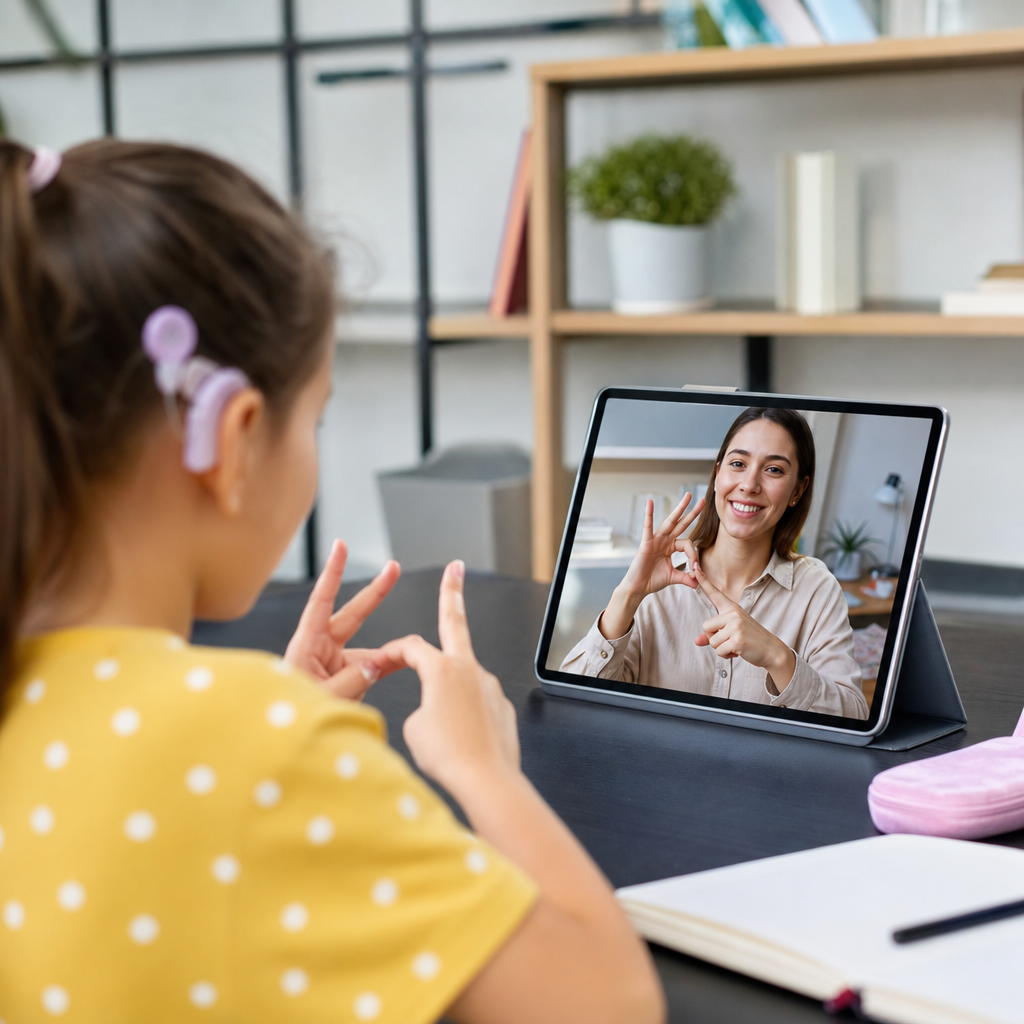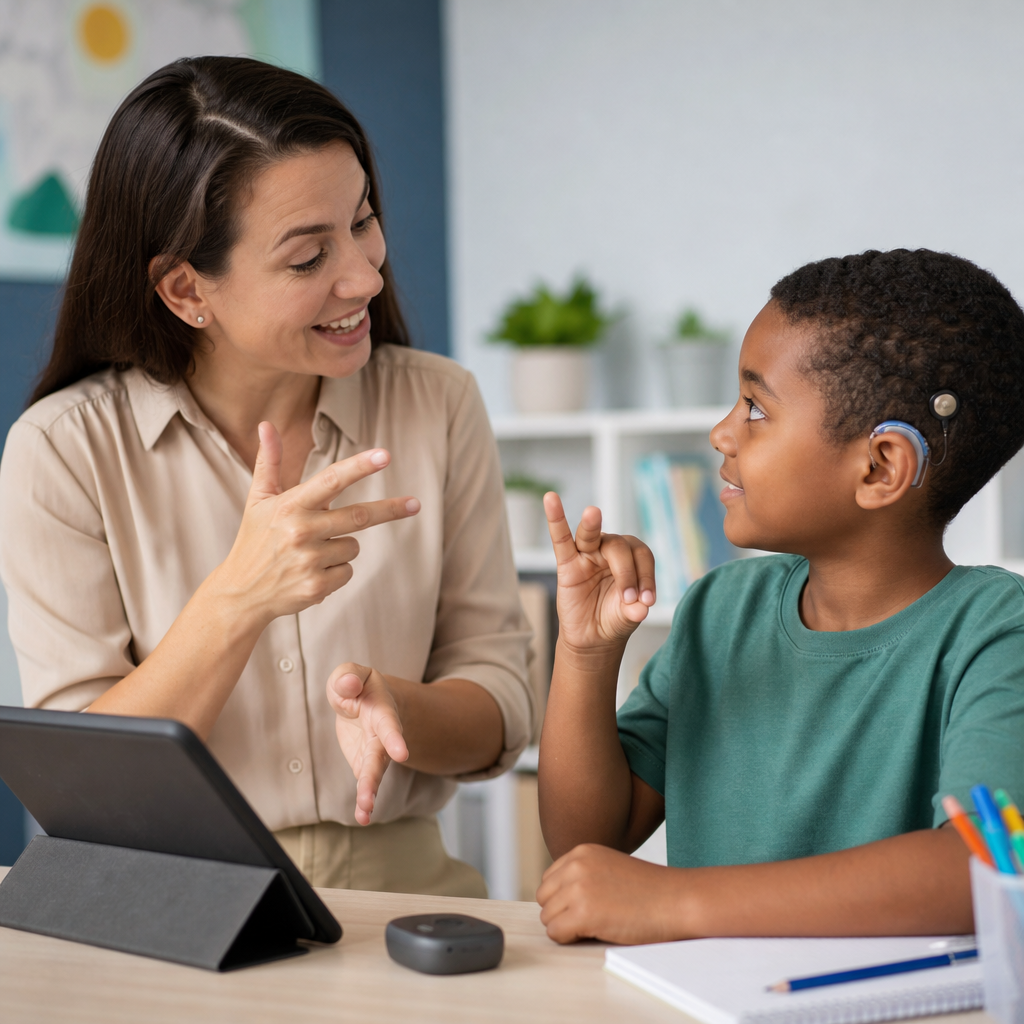

Bilingual-bicultural education, usually shortened to Bi-Bi education, is an approach to Deaf education that treats a signed language as the child’s first or primary language and the surrounding written or spoken majority language as a second language. In practice, that usually means students learn through a natural sign language such as American Sign Language, British Sign Language, or another national sign language, while also developing literacy in English or another majority language and learning how to navigate both Deaf culture and the wider hearing society. For families, educators, and school leaders asking what bilingual-bicultural education is, the short answer is clear: it is a language-rich, identity-affirming educational model designed to give Deaf children full access to learning from the start.
This matters because Deaf education systems have long been shaped by debates about language, access, and expectations. I have worked with schools and families comparing oral programs, total communication classrooms, mainstream placements, and residential Deaf schools, and the same pattern appears repeatedly: children progress when they have consistent access to language, skilled teachers, and a school culture that understands Deaf development. When language access is delayed, academic gaps widen quickly. Bi-Bi education addresses that core problem by making direct communication central rather than optional. It does not reject literacy, speech, technology, or inclusion. It simply starts from a nonnegotiable principle that Deaf children need complete language exposure early enough to support cognition, learning, and social development.
To understand Bi-Bi education well, it helps to define several related terms. Deaf with a capital D commonly refers to a cultural and linguistic community, not only an audiological condition. A signed language is not a manual code of English; it is a full language with its own grammar, lexicon, discourse patterns, and regional variation. Bicultural means students are taught to understand the values, history, and norms of both Deaf communities and the majority culture around them. Deaf education systems are the organized structures through which Deaf students receive schooling, including residential schools for the Deaf, mainstream public schools, charter programs, interpreter-supported placements, early intervention services, and family education programs. This article serves as a hub for that entire landscape, with Bi-Bi education as the anchor model for understanding how strong Deaf education can work.
Bi-Bi education also matters because it reframes success. Instead of measuring a Deaf child only by how closely they approximate hearing norms, it asks whether the child has age-appropriate language, literacy, content knowledge, self-advocacy, and a secure sense of identity. That shift has practical consequences in curriculum, staffing, assessment, and school design. A strong Bi-Bi program hires fluent signers, includes Deaf adults in meaningful instructional roles, teaches reading explicitly, and connects students to Deaf history and community life. It is not a single classroom technique. It is a whole-school philosophy that influences everything from preschool routines to graduation planning.
How bilingual-bicultural education works in Deaf education systems
In a Bi-Bi model, the signed language is the medium of instruction across subjects, especially in the early years when children need unrestricted access to concepts, interaction, and classroom talk. Teachers present science, math, social studies, and daily routines in sign, allowing students to build background knowledge without waiting for partial access through speechreading or inconsistent interpretation. The majority language, often English, is then taught deliberately, usually with a strong emphasis on reading and writing. This sequence matters. Students first need a fully accessible language base before they can map print, develop metalinguistic awareness, and transfer knowledge across languages.
Well-designed Deaf education systems use this model in different settings. A residential school for the Deaf may implement Bi-Bi schoolwide, with Deaf role models, dorm life, extracurriculars, and community events reinforcing language and identity. A public school district may run a regional program where Deaf students are grouped together for direct instruction in sign and included with hearing peers for selected activities. Some early childhood centers coach parents in sign language and visual communication so the child’s first years are language-rich at home as well as at school. The setting varies, but the core requirement stays the same: direct access to instruction through a natural sign language.
Bi-Bi education is often contrasted with oral-only and total communication approaches. Oral-only programs prioritize listening and spoken language, sometimes supported by hearing aids or cochlear implants, and may discourage signing. Total communication typically combines speech, signs, fingerspelling, print, gestures, and visual supports, but in practice the language model can become inconsistent because multiple modes are used simultaneously without full fidelity to either language. Bi-Bi differs because it commits to a complete sign language as the foundation. That clarity can improve instruction, assessment, and expectations. Students know what language the classroom runs on, teachers can plan more effectively, and families receive a coherent message about communication goals.
| Approach | Primary classroom language | Main goal | Common challenge |
|---|---|---|---|
| Bi-Bi education | Natural sign language | Full language access plus literacy and cultural competence | Requires fluent signing staff and program consistency |
| Oral-only | Spoken language | Listening and speech development | Access may be incomplete for many students |
| Total communication | Mixed modes | Use any available means to communicate | Language input may be inconsistent or artificial |
| Mainstream with interpreter | Typically spoken classroom, interpreted access | Placement with hearing peers | Indirect access and limited peer communication |
Parents often ask whether Bi-Bi education excludes speech or hearing technology. It does not. Many students in Bi-Bi programs use hearing aids, cochlear implants, FM or DM systems, captioning, and speech therapy. The difference is that technology and speech are treated as supports, not as substitutes for guaranteed language access. A child may practice listening skills and spoken language while still learning academics through sign. That balanced stance reflects what experienced Deaf educators see every year: children’s auditory outcomes vary widely, but the need for language does not.
Why language access comes first
The strongest argument for bilingual-bicultural education is straightforward: language deprivation harms development, and early accessible language prevents it. Deaf children cannot learn efficiently from speech they do not fully perceive. Even with advanced amplification, access can fluctuate based on device fit, background noise, fatigue, distance from the speaker, and the child’s specific hearing profile. Sign language removes those barriers by providing complete visual access. In schools I have evaluated, the biggest difference between thriving and struggling students was rarely intelligence or motivation. It was whether adults ensured fluent, consistent communication from the beginning.
Research across deaf studies, language acquisition, and education supports the need for early language exposure. Children who acquire a first language on time are better positioned for literacy, executive functioning, social development, and content learning. For Deaf children, that first language can and often should be a signed language because it is fully accessible. This does not diminish the importance of English. Instead, it creates the conditions for stronger English literacy by giving students a language base from which to discuss stories, analyze grammar, ask questions, and build knowledge. Reading comprehension depends heavily on vocabulary, syntax, world knowledge, and inferencing; those develop best when the child already has a robust first language.
Bi-Bi education also supports mental health and belonging. Deaf students who can communicate easily with teachers and peers are less isolated and more likely to participate, take academic risks, and develop self-advocacy. In contrast, students placed in settings where they are the only Deaf child often report communication fatigue, social exclusion, and constant dependence on adults for access. A strong Deaf education system recognizes that school is not only about curriculum delivery. It is also a social environment where identity, friendships, and confidence are formed. Bi-Bi programs are often especially effective because they normalize Deaf ways of being rather than treating them as deficits to overcome.
Core components of a strong Bi-Bi program
Effective bilingual-bicultural education requires much more than putting sign language in the classroom. First, staff fluency is nonnegotiable. Teachers, aides, counselors, and administrators need strong receptive and expressive skills in the school’s signed language. If adults rely on limited signing, students receive reduced language models, and the entire program weakens. Second, the curriculum must be designed for bilingual learners. Literacy instruction should include explicit teaching in phonological alternatives where useful, fingerspelling, morphology, vocabulary, genre, and comprehension strategies, all anchored in accessible discussion. Third, Deaf adults should be visible in meaningful roles, not only as occasional visitors. Students need daily examples of Deaf professionals, leaders, and community members.
Assessment is another major component. Standardized tests built for hearing students can obscure what Deaf learners actually know if language access is poor or test directions are not fully understood. Good Deaf education systems use multiple measures: signed language assessments, reading inventories, writing samples, classroom observation, content performance, and family input. Progress monitoring should distinguish between language acquisition, literacy development, and subject mastery. Otherwise, a student may be mislabeled as low-performing when the real issue is inadequate access to instruction or assessment.
Family partnership is equally important. Many Deaf children are born to hearing parents who have little prior knowledge of sign language or Deaf culture. Bi-Bi programs work best when schools actively teach families how to communicate visually at home, connect them with Deaf mentors, and explain educational choices without pressure or guilt. Parents do not need to become perfect signers overnight. They do need sustained support, realistic goals, and regular opportunities to build communication routines around meals, play, reading, and everyday conversation. When schools invest in families, student outcomes improve.
Where Bi-Bi fits within the broader Deaf education landscape
As a hub topic, Deaf education systems include several pathways, and Bi-Bi education helps clarify the strengths and limitations of each. Residential schools for the Deaf remain important because they can provide a full signing environment, concentrated expertise, and a strong peer group. Regional day programs can deliver many of the same benefits when enrollment is large enough to sustain a true language community. Mainstream schools may work well for some students, especially when districts provide qualified teachers of the Deaf, direct sign access, interpreting with clear boundaries, captioned media, and regular contact with other Deaf peers. However, mainstream placement alone does not guarantee inclusion. Access must be designed, monitored, and adjusted continuously.
Early intervention is often where the future of a Deaf child’s education is decided. Families need accurate information about all communication options, including signed language, as soon as hearing status is identified. Programs that present sign as a last resort or as harmful are not following the evidence on language access. Conversely, high-quality Bi-Bi early intervention introduces visual attention strategies, turn-taking in sign, shared book reading, routines, and parent coaching immediately. Later, transition planning matters too. Adolescents in Bi-Bi settings should receive college counseling, career exploration, workplace self-advocacy training, and information about accommodations, interpreting, and Deaf professional networks.
No single model fits every child perfectly. Some Deaf students thrive in Bi-Bi schools; others combine elements of Bi-Bi education with speech services, mainstream classes, or specialized therapies. The critical point is that educational planning should start with access, language, and long-term development rather than ideology. When teams ask practical questions, decisions improve. Can the student communicate directly with teachers all day? Does the child have Deaf peers? Are reading and writing taught explicitly? Is there a fluent language model in school and at home? Those questions reveal more than labels ever will.
Common misconceptions and what families should ask
One common misconception is that learning sign language will prevent spoken language development. That claim is not supported by what experienced educators and many families observe. Children can develop sign and speech in parallel, and sign often reduces frustration by giving the child a complete way to communicate while speech skills develop. Another misconception is that Bi-Bi education is only for profoundly Deaf students. In reality, students with varied hearing levels, devices, and communication profiles may benefit from bilingual access. The deciding factor is not a category label. It is whether the child has full, sustainable access to language and instruction.
Families evaluating Deaf education systems should ask direct questions. Who in the school signs fluently? How many Deaf peers will my child have? What is the literacy curriculum? How are interpreters used, and when is direct instruction provided instead? How does the school measure sign language growth? Are Deaf adults part of the staff? What training do general educators receive about visual access, captioning, classroom acoustics, and Deaf identity? Clear answers usually distinguish robust programs from programs that rely on marketing language but lack substance.
Bilingual-bicultural education gives Deaf children what every student deserves: a complete language, meaningful access to learning, and a school experience that builds competence rather than dependency. As the central model in understanding Deaf education systems, it shows why language access, skilled teaching, and cultural belonging cannot be separated. Families and educators choosing among programs should look beyond labels and examine how access actually works day to day. Start by asking whether the child can learn, connect, and thrive in the language of the classroom. If the answer is yes, the foundation for long-term success is already in place.
Frequently Asked Questions
What is bilingual-bicultural (Bi-Bi) education in Deaf education?
Bilingual-bicultural, or Bi-Bi, education is an approach to Deaf education that recognizes a natural signed language as a child’s first or primary language and teaches the surrounding majority language as a second language. In many settings, this means Deaf students learn academic content through a sign language such as American Sign Language (ASL), British Sign Language (BSL), or another national sign language, while also building strong reading and writing skills in English or another majority language. The “bilingual” part refers to developing competence in two languages, and the “bicultural” part refers to helping students understand and navigate both Deaf culture and the wider hearing society.
Unlike approaches that center spoken language first, Bi-Bi education is based on the idea that Deaf children learn best when they have full access to language from the beginning. A natural sign language provides that access visually and directly. Once students have a solid language foundation, educators can more effectively support literacy, academic growth, and second-language development. The overall goal is not simply communication, but full cognitive, linguistic, social, and cultural development.
How does Bi-Bi education differ from other approaches to teaching Deaf children?
Bi-Bi education differs from other Deaf education models primarily in how it views language access and the role of signed languages. In a Bi-Bi model, a natural sign language is not treated as a backup tool or temporary support. It is treated as a complete, legitimate language and the main medium of instruction. This is a major distinction from oral-only approaches, which focus on speech, listening, and lip-reading, often with the goal of integrating Deaf children into spoken-language environments without using sign language as the primary teaching language.
Bi-Bi also differs from systems that use manually coded versions of spoken languages rather than natural sign languages. Natural signed languages have their own grammar, structure, and cultural context, while manually coded systems are designed to represent spoken language visually and may not provide the same kind of fluent, native language access. In contrast, Bi-Bi education starts with language that is fully accessible to the child, then builds bridges to reading, writing, and, when appropriate, speech or spoken-language awareness.
Another key difference is cultural. Bi-Bi education explicitly values Deaf culture, Deaf identity, and connections to the Deaf community. Students are not taught to see deafness only as a deficit to overcome. Instead, they are supported in developing pride in their language and identity while also gaining the skills needed to participate successfully in the broader society. This dual emphasis on language and culture is what makes the Bi-Bi model distinct.
What are the main benefits of bilingual-bicultural education for Deaf students?
One of the biggest benefits of Bi-Bi education is complete access to language during the critical early years of development. When Deaf children can fully understand the language used around them, they are better positioned to develop thinking skills, social understanding, emotional regulation, and academic readiness. A strong first language foundation supports everything that follows, including literacy and second-language learning. For many Deaf children, a natural sign language provides the clearest and most accessible path to that foundation.
Bi-Bi education can also support stronger literacy outcomes because it does not ask children to learn new concepts through a language they cannot fully access. Instead, students first build knowledge in sign language and then connect that knowledge to written forms of the majority language. This helps make reading and writing more meaningful and less abstract. Teachers can explain vocabulary, grammar, and content clearly in sign language, giving students a stronger base for comprehension and expression.
Socially and emotionally, Bi-Bi programs can foster a sense of belonging and confidence. Students see their language used by teachers and peers, and they learn that Deaf culture has value and history. This can improve self-esteem, identity development, and engagement in school. At the same time, because Bi-Bi education includes the majority language and bicultural learning, students are also prepared to interact with the wider world. In short, the model aims to produce students who are linguistically strong, academically capable, and culturally grounded.
Does Bi-Bi education exclude learning spoken language or using hearing technology?
No. Bi-Bi education does not automatically exclude spoken language, hearing aids, cochlear implants, or other hearing technologies. The defining feature of the Bi-Bi approach is that a natural sign language remains central as the child’s accessible first language and as a primary language of instruction. Within that framework, many students may also learn spoken language skills, use amplification devices, receive speech therapy, or participate in listening activities, depending on their individual needs, abilities, and family goals.
The key difference is that Bi-Bi education does not make access to learning dependent on how well a child can hear or produce speech. Instead, it ensures that the student has a fully accessible language from the start, reducing the risk of language deprivation. Spoken-language development, when included, is usually treated as an additional skill rather than the sole path to education. This makes the model more flexible and often more developmentally supportive, because academic learning does not have to wait for speech or listening skills to reach a certain level.
For families, this means Bi-Bi education is not necessarily an either-or choice between signing and other supports. In many cases, it can be a both-and approach: strong sign language development paired with literacy instruction and, where appropriate, opportunities to develop spoken or auditory skills. The central principle is access first, followed by broad, individualized language and educational growth.
Who is Bi-Bi education best suited for, and what should families look for in a program?
Bi-Bi education can be a strong fit for many Deaf and hard of hearing children, especially those who benefit from consistent, direct visual access to language. It is often particularly valuable for children who need a reliable first language foundation early in life, including those who may not have full access to spoken language even with technology or therapy. That said, suitability can depend on the child’s communication needs, family preferences, available services, and the quality of the program itself.
When evaluating a Bi-Bi program, families should look for more than just the presence of sign language in the classroom. A strong program will use a natural signed language fluently and consistently for instruction, employ qualified teachers who are skilled in Deaf education, and provide deliberate, structured support for literacy in the majority language. It should also include meaningful exposure to Deaf culture, opportunities to interact with Deaf adults and peers, and a clear plan for helping students develop academic knowledge across subjects.
Families may also want to ask practical questions: How is reading taught? How are students assessed in both languages? Are Deaf role models involved in the program? How does the school support communication between school and home? A high-quality Bi-Bi program should be able to explain how it develops bilingual skills over time and how it supports both educational achievement and healthy identity development. The best programs do not simply teach children to get by; they help them build a strong language base, a positive sense of self, and the tools to thrive in more than one linguistic and cultural world.