Challenges in modern deaf education systems shape academic outcomes, language development, social inclusion, and long-term employment for millions of deaf and hard of hearing students worldwide. Deaf education systems include the policies, schools, teaching methods, assessment practices, assistive technologies, and family supports used to educate children who are deaf, hard of hearing, deafblind, or have additional learning needs. In practice, this field sits at the intersection of language access, disability rights, child development, public health, and teacher preparation. After working with accessibility standards, school communication plans, and inclusive learning design, I have seen one point confirmed repeatedly: when a child lacks consistent access to language and instruction, every later intervention becomes harder, costlier, and less effective.
The central challenge is not deafness itself. The real problem is whether a student receives full, timely, and appropriate access to language from the earliest years through graduation. Some learners thrive in bilingual environments that combine sign language and written or spoken language. Others succeed with listening and spoken language programs supported by hearing technology. Many need flexible models rather than ideological extremes. Modern deaf education systems matter because early language deprivation is linked to lower literacy, weaker academic performance, and reduced social participation, while strong communication access improves reading, executive functioning, and mental health. This hub article explains the major obstacles schools and families face, outlines the models in use, and clarifies where policy, training, and practice still fall short.
Language access begins before curriculum access
The most important issue in deaf education is early and continuous language access. A child cannot fully benefit from reading instruction, science lessons, or social-emotional learning if communication is partial, delayed, or inconsistent. Research and classroom experience both show that the first years are decisive. When infants and toddlers receive rich exposure to a fully accessible language, whether a national sign language, spoken language supported by technology, or both, they build the cognitive foundations needed for later learning. When that access is fragmented, gaps appear quickly in vocabulary, narrative skills, working memory, and print awareness.
This is why newborn hearing screening, early intervention, and family counseling matter so much. Screening identifies hearing loss early, but identification alone does not guarantee language access. Families often receive conflicting advice about cochlear implants, hearing aids, sign language, mainstream placement, and specialized schools. In many systems, parents are pushed toward one communication philosophy before they have neutral, evidence-based information. That creates avoidable risk. A child fitted with hearing technology still needs intensive auditory support, mapping, monitoring, and language-rich interaction. A child in a sign-based program still needs qualified sign-fluent adults and access to print. The consistent principle is simple: no child should wait for language.
Communication models and placement decisions remain deeply contested
Modern deaf education systems use several models, and each has benefits and limitations. Bilingual-bicultural programs typically use a signed language as the primary language of instruction while teaching the surrounding written language explicitly. Listening and spoken language programs emphasize auditory-verbal or auditory-oral development, often with hearing aids or cochlear implants. Total communication approaches combine speech, signs, fingerspelling, visual supports, and amplification. Mainstream inclusion places students in general education classrooms with accommodations, while specialized schools for the deaf provide concentrated peer access and staff expertise. The challenge is not that one model exists; it is that placement is often driven by geography, ideology, or staffing shortages instead of the child’s actual language profile.
I have seen students moved into mainstream classes because districts considered them the least restrictive option on paper, even when interpreters were unavailable, teachers lacked deaf education training, and class discussion moved too quickly for consistent access. I have also seen students in specialized settings who benefited socially from deaf peer communities yet still lacked rigorous grade-level content because curriculum expectations had been lowered. Effective placement decisions require ongoing review of expressive and receptive language, literacy growth, access to incidental learning, and student preference. No placement should be considered successful merely because the child is physically present in school or uses a device. The standard must be meaningful educational access.
Teacher preparation is one of the system’s weakest links
A persistent obstacle in deaf education systems is the shortage of well-prepared teachers, interpreters, speech-language professionals, and educational audiologists. Teaching deaf and hard of hearing students requires specialized knowledge that goes beyond general special education. Educators need skill in language development, phonological awareness, visual pedagogy, signed language structure, assistive listening technology, captioning practices, and differentiated literacy instruction. They also need to understand how deafness interacts with autism, dyslexia, attention differences, and socioeconomic barriers. Too many preparation programs cover these topics lightly or assume that basic accommodation knowledge is enough.
Interpreter quality is another major concern. Educational interpreting is not the same as community interpreting. In classrooms, interpreters must convey academic vocabulary, classroom discourse, peer discussion, and teacher intent in real time, often across multiple subjects. Yet many systems use underqualified staff because of budget pressure or workforce shortages. The result is reduced access that may go unnoticed by hearing administrators. Students may receive incomplete information during science demonstrations, miss sarcasm or tone in literature discussions, or lose track of fast peer exchanges. Professional standards from organizations such as the Registry of Interpreters for the Deaf and recognized teacher credentialing frameworks help, but implementation remains uneven across districts and countries.
Technology expands access, but it does not solve access by itself
Hearing aids, cochlear implants, remote microphone systems, captioning platforms, visual alert systems, and classroom sound field technology can significantly improve educational access. Used well, these tools reduce listening fatigue, improve speech perception in noise, and support participation. However, technology is frequently treated as a complete solution when it is only one component of access. Devices require fitting, maintenance, troubleshooting, and training. Cochlear implants need mapping and auditory habilitation. FM or DM systems fail if teachers forget microphones, batteries die, or students move across multiple rooms without coordination. Automatic captions help, but live captions still produce errors with specialist vocabulary, accented speech, and rapid discussion.
The most effective schools build routines around technology rather than assuming students will self-manage. They check equipment daily, provide backups, train substitute teachers, and coordinate between teachers of the deaf, audiologists, and classroom staff. They also recognize the limits of auditory access. Even with advanced devices, many students struggle in reverberant classrooms, group work, assemblies, and sports settings where background noise is high. Universal Design for Learning principles, strong visual supports, and multimodal instruction remain essential.
| Challenge | Common school response | What works better |
|---|---|---|
| Student misses discussion in noise | Seat student near teacher | Use remote microphone, captions, visual turn-taking, and written summaries |
| Interpreter unavailable | Provide notes afterward | Arrange qualified backup access, live captioning, and asynchronous recorded instruction |
| Device malfunction | Wait for outside repair | Keep loaner equipment and trained staff on site |
| Low reading scores | Repeat phonics program unchanged | Assess language base, sign proficiency, vocabulary depth, and explicit comprehension strategies |
Literacy instruction often fails when schools confuse hearing with language
Reading outcomes remain one of the most discussed issues in deaf education because literacy depends on a robust language foundation. Schools sometimes assume that if a student can detect sound, imitate speech, or use amplification, standard reading instruction will transfer automatically. In practice, many deaf learners need more explicit work in vocabulary, morphology, syntax, background knowledge, and metacognitive comprehension strategies. Students who use sign language need strong bridges between signed language structures and written language. Students in spoken-language programs may need direct support with phonological processing, listening stamina, and comprehension monitoring. Neither group benefits from simplified texts that permanently lower expectations.
Effective literacy teaching includes repeated interactive read-alouds, direct vocabulary teaching, explicit grammar instruction, content-rich curriculum, and frequent checks for understanding. Fingerspelling, captioned media, visual phonics, and sign-supported storytelling can all play productive roles when used intentionally. In schools I have audited, the strongest literacy growth came where teams aligned language goals with reading goals instead of treating them separately. Teachers analyzed whether a student’s difficulty came from decoding, limited syntax, weak world knowledge, or reduced classroom access. That diagnostic mindset is more useful than arguing over a single method.
Inclusion can support belonging, but isolation is a real risk
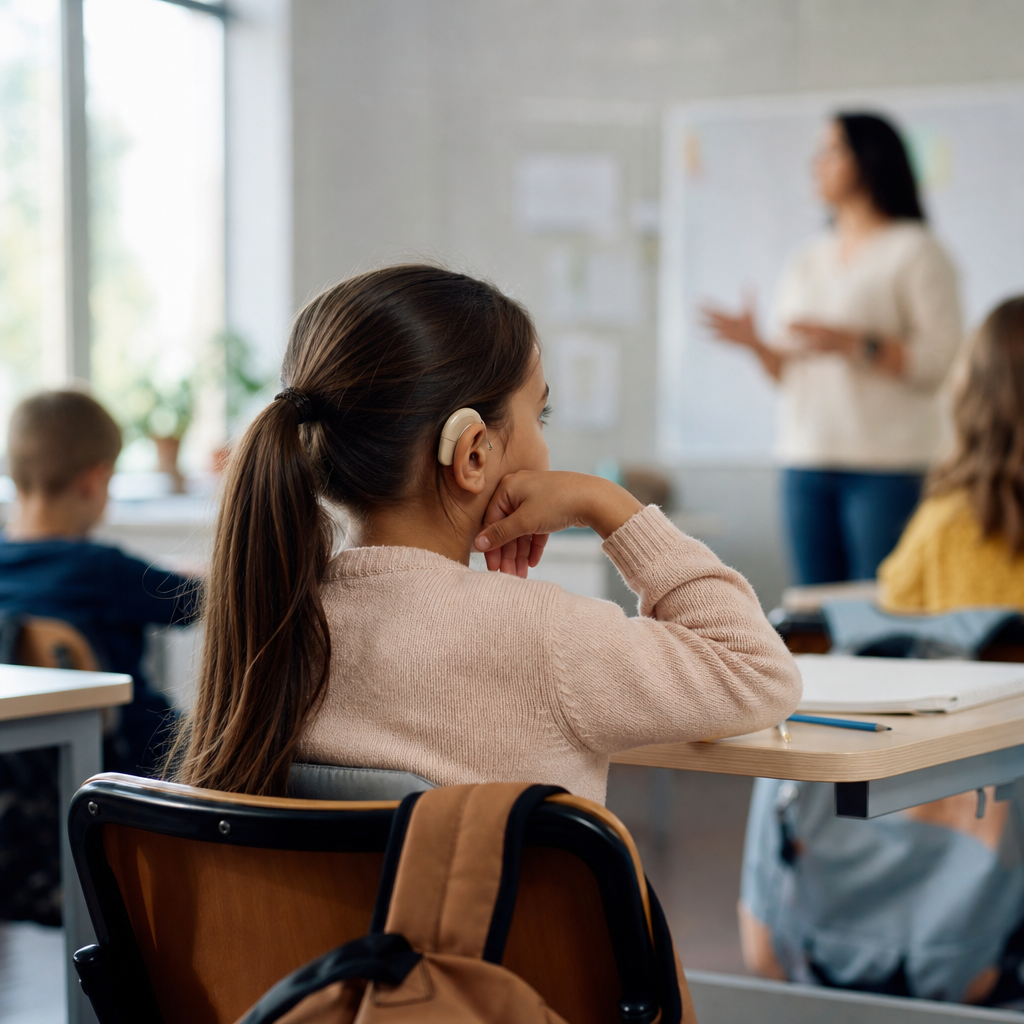
Mainstream education has expanded significantly, and many deaf students spend most or all of the day in general education classrooms. Inclusion can offer access to broader curricula, neighborhood schools, and hearing peers. It can also improve expectations when accommodations are well designed. But inclusion fails when a student is academically present and socially absent. Deaf students in mainstream settings often report exhaustion from sustained listening or visual monitoring, limited participation in informal conversation, and exclusion from lunch, clubs, and playground interactions. Incidental learning, the information children absorb from overheard talk and spontaneous peer exchange, is especially easy to miss.
Specialized schools for the deaf can address some of these barriers by providing direct communication, deaf role models, cultural belonging, and fluent peer interaction. For many students, that environment supports identity development and confidence in ways mainstream settings do not. The tradeoff is that some specialized schools are geographically distant, may offer fewer advanced electives, or struggle with funding. The best systems stop framing the choice as mainstream versus special school and instead build regional continuums: co-enrollment, shared services, bilingual hubs, short-term intensive placements, and hybrid supports that can change as student needs change.
Assessment, equity, and policy gaps distort outcomes
Another challenge in modern deaf education systems is poor measurement. Standardized assessments often test language exposure as much as academic skill. A deaf student may understand a math concept but misread dense instructions, miss oral directions, or encounter unfamiliar vocabulary unrelated to the target standard. Without accessible assessment design, schools can misclassify students as low ability when the issue is limited access. The same problem appears in psychological testing, where norms and administration conditions may not fit signers, multilingual students, or children with irregular early language histories.
Equity concerns deepen these problems. Rural districts often lack itinerant teachers of the deaf, educational audiologists, and interpreters. Low-income families may face transportation barriers, delayed device replacement, and reduced access to private therapy or enrichment. Students from minority language homes can be underserved twice over: first by hearing loss, then by systems unprepared for bilingual or multilingual development. Strong policy should guarantee early intervention, communication access, qualified personnel, family information in plain language, and enforceable service standards. Laws such as the Individuals with Disabilities Education Act and accessibility rules create a framework in some countries, but compliance quality varies widely. Better outcomes require funding formulas, accountability metrics, and leadership that treats language access as a core educational right, not a discretionary support.
Deaf education systems work best when they start from one nonnegotiable principle: every student deserves full access to language, instruction, peers, and opportunity. The major challenges are clear—late language access, uneven placement decisions, weak professional preparation, overreliance on technology, inconsistent literacy teaching, social isolation, and inaccessible assessment. None of these problems is inevitable. Schools can improve outcomes by giving families balanced guidance early, matching placements to student profiles, investing in qualified staff, and designing classrooms that are visually and linguistically accessible from the start.
As the hub for deaf education systems within education and learning resources, this article should orient parents, teachers, school leaders, and policymakers to the full landscape. The most effective next step is practical: review how your school or program delivers language access across the day, not just during formal lessons. If access breaks during discussion, transitions, extracurriculars, or testing, the system needs redesign. Start there, and every later improvement becomes more achievable.
Frequently Asked Questions
What are the biggest challenges in modern deaf education systems today?
Modern deaf education systems face a combination of language, policy, staffing, and access challenges that directly affect student outcomes. One of the most significant issues is early language access. Many deaf and hard of hearing children are born to hearing families who may not immediately receive clear, balanced guidance about communication options, including sign language, spoken language supports, bilingual approaches, and total communication. When language access is delayed during early childhood, students can enter school already behind in vocabulary, literacy foundations, and social development.
Another major challenge is inconsistency across schools and regions. Some students have access to specialized deaf programs, qualified teachers of the deaf, interpreters, speech-language support, audiology services, and assistive technology, while others are placed in mainstream settings with minimal accommodations. This uneven quality of provision means outcomes often depend more on geography, funding, and local expertise than on student potential. In many systems, schools also struggle to find professionals who are fluent in sign language, trained in deaf education, and prepared to support students with diverse profiles, including those who are deafblind or who have additional learning needs.
Assessment practices create additional barriers. Standardized tests are often designed for hearing students and may not accurately measure the knowledge of deaf learners, especially when language access is incomplete or the testing format is inaccessible. Social inclusion is another persistent concern. Even when deaf students are physically present in general education classrooms, they may still experience isolation if communication is limited, peer interaction is reduced, or classroom discussion moves too quickly for full access through interpreting or captioning. Taken together, these challenges show that deaf education is not only about hearing levels or devices; it is about building systems that ensure full language access, meaningful participation, and equitable opportunities over time.
Why is language access considered the foundation of successful deaf education?
Language access is central because it shapes nearly every area of a child’s development, including thinking, learning, self-expression, reading, emotional regulation, and social relationships. Deaf and hard of hearing students need consistent access to a complete language from the earliest possible age. Without that foundation, learning in school becomes much more difficult because the child is not only trying to understand academic content but may also still be trying to fully acquire a language itself. This is why discussions in deaf education often focus on whether children have timely access to sign language, spoken language with appropriate supports, or a well-implemented bilingual or multimodal approach.
When language access is strong, students are better able to develop literacy, ask questions, follow instruction, and participate in class discussions. They are also more likely to build confidence and form stronger relationships with peers and adults. By contrast, limited language access can lead to gaps that are often misunderstood as cognitive delay, behavioral problems, or lack of motivation. In reality, the student may simply not have had a fully accessible pathway to language. This is especially important in early childhood, when the brain is rapidly developing communication and learning systems.
In practical terms, successful deaf education systems recognize that language access must be proactive, not assumed. That means training educators to understand language development in deaf children, ensuring families receive accessible information early, and avoiding one-size-fits-all models. Some students thrive with sign-rich environments, some benefit from strong auditory and speech supports, and many do best with flexible approaches that prioritize full comprehension and communication. The common principle is that students need reliable, rich, and ongoing access to language in order to succeed academically and socially.
How do mainstreaming and inclusive education affect deaf and hard of hearing students?
Mainstreaming and inclusive education can offer important benefits, but their success depends heavily on the quality of support provided. In the best cases, deaf and hard of hearing students in mainstream schools gain access to the general curriculum, participate in neighborhood schools, and build relationships with hearing peers. Inclusive settings can also help normalize accessibility practices such as captioning, visual teaching strategies, microphone systems, and interpreter use. For some students, especially those with strong communication supports and responsive teachers, mainstream education can be academically and socially beneficial.
However, inclusion is not automatically the same as access. A student may sit in a regular classroom and still miss large portions of instruction if the teacher turns away while speaking, videos are not captioned, interpreters are unavailable or underqualified, classroom acoustics are poor, or group work moves too quickly for effective participation. Deaf students may also experience what educators sometimes describe as “social inclusion without real belonging,” where they are present in activities but excluded from spontaneous conversation, humor, informal learning, and peer bonding. These experiences can affect confidence, identity development, and mental well-being.
The impact of mainstreaming also varies by age, communication mode, and individual needs. Some students benefit from full-time placement in deaf schools or specialized programs where language and culture are naturally accessible, while others do well in inclusive settings with strong individualized supports. The most effective systems avoid treating placement as an ideological debate and instead focus on whether the student has full communication access, qualified professionals, opportunities for peer connection, and measurable academic growth. Inclusion works best when schools understand that true participation requires structural support, not just physical placement in a classroom.
What role do teachers, interpreters, and assistive technology play in improving outcomes?
Teachers, interpreters, and assistive technology are all essential, but they are most effective when they operate as part of a coordinated educational system rather than as isolated supports. Teachers of deaf and hard of hearing students bring specialized knowledge about language development, literacy, auditory access, visual learning strategies, and individualized instruction. General education teachers also play a major role because they control classroom pacing, discussion patterns, visual access, and the overall learning environment. When teachers understand how to present information clearly, check for comprehension, and adapt instruction for accessible communication, student participation improves significantly.
Interpreters can be critical for students who use sign language in mainstream environments, but their presence alone does not guarantee access. The quality of interpretation, familiarity with academic vocabulary, understanding of child language development, and ability to work within classroom dynamics all matter greatly. Students also need direct relationships with teachers rather than being expected to learn only through an interpreter. In addition, interpreters should be viewed as part of a broader support team that includes teachers, specialists, and families, especially when planning how a student will access lessons, assessments, and extracurricular activities.
Assistive technology adds another important layer. Hearing aids, cochlear implants, FM or DM systems, real-time captioning, alerting devices, speech-to-text tools, and visual classroom supports can all improve access when properly selected and maintained. Still, technology is not a complete solution. Devices may fail, listening conditions may remain poor, and not every student benefits in the same way from auditory tools. Effective deaf education systems understand that technology should support communication, not define it. The strongest outcomes usually come from combining skilled professionals, accessible teaching methods, reliable technology, and a clear focus on each student’s communication strengths and needs.
How do challenges in deaf education systems affect long-term employment and quality of life?
The effects of deaf education extend far beyond the classroom. When students leave school with strong language skills, academic knowledge, self-advocacy abilities, and confidence in using accommodations, they are generally better prepared for higher education, vocational training, and employment. They are also more likely to navigate interviews, workplace communication, professional relationships, and legal rights related to accessibility. By contrast, when education systems fail to provide full language access or appropriate supports, students may graduate with gaps in literacy, limited access to advanced coursework, reduced career awareness, and less experience advocating for themselves in complex environments.
Employment outcomes are shaped not only by academic achievement but also by social and communication opportunities during school. Deaf and hard of hearing students need exposure to role models, career guidance, transition planning, and real-world practice using interpreters, captioning, assistive technology, and workplace communication strategies. Without these supports, students may face unnecessary barriers when moving into adulthood. This can contribute to underemployment, restricted career choices, or dependence on systems that did not adequately prepare them for independence.
Quality of life is also closely tied to educational experience. Education influences mental health, social identity, community connection, and the ability to participate fully in civic and cultural life. Students who grow up in environments where they are understood, included, and given full access to communication are often better positioned to build strong relationships and pursue long-term goals. That is why improving deaf education systems is not simply a school reform issue. It is a public issue connected to equity, workforce participation, lifelong well-being, and the right of deaf and hard of hearing people to develop their abilities without avoidable barriers.